New Jersey's largest municipal gathering runs November 17–19, bringing elected officials, business leaders and policymakers to Atlantic City for discussions on housing, redevelopment, infrastructure and the future of local government.
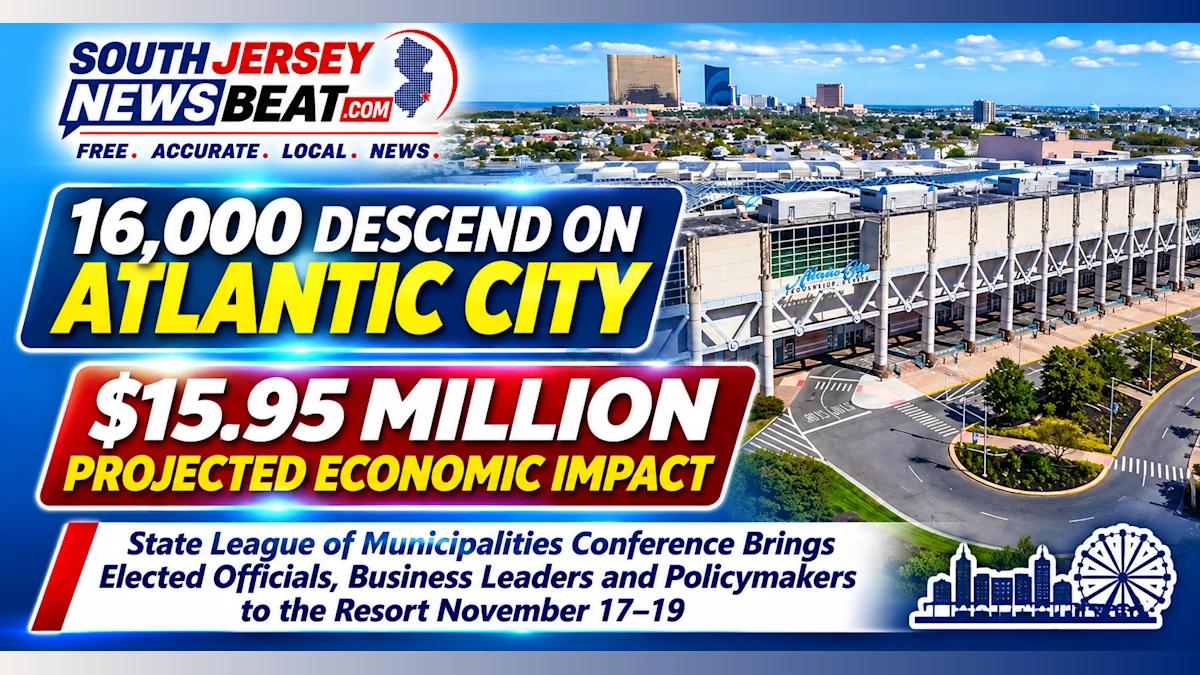
ATLANTIC CITY, N.J. — Atlantic City is welcoming an estimated 16,000 municipal officials, business representatives and government professionals this week as the 111th New Jersey State League of Municipalities Annual Conference gets underway, bringing nearly $16 million in projected economic activity to the resort.
The three-day conference, running Tuesday, November 17, through Thursday, November 19, at the Atlantic City Convention Center, is considered the largest municipal conference in the United States.
While the gathering is known for bringing many of New Jersey's political leaders together in one place, its economic significance to Atlantic City is substantial.
According to Visit Atlantic City, the conference is expected to generate approximately $15,952,642 in economic impact and has booked 8,280 hotel room nights.
The event also features approximately 1,100 exhibit booths and more than 175 educational sessions, giving municipal leaders opportunities to examine issues ranging from property development and housing to infrastructure, public safety, technology and government finances.
For Atlantic City, the conference represents one of the most important annual gatherings in its convention calendar, bringing thousands of visitors to hotels, casinos, restaurants and other businesses during the November shoulder season.
A Major Economic Boost for Atlantic City
The conference's projected economic impact extends well beyond the Convention Center.
Thousands of attendees are staying in Atlantic City hotels, dining at local restaurants, visiting casino properties and participating in receptions and networking events throughout the resort.
The 8,280 booked room nights provide a significant source of business for the hospitality industry during a period when summer tourism has ended.
The nearly $16 million economic impact figure is an estimate published by Visit Atlantic City, not a final accounting of actual visitor spending.
The League conference has historically been one of Atlantic City's largest recurring convention events.
In 2024, the conference attracted approximately 18,000 attendees, occupied about 9,000 hotel rooms and generated an estimated $14 million in economic impact, according to figures reported by NJBIZ.
The 2026 projections therefore suggest another significant economic contribution, even with anticipated attendance somewhat below the 2024 figure.
Atlantic City Mayor Marty Small Sr. has previously emphasized the importance of the event to the city's hospitality industry.
Following the 2024 conference, Small praised the League for continuing to choose Atlantic City and said the event brought an important boost to the resort's casinos, hotels and restaurants.
This year's gathering also provides an opportunity for the city to showcase ongoing redevelopment and infrastructure improvements to municipal leaders and private-sector representatives from throughout New Jersey.
More Than Politics: Housing, Development and Local Government Challenges
Although the conference attracts statewide political attention, much of its work focuses on the practical challenges facing New Jersey's 564 municipalities.
The League describes the annual gathering as an opportunity for local officials to exchange ideas, examine government policies and learn about products and services that can help their communities operate more effectively.
The 2026 program includes discussions on housing, zoning, redevelopment, public infrastructure, emerging technology and municipal regulations.
Among the subjects being addressed are accessory dwelling units, the conversion of vacant commercial properties into productive uses, historic preservation and the growing demand for artificial intelligence data centers.
New Jersey Planning Officials has scheduled several sessions examining issues that directly affect communities in Atlantic and Cape May counties.
One discussion focuses on accessory dwelling units, smaller residential units that can be added to existing properties or developed alongside single-family homes.
Supporters view them as a potential way to expand housing availability, while critics raise concerns about parking, neighborhood density and the effects on surrounding properties.
Another session examines adaptive reuse, including converting underutilized office buildings, shopping malls and warehouses into new residential or commercial uses.
That subject has particular relevance in Atlantic City, where officials and developers have pursued the redevelopment of vacant and aging buildings.
A Wednesday session will examine artificial intelligence data centers and their potential effects on land use, energy consumption and local economies.
The topic has become increasingly important as communities across New Jersey consider proposals for large technology facilities that can require substantial electricity, water and infrastructure.
Cannabis Regulations and Local Tax Revenue on the Agenda
The New Jersey Cannabis Regulatory Commission is participating in the conference with a session designed to help municipal officials understand the economic and regulatory implications of allowing cannabis businesses in their communities.
The session, scheduled for Tuesday, November 17, includes representatives from the Cannabis Regulatory Commission, New Jersey Business Action Center and New Jersey Economic Development Authority.
Discussions focus on potential local tax revenue, available state resources and regulatory developments affecting municipalities.
The commission is also providing access to its Obedio data platform at its exhibit booth, allowing local officials to examine cannabis market information and potential revenue opportunities.
The issue remains relevant in South Jersey, where municipalities have taken different approaches to permitting cannabis businesses.
Some communities have embraced cannabis development as an economic opportunity, while others have restricted or prohibited certain operations.
The conference gives local officials an opportunity to compare experiences and evaluate the financial and regulatory consequences of those decisions.
Atlantic City Uses Conference to Showcase Redevelopment
Atlantic City is also using the arrival of thousands of municipal leaders to promote its ongoing economic development initiatives.
The city's Great Day Atlantic City website published a November 16 guide encouraging conference attendees to explore redevelopment projects, local businesses and neighborhood improvements.
Among the projects highlighted are the Terraces at Absecon Inlet, where K. Hovnanian Homes has broken ground on 38 waterfront townhomes, and Lighthouse Row, which is adding new residential properties near Absecon Lighthouse.
The city is also promoting the planned rehabilitation of the historic Schwehm Building at 1 South New York Avenue.
That $22.5 million project is intended to transform the longtime vacant building into 56 loft-style apartments with ground-floor retail space and other amenities.
Additional developments highlighted by the city include proposed residential construction in the Marina District and redevelopment opportunities involving MGM Resorts and Boraie Development.
Some of those projects remain in the planning or approval stages.
The city is also drawing attention to infrastructure improvements, including work on Atlantic and Pacific avenues, Boardwalk reconstruction and neighborhood recreational facilities.
According to the city's promotional materials, more than $250 million in non-taxpayer funding is being invested in infrastructure improvements.
Atlantic City is also highlighting its small-business assistance efforts, including $900,000 in microgrants awarded to 65 businesses across the city's wards.
The effort reflects a broader goal of encouraging conference visitors to experience Atlantic City beyond its casinos and Convention Center.
A Marketplace for Municipal Services and Technology
The League conference is also a major business event.
Approximately 1,100 exhibit booths showcase products and services used by local governments.
Exhibitors represent industries including engineering, construction equipment, emergency services, environmental management, insurance, telecommunications, technology, housing and infrastructure.
Municipal officials can examine equipment and services that may eventually be purchased or used by their communities.
The conference also offers continuing education opportunities for licensed municipal professionals, planning and zoning officials, administrators and other public employees.
League President and Mayor Sean Elwell emphasized the importance of preparing municipalities for changing conditions in the organization's 2026 conference materials.
"Our residents depend on us to be ready, adaptable, and forward-thinking," Elwell said. "By understanding how risks affect our towns and taking proactive steps to manage them, we can build stronger, more resilient communities."
League Executive Director Michael Cerra said the annual gathering gives communities an opportunity to exchange strategies and prepare for future challenges.
"For three days every November for more than a century, the League has provided a gathering place for members from around the state to celebrate, innovate, and anticipate life in the municipalities in ways that meaningfully impact New Jersey's residents," Cerra said.
What Happens During the Three-Day Conference?
The conference began Tuesday morning at the Atlantic City Convention Center.
The exhibit hall is scheduled to remain open from 9 a.m. to 5 p.m. Tuesday and Wednesday, with Thursday hours from 9 a.m. until noon.
Educational sessions and other conference activities continue throughout the three days, with some events also taking place at nearby hotels.
The gathering traditionally provides opportunities for statewide elected officials, municipal leaders and policymakers to discuss legislative priorities and issues affecting local government.
Those conversations can influence future debates over state aid, municipal budgets, infrastructure spending, housing requirements and other policies affecting South Jersey communities.
For Atlantic City, however, the immediate impact is already evident in the thousands of visitors attending the event and the hotel business generated by the conference.
The longer-term value may come from the relationships, business opportunities and policy discussions that emerge during the three days.
As the conference continues through Thursday, Atlantic City will serve as the meeting place for municipal leaders from across New Jersey, while the resort benefits from one of its largest annual convention gatherings.
For a city working to strengthen its year-round economy, the projected $15.95 million economic impact demonstrates why major conventions remain an important part of Atlantic City's future.

About the Author
Peter Killeen
A 25-year radio news veteran, Peter covers South Jersey for NewsTalk 1400 & 92.3 WOND radio. Known for his concise and impactful delivery, he ensures listeners and readers stay informed without unnecessary filler.