
An educator's experiment in removing price tags from a campus festival has become a case study in what happens when a community is asked to give rather than sell. Gaurav Marathe, who teaches on a college campus, proposed the exercise to his students as a way to strip away what he describes as the "carbon" of habit and routine — the accumulated residue that dims one's inner light.
The idea grew from a mantra Marathe adopted early in his schooling, translated for him by a teacher: "Humans are like a candle. After the candle burns, carbon stays on it, and you have to remove that black carbon from the light so the light again illuminates." The saying, which Marathe shared with DailyGood, frames his work as a dual practice — clearing away the soot and tending the jyoti, the light he believes exists within each person.
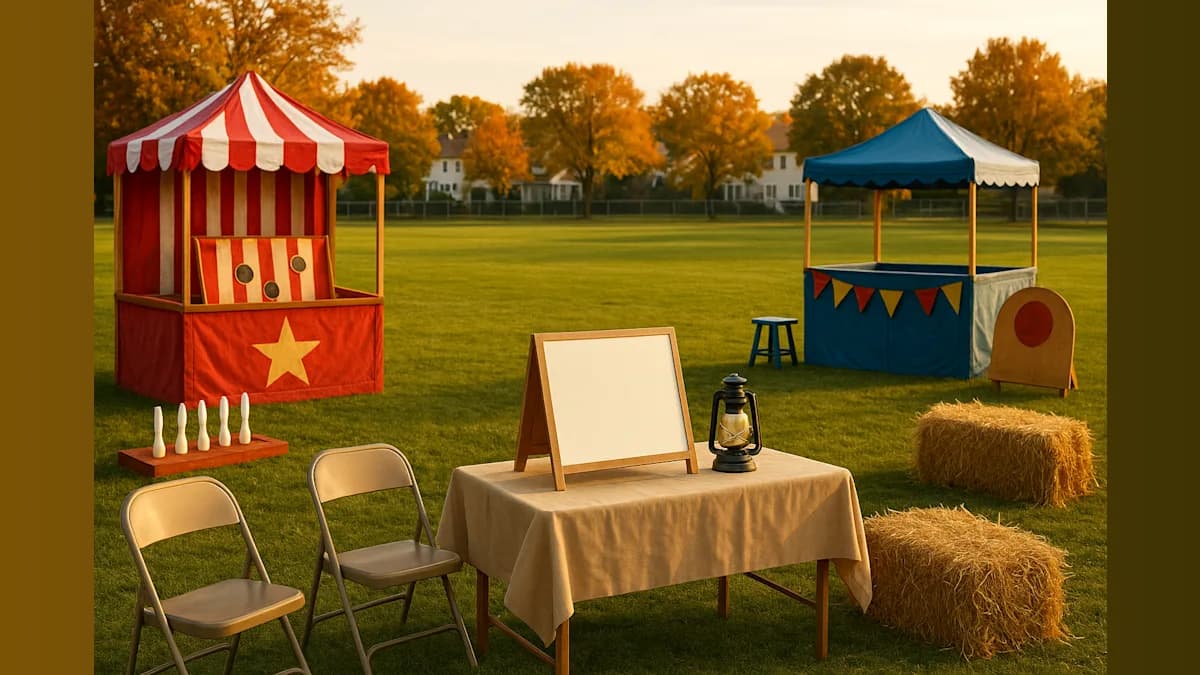
His experiment took aim at a familiar target: the task-driven, rule-driven festival that dominates campus calendars. Marathe asked his students to imagine a different kind of gathering, one in which no vendor sets a price and no organizer recovers a cost. In his words, the proposal was simple: "Let's do that experiment. Let it be the kind of carnival where nobody is charging anything. No cost price, nothing. If anybody wants to pay, they pay. If they don't, they don't. Let's believe in that spirit."
The outcome exceeded expectations. According to Marathe, the event succeeded beyond anyone's imagination and evolved into what participants call a "Soul Carnival," a celebration organized around giving rather than profit. For local readers, the model offers a template that requires no budget line for marketing or revenue: the only currency is willingness.
Marathe is careful not to present the carnival as a finished solution. "Perhaps that's the point of these experiments — not to have all the answers, but to keep creating spaces where we can go close to inner jyoti a little more," he told DailyGood. The value, in his framing, lies less in the result than in the repeated practice of making room for generosity.
The experiment raises a practical question for community organizers: what changes when an event stops asking attendees to buy and starts asking them to participate? Marathe's answer, drawn from his own classroom, is that the shift is less about money than about attention — removing the carbon so the light can show through.