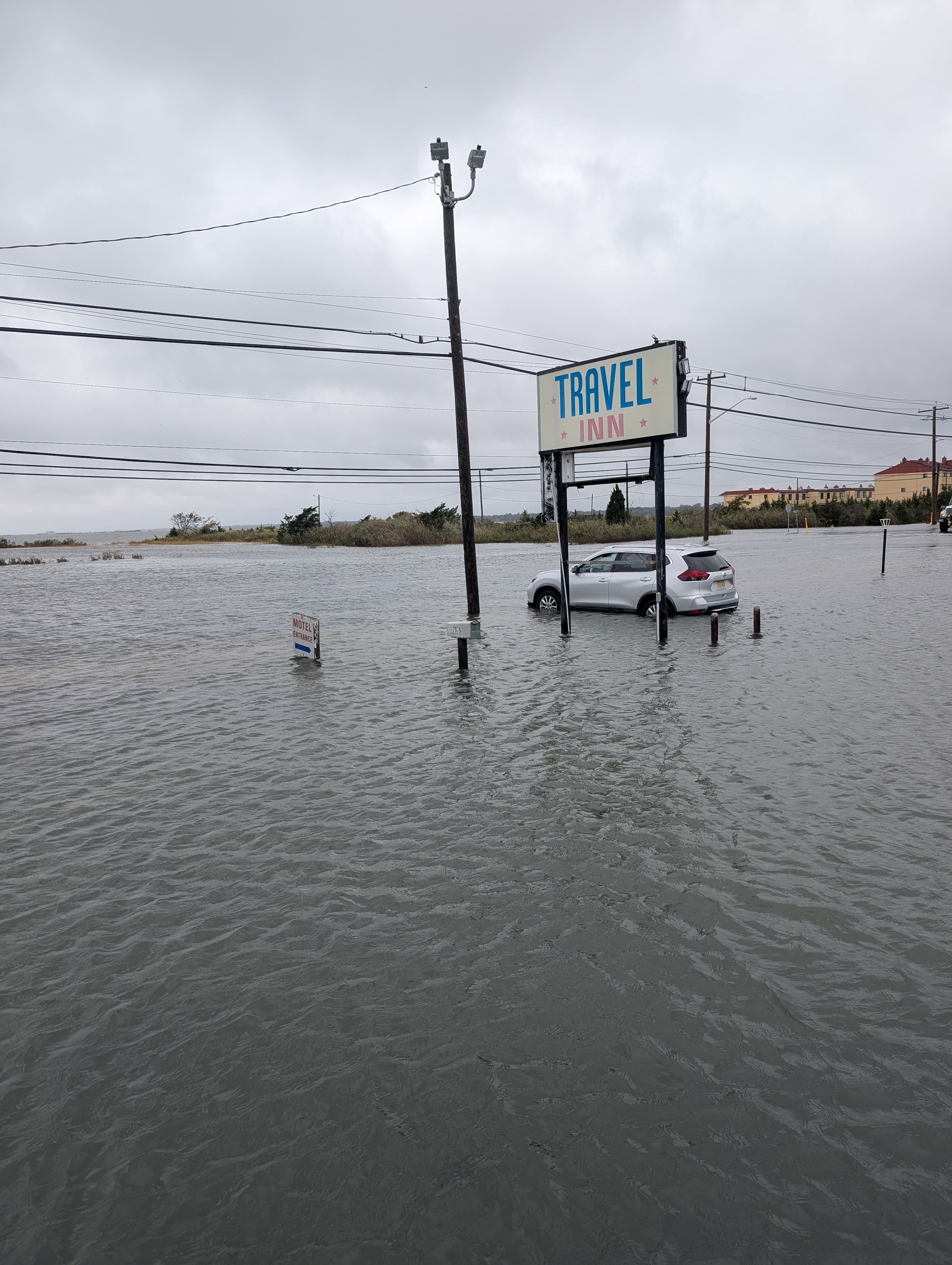
ATLANTIC CITY — After another powerful nor’easter stripped sand from beaches, damaged dunes and battered coastal defenses, officials are looking beyond simply replacing what was lost — and toward tens of millions of dollars in federal funding and more permanent solutions to Atlantic City’s recurring erosion problem.
U.S. Rep. Jeff Van Drew joined representatives from the U.S. Army Corps of Engineers, Federal Emergency Management Agency, New Jersey Department of Environmental Protection and local officials Thursday for a tour of storm damage along the Jersey Shore, including Atlantic City and Brigantine.
Van Drew said Atlantic City needs immediate disaster assistance but also argued that repeatedly replacing sand after major storms cannot be the only answer.
“We need the sand and we’re going to continue to put the sand there,” Van Drew said. “But that’s not the only answer. We need permanent structure.”
For Atlantic City specifically, Van Drew said officials are looking at a T-groin extension designed to address severe erosion while federal funding is pursued.
“Atlantic City, we need disaster funding and a T-groin extension,” Van Drew said. “Also, just so we know, Atlantic City, we’ve been working with them hand in glove, as we have been with the Army Corps, FEMA and the DEP.”
Van Drew said he has a $30 million federal funding request for Atlantic City moving through the budget process to address the problem.
“I have an earmark for $30 million for Atlantic City for this very problem to make sure that we get this done one way or another,” he said.
The congressman said different Shore communities may require different approaches. Brigantine, he said, needs an extension of its seawall, while North Wildwood needs additional seawall work and repairs.
“It could be a seawall. It could be a groin. It could be a jetty. It can be a lot of different things,” Van Drew said. “We need to explore that more. We need to learn more. We need to obey the science here and do what’s right.”
Army Corps: Full Assessment Will Take ‘Weeks, Not Months’
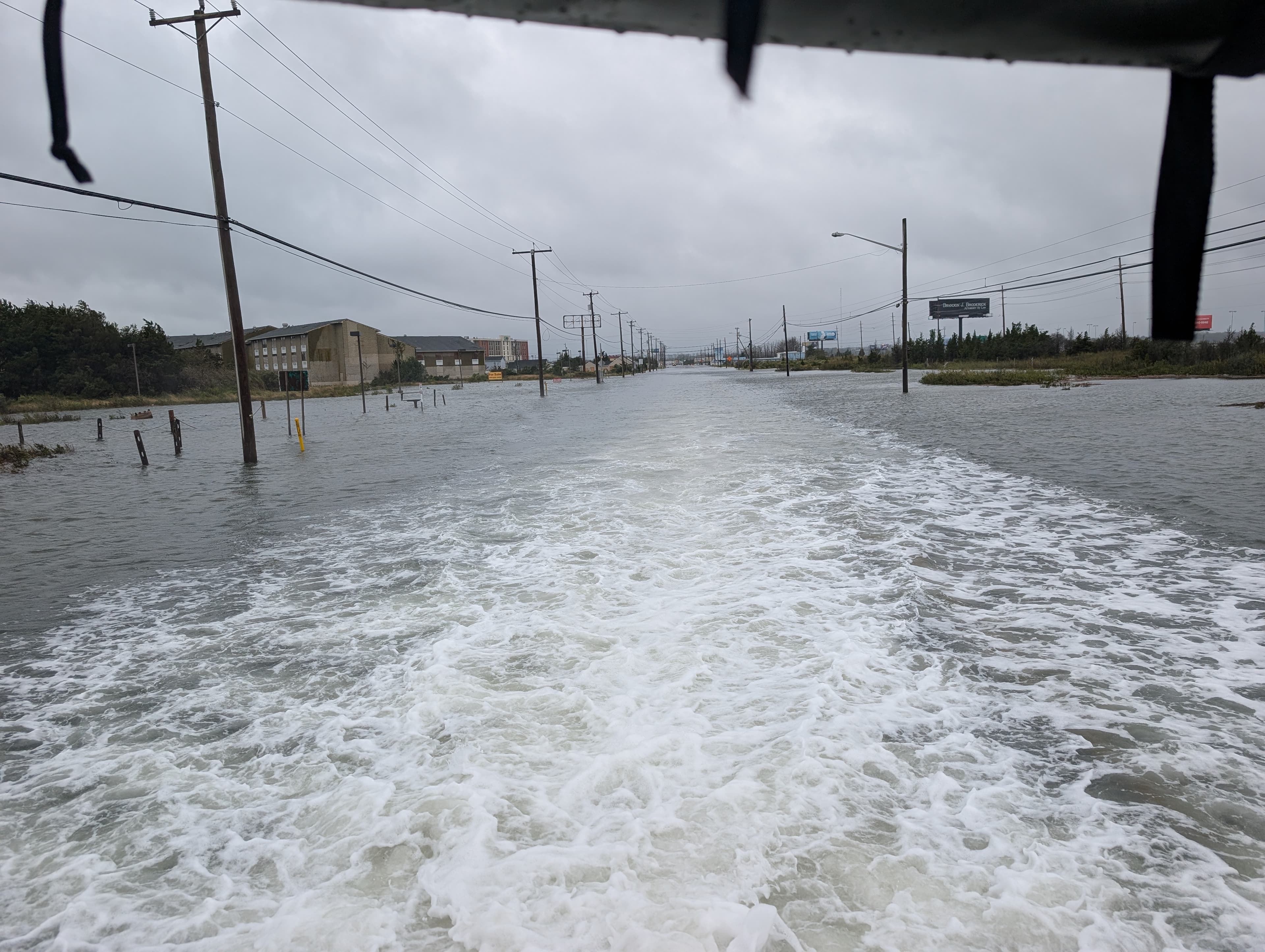
The extent of the damage — and exactly what federal projects will be eligible for repair — is still being determined.
An Army Corps official participating in Thursday’s tour said the agency has conducted visual inspections of virtually all of its projects affected by the storm but cautioned that those inspections are only the beginning.
“We are still at the very beginning,” the official said. “We’ve done site, you know, visual inspections of virtually all of our projects, but we are not ready. Visual inspections is a good first step, but it’s only a first step.”
The official compared the process to assessing a damaged vehicle: What can be seen from the outside may not represent the full extent of the damage.
“We need a little more review,” he said. “We’re talking weeks, not months. We’ll have a full assessment of what the impacts have been on our projects and figure out what the way forward we might have from there.”
The official also cautioned that significant additional federal work could require Congress to provide more money.
“The best opportunity to really make progress would be with a supplemental appropriation associated with the storm because there’s not a lot of pocket change sitting around in the Corps budget,” he said.
DEP Finds Major Damage Along Much of Coast
New Jersey environmental officials were already documenting conditions before the nor’easter arrived.
A DEP official said teams completed pre-storm assessments at nearly 250 locations along the New Jersey coastline, providing a baseline against which post-storm damage could be measured.
After the storm, DEP teams returned to the coast with local officials and the Army Corps.
“What we found was major damage to much of our 127 miles of coastline,” the DEP official said.
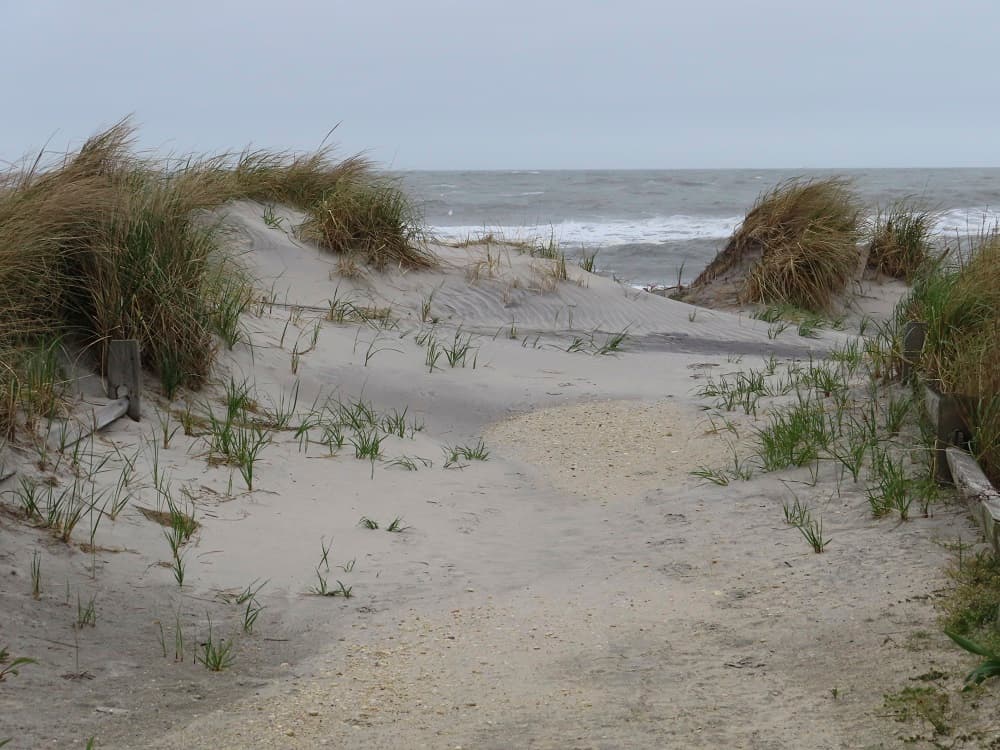
In Brigantine, officials saw beaches and dunes washed away along with damage to beach ramps and fencing and debris left behind.
“There’s a lot of work ahead, and it will take partnership at every level of government and with local municipalities themselves,” the official said.
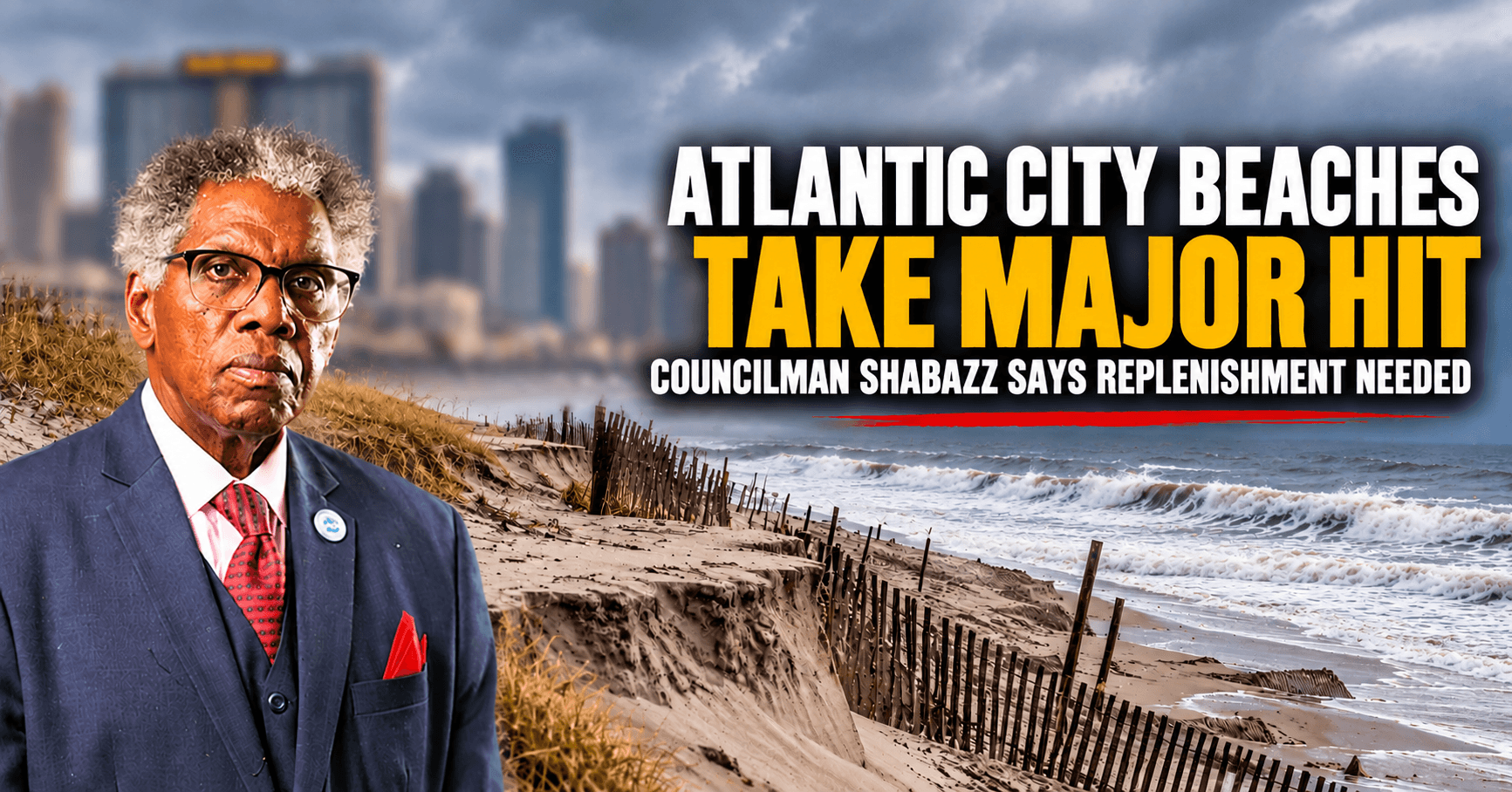
Small: Atlantic City Needs Its Beaches Replenished
Atlantic City Mayor Marty Small Sr. joined the officials during the Atlantic City portion of the tour and said the city's beach and Boardwalk remain critical to its economy.
“We’re always counted out and we always rebuild better and stronger than before,” Small said. “I stand shoulder to shoulder with our North Beach casinos, our consultant, our federal partners, the Army Corps of Engineers, our state delegation to repair this Boardwalk.”
Small said Atlantic City has already invested heavily in flood-control infrastructure following Superstorm Sandy, including bulkheading and pumping projects.
Asked whether those improvements worked during the nor’easter, Small said they did, although the prolonged storm and changing tides still caused problems.
“We have a tremendous emergency management team, and we deploy all our resources and dealt with the storm the best that we can,” Small said. “One thing that we all know that we can’t control is Mother Nature.”
Asked where Atlantic City most needs help now, Small's answer was straightforward.
“We need our beaches replenished,” he said.
But Small also cautioned against rushing into repairs that could simply be damaged by another fall or winter storm.
“We don’t want to throw money away,” Small said. “That’s the worst thing we can do is do these repairs now because, listen, we’re used to nor’easters, we’re used to storms, we’re used to blizzards that have an effect on what we do here.”
Hard Rock President Pushes Permanent Solution
The push for a longer-term solution also has support from Atlantic City's casino industry.
Hard Rock Hotel & Casino Atlantic City President George Goldhoff joined the tour and described the latest storm damage as “absolutely devastating.”
“What we need now is a permanent solution,” Goldhoff said.
Goldhoff said a permanent erosion-control project would protect residents, visitors and the billions of dollars invested in properties along Atlantic City's Boardwalk.
He also argued that there is a financial case for reducing the need to repeatedly replace sand that is subsequently lost to storms.
“There’s a real economic argument where there’s a return on investment when you don’t have to put tens of millions of dollars of sand onto this beach nearly annually for it to be pulled out to sea by Mother Nature,” Goldhoff said.
Goldhoff said the concept involves structures such as T-groins or jetties intended to reduce erosion.
Van Drew Calls for Dedicated Coastal Fund
Beyond the immediate recovery, Van Drew used Thursday's tour to renew his push for a dedicated federal coastal trust fund.
He criticized the current system in which Shore communities and officials frequently have to assemble money from various federal programs following major storms.
“Every year, every storm, we’ve got to cobble money together,” Van Drew said. “Sometimes it’s through earmarks, supplemental funds. Sometimes it’s some of the appropriations that are done. Sometimes it’s money left over.”
“That’s no way to run an operation,” he added.
Van Drew said a coastal trust fund could potentially use revenue generated by offshore oil and gas leases to provide a more reliable source of money for coastal communities.
For now, however, the immediate focus is determining exactly how much damage the nor’easter caused and what can be repaired before another major storm arrives.
Van Drew said years of beach replenishment, stronger utility infrastructure, pumping projects, elevated construction and other improvements prevented the damage from becoming even worse.
But he said the latest storm demonstrated that more work remains.
“This is a disaster,” Van Drew said. “This is an emergency. We do need help, and we’re going to push like hell to get that help.”
The Army Corps expects its more complete assessment of the storm's impact on federal coastal projects within weeks.

About the Author
Karen Johnson
With over 30 years of news experience in major markets like Los Angeles, Denver, and Columbus, Karen now covers our area for South Jersey NewsBeat. She also brings her articulate and conversational news delivery to WOND radio listeners every weekday. Her background includes work with the NBC Radio Network, and she thrives in fast-paced news environments.