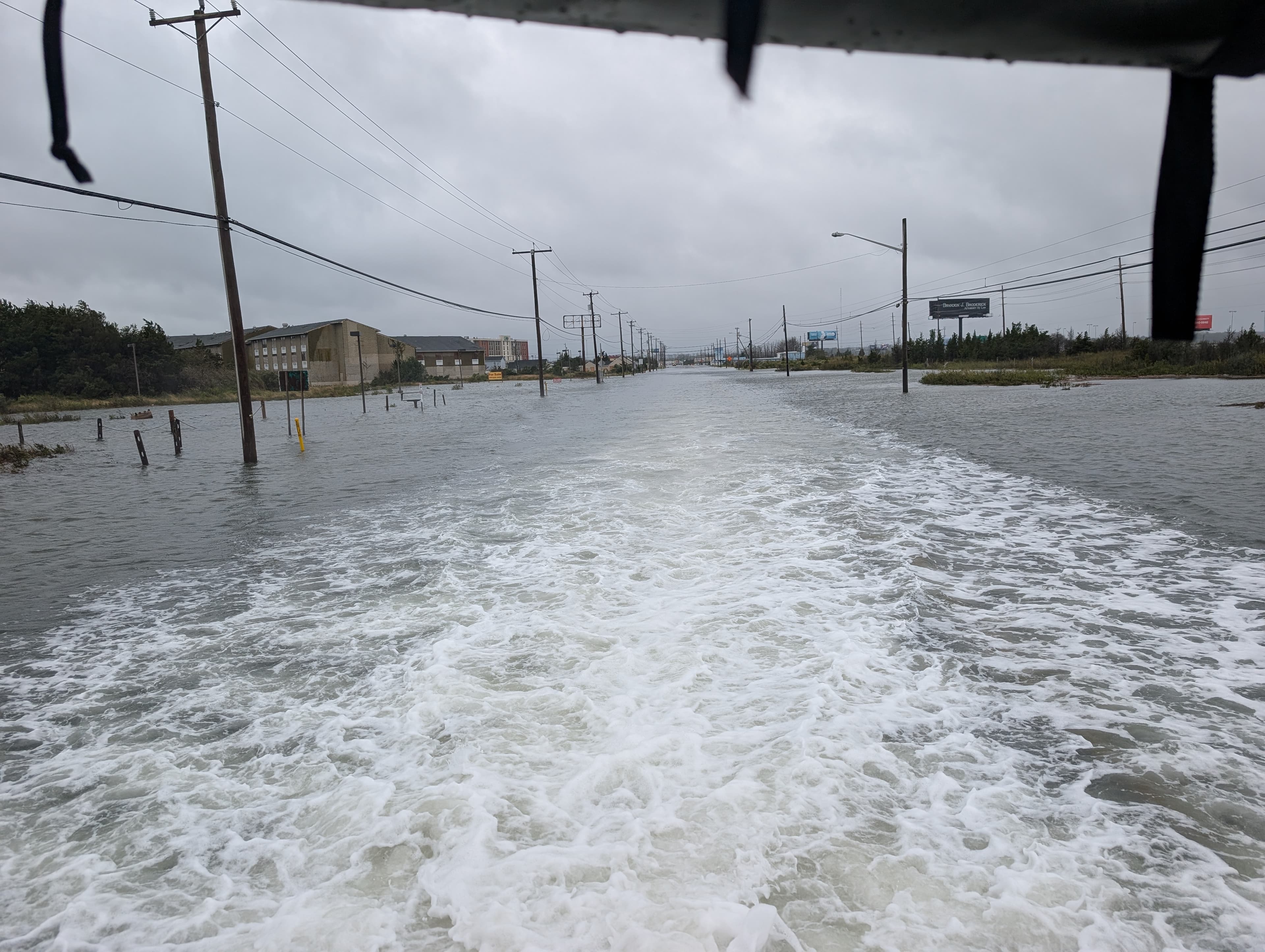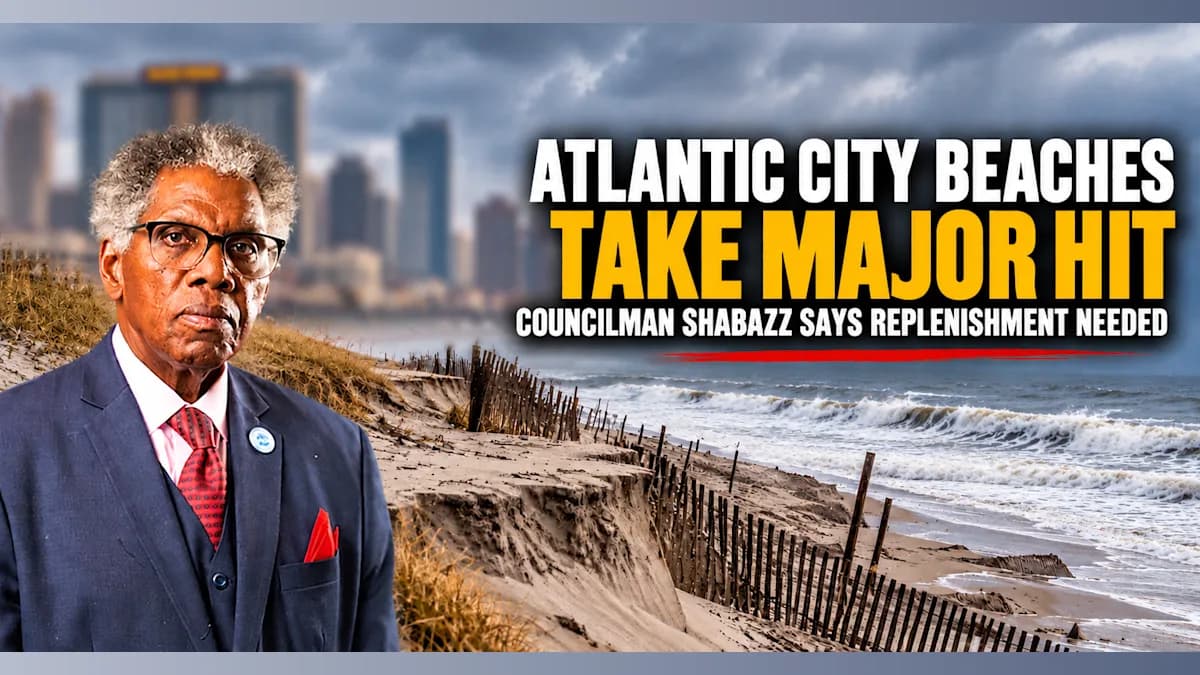
Council Vice President Kaleem Shabazz says the city's beaches were badly depleted by the nor’easter as Atlantic City begins assessing damage along its shoreline.
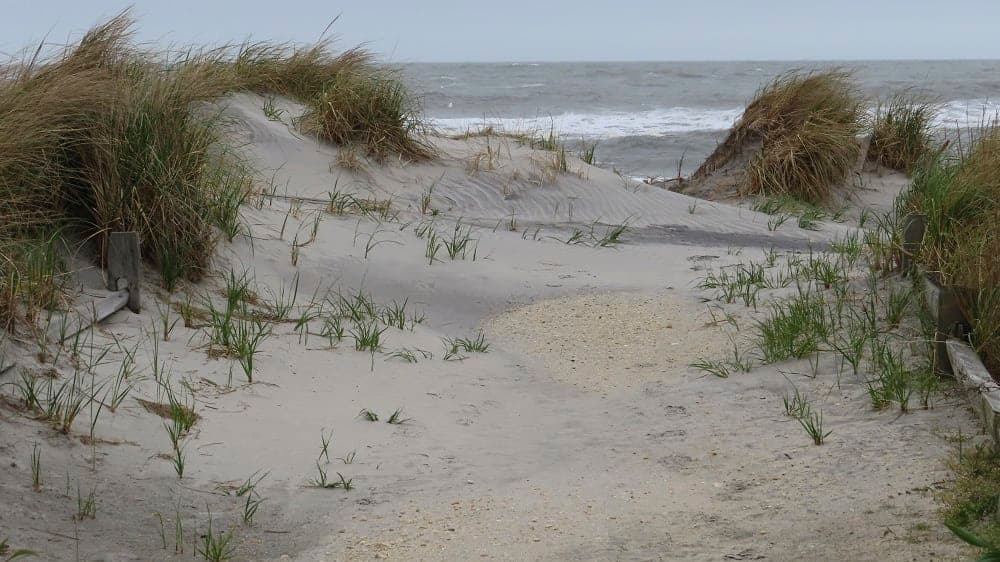
ATLANTIC CITY, N.J. — Less than two years after the completion of Atlantic City's latest federal beach nourishment, this weekend's powerful nor’easter carved into the city's shoreline in what Beach Patrol officials have described as the worst erosion since Superstorm Sandy.
Now Atlantic City Council Vice President Kaleem Shabazz says beach replenishment will again be needed — not only in Atlantic City, but along battered sections of the South Jersey coast.
“The beaches really took a hit,” Shabazz said Monday morning on The Don Williams Show on News Talk 1400 and 92.3 WOND.
“I think the beaches are — I don't want to say destroyed — but depleted.”
“We need beach replenishment up and down, not just us,” he said.
Worst Erosion Since Sandy
The damage was particularly significant along the northern section of Atlantic City's shoreline.
Atlantic City Beach Patrol Deputy Chief Dave Russo described the weekend storm as producing the city's worst beach erosion since Sandy in 2012.
A roughly half-mile stretch north of Steel Pier was particularly hard hit, with the storm cutting into dunes, exposing previously buried structures and creating steep drop-offs along the beach. Russo estimated roughly half of the dunes remained in the affected area.
Shabazz also pointed to the Inlet as an area where flooding problems existed well before this storm.
“The Inlet, unfortunately, the Inlet, and some streets even in my district flood even with a heavy rain,” Shabazz said. “They flood. And we're working on that.”
“We're working on some resiliency projects, but this storm was really, really a little more than we expected.”
1.2 Million Cubic Yards of Sand Added in 2024-25
The erosion comes despite an extensive federal coastal protection system along Absecon Island.
The U.S. Army Corps of Engineers completed its most recent periodic nourishment in Atlantic City and Ventnor between November 2024 and February 2025, placing approximately 1.2 million cubic yards of sand.
The federal Absecon Island project, which encompasses Atlantic City, Ventnor, Margate and Longport, remains eligible for periodic nourishment. The Army Corps lists it on a three-year nourishment cycle, subject to funding.
That would ordinarily put the next nourishment around 2028.
The amount of sand Atlantic City lost during this weekend's storm has not yet been publicly quantified, and no emergency nourishment project has been announced.
Millions Invested in Flood Protection
Atlantic City has also been investing millions of dollars in projects designed to make vulnerable neighborhoods more resilient.
Those efforts include an approximately $8.5 million Chelsea bulkhead replacement, improvements to the Atlantis Avenue Pump Station and work on the Baltic Avenue Canal stormwater system.
The city has also been completing the final phase of the approximately $60 million Inlet Boardwalk and seawall project.
Shabazz said the storm demonstrated the continuing need for that work.
Public Works employees, he said, were preparing before the storm arrived and worked nearly around the clock during and after it.
“The Public Works Department was gearing up. The emergency management was gearing up. The police and fire were gearing up,” Shabazz said.
He also credited the Casino Reinvestment Development Authority for opening the Wave Parking Garage so residents could move vehicles to higher ground.
‘It Was Not as Bad as Sandy’
Some Atlantic City residents lost electricity during the storm, including people in Shabazz's 3rd Ward. By Monday morning, Shabazz said he believed power had been restored throughout the city.
Atlantic City schools opened two hours late Monday, while Shabazz said roads were largely reopened and conditions were returning to normal.
He also said he was thankful the city escaped something worse.
“Thank God, I believe there were no casualties,” Shabazz said.
For Shabazz, comparisons with Superstorm Sandy are personal. He said he lost his house during the 2012 storm and had to leave the city with his wife.
“Everybody of a certain age, those of us who remember Sandy, we had flashbacks,” Shabazz said.
But he cautioned against equating the two storms.
“It was not as bad as Sandy, but it was something,” he said. “I remember Sandy. I remember it well. I lost the house.”
Now, as Atlantic City cleans up, attention is turning from flooded streets to what the nor’easter left behind along the shoreline — and how much work will be necessary to restore the city's beaches and dunes.
Atlantic City Council Vice President Kaleem Shabazz spoke Monday morning on The Don Williams Show on News Talk 1400 and 92.3 WOND. The Don Williams Show airs Monday through Friday from 6 to 10 a.m.

About the Author
Scott Stephens
Scott has been an on-air personality, producer and newscaster for 30+ years. He has been a mainstay in the South Jersey Community and on the air across many different area stations. Scott can currently be heard on Kool 98.3 and News Talk 1400 & 92.3 WOND.