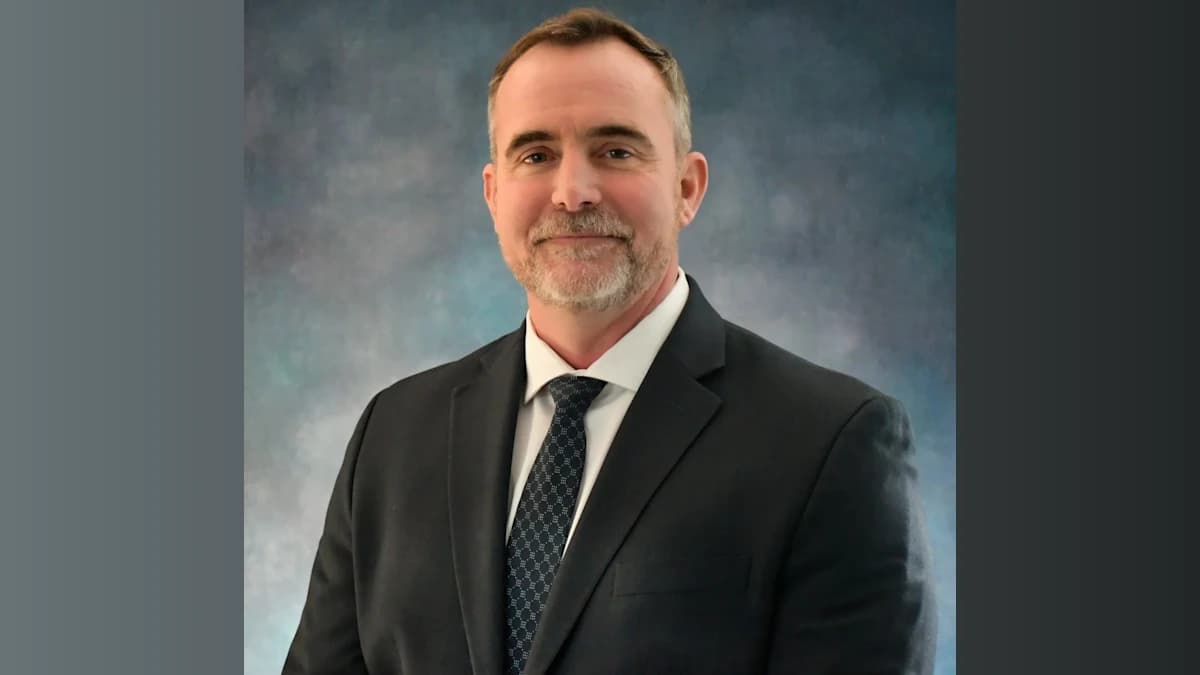
ATLANTIC CITY, N.J. — Atlantic County sheriff candidate Sean Riggin says he would follow New Jersey's immigration enforcement requirements if elected, arguing that local law enforcement officers should concentrate on investigating crimes rather than carrying out routine federal civil immigration enforcement.
Riggin, Atlantic City's public safety director and a former Pleasantville police chief, discussed his position during an extended interview Tuesday, Sept. 22, on The Don Williams Show on News Talk 1400 and 92.3 WOND.
Williams repeatedly questioned Riggin about whether the Atlantic County Sheriff's Office would cooperate with U.S. Immigration and Customs Enforcement, commonly known as ICE, under his leadership.
Riggin said he would follow the state's Immigrant Trust Directive and emphasized that the restrictions on voluntary assistance with civil immigration enforcement do not prevent police from arresting people wanted for criminal offenses.
"I'm a law enforcement officer. I follow the law, period," Riggin told Williams.
Riggin Says Local Police Should Focus on Criminal Enforcement
Riggin said he believes local police departments have substantial responsibilities involving violent crime, burglaries, robberies and other offenses that directly affect their communities.
He questioned whether assigning additional local resources to federal civil immigration enforcement would be an effective use of personnel.
"I don't want to pull any cops out of the local communities to deal with something that is being overwhelmingly funded by the federal government," Riggin said.
He also expressed concern that participation in immigration enforcement could discourage some residents from reporting crimes or cooperating with local police.
"I want to make sure that everybody calls the cops, every single opportunity that they have for everything that they need," Riggin said.
He argued that police departments depend on cooperation from residents, including crime victims and witnesses, to investigate offenses.
Riggin said he wants to preserve relationships that local police departments have developed with immigrant communities.
His comments reflect his stated approach to allocating law enforcement resources and maintaining community cooperation.
What New Jersey's Immigration Law Actually Requires
New Jersey's Immigrant Trust Directive, originally issued by the state attorney general in 2018, establishes limits on voluntary assistance that state, county and municipal law enforcement agencies may provide in federal civil immigration enforcement.
The directive was codified in state law in 2026.
Under the law, officers generally may not stop, question, arrest, search or detain someone solely because of actual or suspected immigration status or a suspected violation of federal civil immigration law.
The restrictions also generally prohibit officers from participating in federal civil immigration enforcement operations, subject to specified exceptions.
However, the directive does not prevent officers from enforcing New Jersey criminal laws or complying with valid judicial warrants and court orders.
It also does not prohibit every form of communication or cooperation between local law enforcement and federal authorities.
The distinction between civil immigration enforcement and criminal law enforcement is central to the policy.
During the interview, Riggin referred to the policy as the "Immigrant Trust Act." The original statewide policy is known as the Immigrant Trust Directive and was subsequently codified by the Legislature.
Criminal Warrants Would Still Be Enforced, Riggin Says
Williams pressed Riggin on whether his position meant ICE should expect no assistance from the Sheriff's Office if he were elected.
Riggin responded by distinguishing civil immigration matters from criminal offenses.
"If there is a warrant, just like anyone else, if you commit a crime outside of specific immigration administration, we will enforce that," he said.
Riggin said local officers would continue arresting individuals wanted for criminal offenses regardless of their immigration status.
He also explained that Atlantic City police generally do not ask people about their immigration status during routine criminal investigations.
When Williams asked whether police had encountered people who were in the country illegally while investigating other crimes, Riggin said officers generally would not know because they do not routinely inquire about immigration status.
He said officers would still act on criminal warrants identified through law enforcement databases.
Riggin's comments were consistent with his stated position that local police should continue enforcing criminal laws while observing the restrictions governing federal civil immigration enforcement.
Debate Over Federal Resources
Riggin also questioned federal spending priorities, arguing that additional funding for local public safety and community services could help address problems involving addiction, homelessness and other quality-of-life concerns.
He said Atlantic County communities face challenges that require cooperation among municipal, county and federal agencies.
Riggin argued that additional local resources could help police departments address problems that residents encounter in their neighborhoods.
Those comments represent his policy position rather than an established finding about how federal funds should be allocated.
The interview did not include a detailed comparison of federal immigration enforcement spending and funding for local law enforcement programs.
What the Position Means for the Sheriff's Race
Riggin's comments provide a description of how he says he would approach immigration enforcement if elected Atlantic County sheriff.
He said the Sheriff's Office would continue enforcing criminal laws and complying with applicable legal requirements while limiting voluntary participation in federal civil immigration enforcement.
The state's Immigrant Trust Directive applies to county sheriff's officers as well as municipal police and other covered law enforcement personnel.
Consequently, any sheriff must operate within the applicable state and federal legal framework.
Riggin's statements clarify his approach to that framework and his stated preference for concentrating county law enforcement resources on criminal investigations and support for local police departments.
Sean Riggin discussed immigration enforcement during an interview on The Don Williams Show on News Talk 1400 and 92.3 WOND on Tuesday, Sept. 22. The Don Williams Show airs Monday through Friday from 6 to 10 a.m.

About the Author
Scott Stephens
Scott has been an on-air personality, producer and newscaster for 30+ years. He has been a mainstay in the South Jersey Community and on the air across many different area stations. Scott can currently be heard on Kool 98.3 and News Talk 1400 & 92.3 WOND.