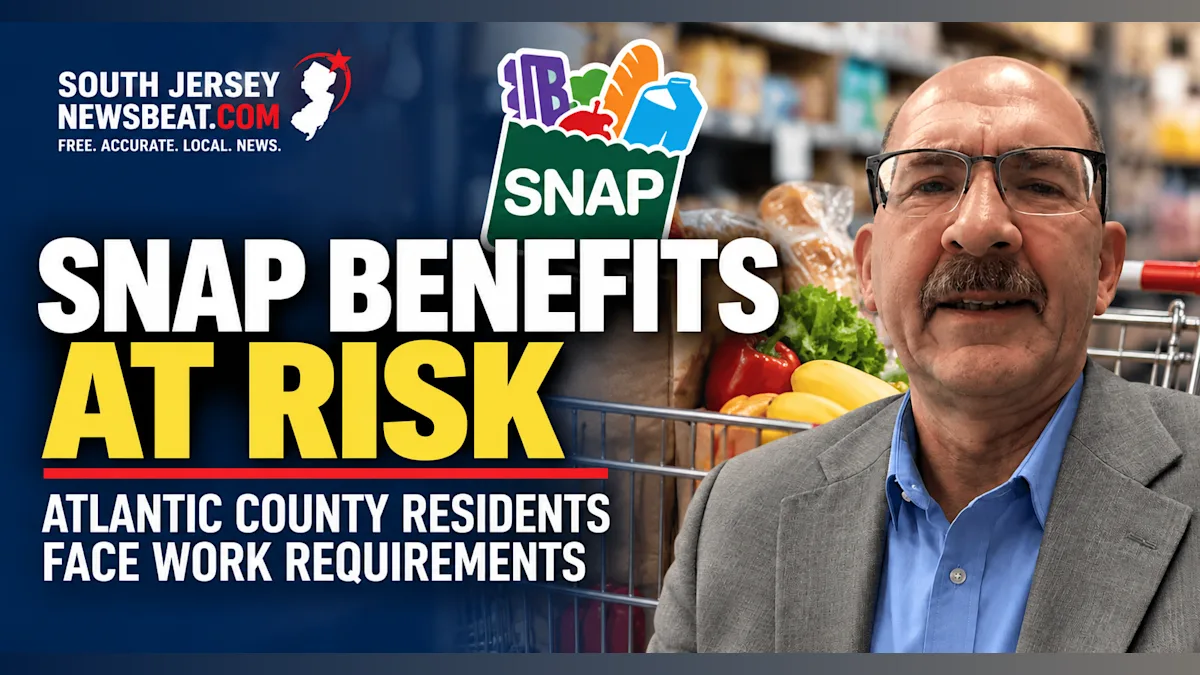
Fran Kuhn says the county is working to connect residents with jobs, training and qualifying activities as federal rules put additional pressure on some food assistance recipients.
ATLANTIC COUNTY, N.J. — Thousands of Atlantic County residents rely on public assistance programs, but some face the possibility of losing food benefits if they fail to meet federal work requirements or qualify for an exemption.
Fran Kuhn, executive director of the Atlantic County Workforce Development Board, discussed the challenges facing local residents during a Sept. 23 appearance on Klein Time with Dan Klein on News Talk 1400 & 92.3 WOND.

Kuhn said the county is working to connect residents receiving public assistance with employment, training and other qualifying activities, but getting people to participate in available programs remains a challenge.
"We're sending out somewhere between 40 and 50 invitations a week and we're getting a show rate of less than 10," Kuhn told Klein.
The county conducts weekly opportunity fairs intended to connect eligible residents with organizations that can help them meet applicable work requirements and document their participation.
Kuhn said some residents are already losing SNAP benefits because they have not satisfied the requirements.
The Supplemental Nutrition Assistance Program, commonly known as SNAP or food stamps, provides monthly food assistance to eligible low-income households.
Changes to federal law have expanded the number of adults who may be required to work, participate in approved training or complete other qualifying activities to continue receiving benefits beyond a limited period.
What Has Changed for SNAP Recipients?
Federal legislation enacted in July 2025 expanded SNAP work requirements for certain adults.
Under the rules now in effect in New Jersey, adults ages 18 through 64 who are physically and mentally able to work and do not live with a child younger than 14 may be subject to additional work requirements and time limits.
Previously, the additional work requirement generally applied to adults through age 54, and living in a household with a child younger than 18 provided an exemption.
The changes mean that some older adults and parents of teenagers who previously qualified for exemptions may now be required to participate in work-related activities.
Affected recipients generally must complete at least 80 hours of qualifying activity each month to continue receiving SNAP benefits beyond three months in a three-year period.
Qualifying activities can include paid employment, approved job training, volunteer work or a combination of eligible activities.
Certain exemptions remain available, including for people who are pregnant, unable to work because of qualifying physical or mental conditions, or otherwise exempt under applicable program rules.
Not every SNAP recipient is subject to the additional requirements.
New Jersey also distinguishes between general SNAP work requirements and the additional time-limit rules that apply to certain adults without qualifying dependents.
Residents who are uncertain about their status should contact their county social services agency to determine which requirements apply to them.
Atlantic County Residents Face New Challenges
New Jersey previously operated under a federal waiver that exempted most counties from the additional SNAP work-related time limits.
That statewide arrangement ended Jan. 31, 2026.
Beginning Feb. 1, the additional time-limit requirements took effect in Atlantic County and most other parts of New Jersey.
Cape May County and Camden City remained covered by separate waivers, according to the New Jersey Department of Human Services.
The changes have created additional responsibilities for county agencies working to connect eligible residents with employment and training opportunities.
During his radio interview, Kuhn estimated that approximately 4,000 Atlantic County residents fall within the public assistance populations his agency helps oversee, including recipients of SNAP, Temporary Assistance for Needy Families and General Assistance.
That figure represents multiple assistance programs and should not be interpreted as the number of Atlantic County residents who are subject to SNAP work requirements or who have lost benefits.
Kuhn said his agency is working to help residents understand their obligations and connect with qualifying activities.
However, participation in the county's weekly opportunity fairs has been limited.
"We're sending out somewhere between 40 and 50 invitations a week and we're getting a show rate of less than 10," he said.
The fairs are intended to introduce residents to organizations offering employment assistance, training and other activities that may help them satisfy applicable requirements.
Kuhn's comments suggest that connecting residents with available services remains a challenge, even as the consequences of failing to meet work requirements become more significant.
Training and Volunteer Work Can Help Residents Maintain Eligibility
For affected SNAP recipients, finding a traditional full-time job is not necessarily the only way to satisfy the additional work requirements.
New Jersey allows several types of qualifying activities, including employment, approved job training and volunteer work.
A combination of eligible activities may also satisfy the monthly requirement.
The state's SNAP Employment and Training program provides access to job-search assistance, skills development and training opportunities.
Participants may also qualify for assistance with certain expenses associated with their training, including transportation, dependent care, books, uniforms and supplies.
The Atlantic County Workforce Development Board works with local employers, training providers and community organizations to connect residents with employment opportunities.
Kuhn said the county's goal is to help residents develop skills that can lead to lasting employment while also addressing the immediate requirements associated with public assistance programs.
For some residents, that may involve participating in training programs that prepare them for jobs in health care, manufacturing, hospitality or other industries.
For others, it may mean documenting existing employment or volunteer activities that satisfy the applicable rules.
What Happens if Someone Does Not Meet the Requirements?
Under New Jersey's SNAP rules, adults subject to the additional work-related time limit generally can receive benefits for only three months during a three-year period unless they satisfy the work requirement or qualify for an exemption.
Recipients who do not meet the requirements may lose their benefits after exhausting those three months.
However, eligibility depends on individual circumstances, and residents who believe they qualify for an exemption should notify their county social services agency.
The New Jersey Department of Human Services has developed screening procedures to help county agencies identify recipients who may qualify for exemptions.
The state has also been working with the New Jersey Department of Labor and Workforce Development to expand access to qualifying work activities.
Residents who receive notices concerning their SNAP eligibility should carefully review the instructions and respond to requests for information.
Those who are already working, volunteering or participating in qualifying training should make sure their activities are properly documented.
Where Atlantic County Residents Can Get Help
Residents seeking assistance with employment, training or SNAP work requirements can contact the Atlantic County One-Stop Career Center in Pleasantville.
The center provides access to job-search assistance, career counseling, employment programs and information about available training opportunities.
Residents with questions about SNAP eligibility, exemptions or the status of their benefits should contact the Atlantic County Department of Family and Community Development, which administers public assistance programs locally.
Kuhn emphasized that the county's workforce system serves both residents seeking employment and businesses looking for workers.
"We have two customers. We have the job seeker and we have the employer," he said. "And tying those two people together is the best way to make everything work."
As the federal work requirements continue to affect New Jersey residents, connecting eligible individuals with employment and training opportunities will remain an important part of Atlantic County's workforce development efforts.
Fran Kuhn, executive director of the Atlantic County Workforce Development Board, discussed public assistance work requirements and local employment programs during an appearance on Klein Time with Dan Klein on News Talk 1400 & 92.3 WOND. Klein Time airs Monday through Friday from 2 to 4 p.m.

About the Author
Peter Killeen
A 25-year radio news veteran, Peter covers South Jersey for NewsTalk 1400 & 92.3 WOND radio. Known for his concise and impactful delivery, he ensures listeners and readers stay informed without unnecessary filler.