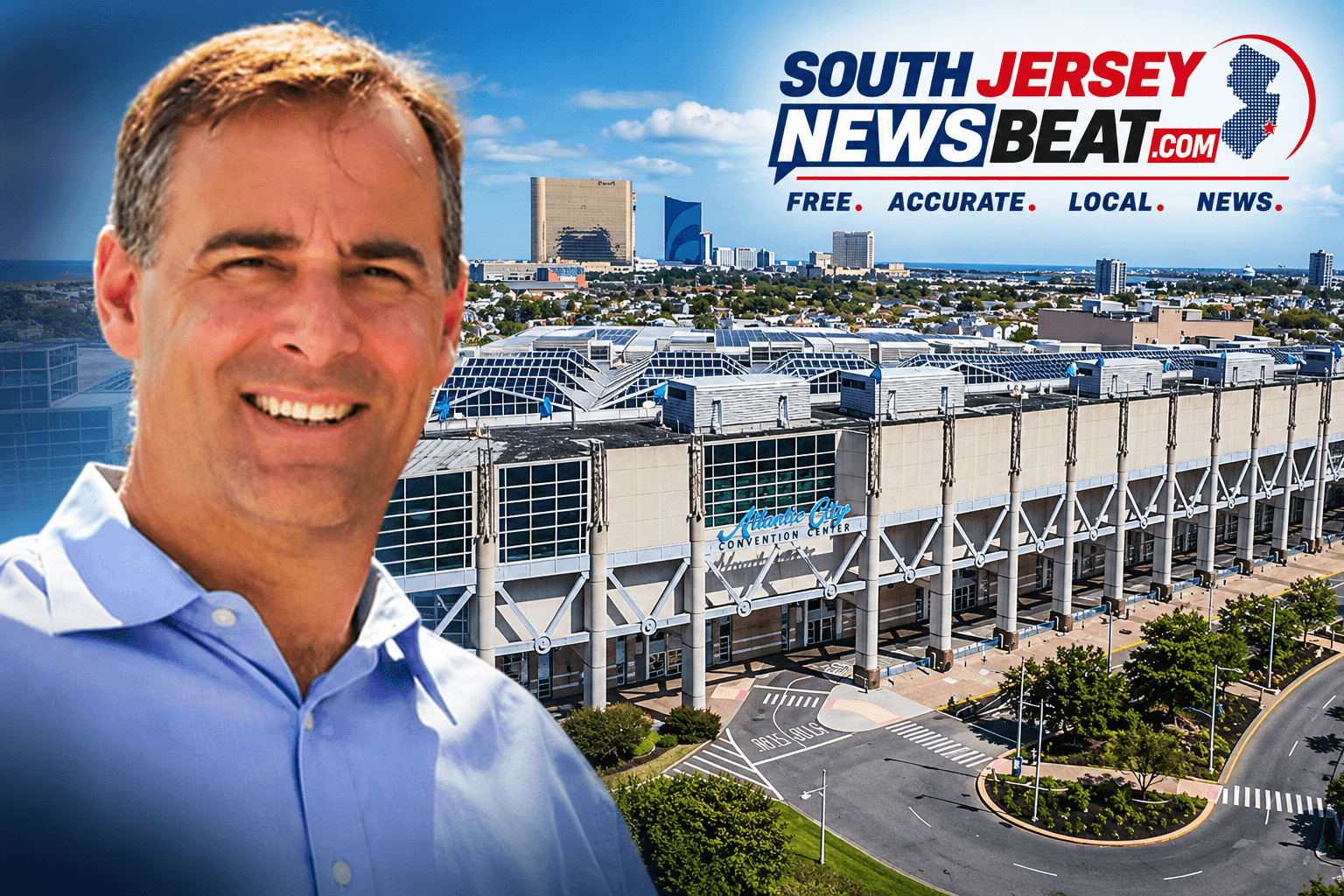
ATLANTIC CITY — Casinos, conventions and concerts have long been used to fill Atlantic City's hotel rooms.
Corporate site-selection consultant John Boyd Jr. says another industry deserves increasing attention as the city looks to diversify its economy: sports tourism.

Boyd, a principal of The Boyd Company Inc., said on The AC Mike Lopez Show on WOND that sporting events can deliver something especially valuable to a tourism economy — visitors who might not otherwise have come to Atlantic City.
“Sports tourism is really the holy grail of tourism,” Boyd said.
“These are unique visitors spending dollars that otherwise would not be spent in Atlantic City.”
Atlantic City's own numbers suggest those visitors are already becoming serious business.
The Atlantic City Sports Commission reported that in its first year it hosted 25 events that generated about 18,000 room nights, 101,000 attendees and $25.1 million in economic impact.
By its 10th year, those numbers had grown to 69 events, nearly 85,000 room nights, more than 302,000 attendees and $114.2 million in economic impact.
For Boyd, that makes sports much more than entertainment.
It's economic development.
Sports events bring visitors who otherwise might not come
The appeal of sports tourism is fairly straightforward.
Athletes come to compete. Their families come with them. Fans travel to watch. They need hotel rooms, eat at restaurants, shop and spend money on entertainment.
Unlike some traditional leisure travel, many of those trips are dictated by where a tournament or competition is being held.
Boyd said that creates an opportunity for Atlantic City to introduce itself to people who weren't necessarily planning a Jersey Shore vacation or casino trip.
He pointed to events ranging from combat sports to offshore racing and other competitions as opportunities to attract different audiences to the resort.
Atlantic City's 2026 sports calendar illustrates the potential.
Visit Atlantic City projected the U.S. Futsal Northeast Regional Championship would generate about $5.8 million in economic impact, while the MAAC men's and women's basketball championships were projected at about $4 million and the NJSIAA state wrestling championships at approximately $4.1 million.
A girls basketball tournament scheduled at the Atlantic City Convention Center this spring was expected to attract 12,000 attendees, generate more than 6,200 room nights and produce about $7.2 million in economic impact by itself.
Those events also help Atlantic City generate business outside the traditional summer tourism season.
Atlantic City has advantages other destinations don't
Boyd said Atlantic City has some of the same characteristics that have helped destinations such as Las Vegas, Orlando and New Orleans capitalize on major sporting events.
A competition isn't the only attraction.
Visitors can stay for restaurants, entertainment, nightlife and other activities before and after the event.
That gives Atlantic City an opportunity to turn a wrestling tournament, basketball event or boxing card into a broader visitor experience.
The city has been increasingly aggressive about pursuing that business. The Atlantic City Sports Commission is offering incentives to organizers in 2026, including signing bonuses and incentives tied to hotel-room nights.
And sports tourism doesn't necessarily require Atlantic City to host the actual competition.
During this summer's World Cup, Atlantic City was designated an official viewing destination, with beachfront watch parties and other fan experiences designed to capitalize on games being played elsewhere in the region.
That model could become increasingly important as major sporting events come to Philadelphia and the New York metropolitan area.
The ‘LeBron effect’
Boyd pointed to perhaps the biggest current example of the economic power of sports just an hour away.
His firm estimates LeBron James' arrival with the Philadelphia 76ers could generate $250 million to $430 million in regional economic activity during his first season.
The estimate has subsequently been reported nationally, including by Fortune.
The projected “LeBron effect” includes increased tourism, hospitality spending, ticket demand, merchandise sales, media exposure and other activity surrounding one of the world's most recognizable athletes.
Boyd believes some of that activity can spill across the Delaware River.
He said South Jersey, the Jersey Shore and Atlantic City are positioned to capture visitors already coming into the Philadelphia region for major sporting events.
That doesn't mean hundreds of millions of dollars suddenly flow from Philadelphia to Atlantic City. Rather, Boyd's argument is that a larger regional sports economy creates opportunities for Atlantic City to market itself to fans, sponsors and businesses already traveling to the area.
More than ‘heads in beds’
Boyd said the economic-development value goes beyond hotel occupancy.
Major sporting events attract corporate sponsors, executives, media organizations and other business decision-makers.
That creates opportunities for networking and promoting Atlantic City to people who might eventually invest or conduct business in the region.
Sports also generate something more difficult to purchase through conventional advertising: exposure.
A nationally televised boxing match, major tournament or high-profile sporting event puts Atlantic City's name and skyline in front of audiences well beyond New Jersey.
Boyd sees those events as another way of selling the city.
And Atlantic City's broader tourism economy demonstrates the scale involved. Visit Atlantic City said meetings, conventions and trade shows generated 328,067 room nights, more than 533,000 attendees and approximately $362.3 million in economic impact during 2025.
Sports can complement that business rather than replace it.
Another piece of Atlantic City's diversification strategy
Boyd's sports-tourism argument fits into a larger concern he raised during his WOND interview: Atlantic City needs to become less dependent on casino gambling as new competition emerges in New York and potentially North Jersey.
He has identified aviation, research and development, higher education, health care, residential construction and office development among the sectors Atlantic City should pursue.
Sports tourism belongs on that list, he said, because it can generate economic activity while taking advantage of infrastructure the city already has — hotels, restaurants, the Convention Center, Boardwalk Hall, the beach and Boardwalk.
And the numbers indicate the strategy has already moved well beyond theory.
From roughly $25 million in annual sports-event economic impact in the Atlantic City Sports Commission's first year to more than $114 million by its 10th, sporting events have become a significant piece of the city's visitor economy.
For Boyd, the opportunity now is to make sports part of something larger: using the people who come to Atlantic City for a game, fight, race or tournament to generate investment, exposure and economic activity that lasts after the final whistle.

About the Author
Karen Johnson
With over 30 years of news experience in major markets like Los Angeles, Denver, and Columbus, Karen now covers our area for South Jersey NewsBeat. She also brings her articulate and conversational news delivery to WOND radio listeners every weekday. Her background includes work with the NBC Radio Network, and she thrives in fast-paced news environments.