With the 2026 midterm elections less than three months away, veteran Republican political consultant Rick Shaftan sees potential opportunities for his party in New Jersey — but he also sees a significant problem.
Republicans need to give their own voters a reason to show up.
Shaftan, president of Neighborhood Research and Media and a longtime Republican pollster and political strategist, offered a candid assessment of the approaching midterms during an appearance on Klein Time with Dan Klein on WOND.
Rather than predicting a Republican wave in New Jersey, Shaftan argued that the political environment remains unsettled and that Republicans face a fundamental challenge: Democratic voters appear more motivated right now.
"Democrats are fired up," Shaftan said.
Republicans, he said, have not done enough to generate the same enthusiasm among their own voters.
That's particularly important in a midterm election, when turnout can determine whether a potentially competitive district actually becomes competitive.
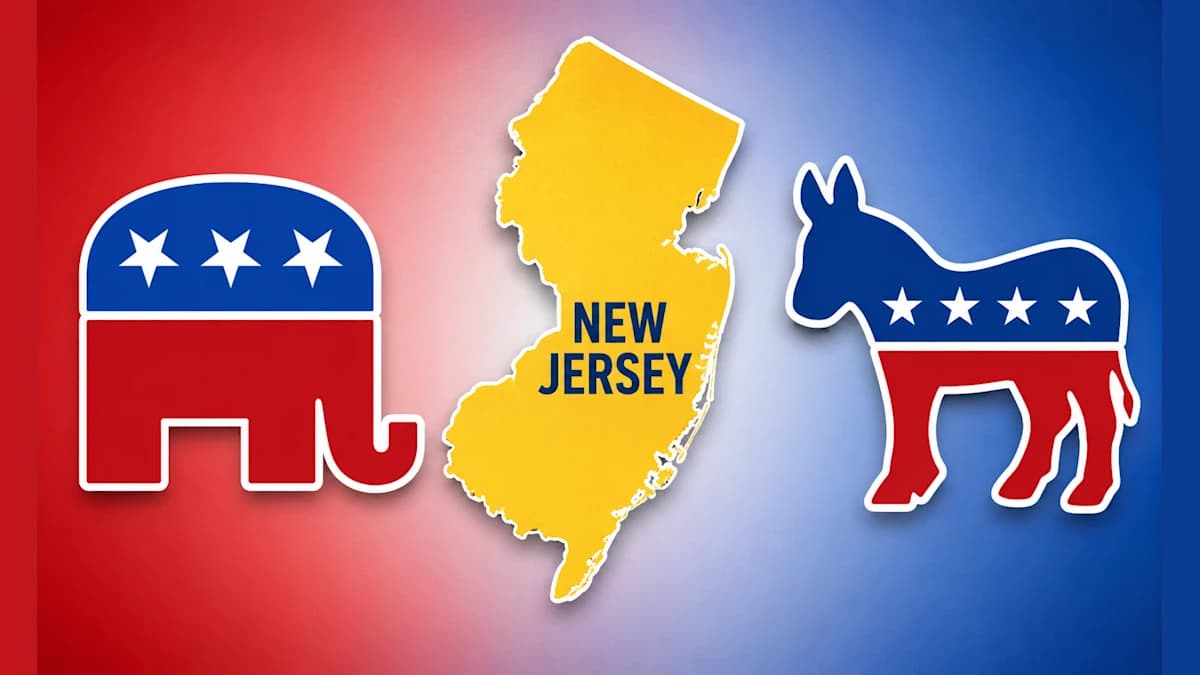
New Jersey voters will elect all 12 members of the state's U.S. House delegation on Nov. 3. Democrats currently hold nine of those seats and Republicans three.
Republicans are also trying to navigate a national political environment in which Democrats are openly targeting control of the House. Former House Speaker Nancy Pelosi said Wednesday that Democrats are aiming to flip 30 seats nationally in November.
For Shaftan, however, the larger question isn't simply which party has the more favorable national environment.
It's which party gets its voters to the polls.
'Elections Are Just About Turnout'
Shaftan said Republicans have accomplishments they can campaign on but haven't necessarily communicated them effectively enough to motivate voters.
And he believes some Republican rhetoric may actually be making the turnout problem worse.
Shaftan, a Republican consultant, criticized members of his own party who repeatedly tell supporters that elections are rigged.
"Every time they will have elections being rigged, it tells our people not to vote," Shaftan said.
The logic, he suggested, is straightforward: If voters become convinced an election's outcome is predetermined or fraudulent, some may decide there is little reason to participate.
"Elections are just about turnout," Shaftan said. "We have to turn our people out."
That makes the argument particularly noteworthy coming from a veteran GOP strategist.
Shaftan isn't dismissing Republican concerns about election procedures. His argument is strategic: Republicans cannot simultaneously convince their voters that participating in elections is futile and expect those voters to turn out in sufficient numbers to win close races.
New Jersey Isn't Being Written Off
Shaftan also pushed back against the assumption that New Jersey should simply be considered politically unwinnable territory for Republicans.
When Klein asked whether he sees a way for New Jersey to "turn around," Shaftan answered quickly.
"Well, yeah," Shaftan said. "But not with the Republican Party you currently have."
His criticism centered on what he sees as a New Jersey Republican establishment too willing to operate within the state's existing political structure rather than attempting to fundamentally change it.
Shaftan also challenged the conventional wisdom surrounding the 2026 election itself.
"2026 [was] a bad year for Republicans — maybe until it's not," Shaftan said. "We don't know."
That uncertainty is important.
Midterm elections have historically created difficulties for the president's party, but individual races can be shaped by candidates, turnout, local issues and changing national conditions.
New Jersey also demonstrated in the 2024 presidential election that its electorate can be more competitive than its congressional delegation might suggest. Democrats retained the state, but Kamala Harris carried New Jersey by only about six percentage points.
A Major Test in the 7th District
One of the races likely to receive substantial attention is New Jersey's 7th Congressional District, where Republican Rep. Tom Kean Jr. is seeking reelection.
Democrats nominated former Navy helicopter pilot Rebecca Bennett in June to challenge Kean. The race is viewed as an important opportunity for Democrats as they attempt to gain the seats necessary to retake control of the House.
New Jersey Republicans also hold the 2nd Congressional District, represented by Rep. Jeff Van Drew and encompassing much of South Jersey, and the 4th District, represented by longtime Rep. Chris Smith.
Shaftan did not provide district-by-district polling during his WOND interview, and his comments should not be interpreted as a prediction that Republicans will flip a specific number of New Jersey congressional seats.
Instead, his argument was broader: Republicans have opportunities, but those opportunities mean little if the party cannot motivate its voters.
Campaigning Has Changed
Shaftan also believes the way campaigns reach those voters has changed dramatically.
He argued that the traditional model of hiring large numbers of strangers to knock on doors or operate phone banks is becoming less effective.
"People don't want phone calls. They don't want people showing up at their houses," Shaftan said. "They communicate through social media, and that's how you have to run your campaigns now."
He made an important exception for local campaigning.
A candidate personally knocking on someone's door — or a neighbor talking to another neighbor — can still be extremely effective, Shaftan said. He pointed to an Ocean City council race as an example of the kind of contest where personal contact can matter.
What he questions is whether campaigns should spend heavily to send paid strangers door to door.
For larger races, Shaftan sees social media as increasingly central to persuasion, enthusiasm and turnout.
He described the modern political communications operation as being driven by a simple daily question:
"What am I going to do to get clicks for my candidate?"
A Critical View of His Own Party
Perhaps what makes Shaftan's assessment most interesting is that he isn't simply predicting Republican success.
He is openly critical of the party he has spent decades helping elect.
Shaftan believes Republicans need stronger messaging, better use of modern communications and, above all, a strategy for motivating their own voters.
And while he sees New Jersey as potentially more politically competitive than its reputation suggests, he isn't convinced the state's existing Republican establishment is prepared to capitalize on it.
With less than three months remaining before Election Day, that leaves Shaftan's assessment of New Jersey's midterms less a prediction than a warning.
Republicans may have opportunities.
But first, he argues, they have to convince Republican voters that showing up on Election Day matters.