A maritime mystery that has puzzled researchers for three decades has finally been resolved. The South West Maritime Archaeology Group has successfully identified a 400-year-old shipwreck discovered off the coast of Devon, England, as the Dutch trading vessel Dom van Keulen, which met its fate during a storm-tossed voyage from Morocco to the Netherlands in the autumn of 1633.
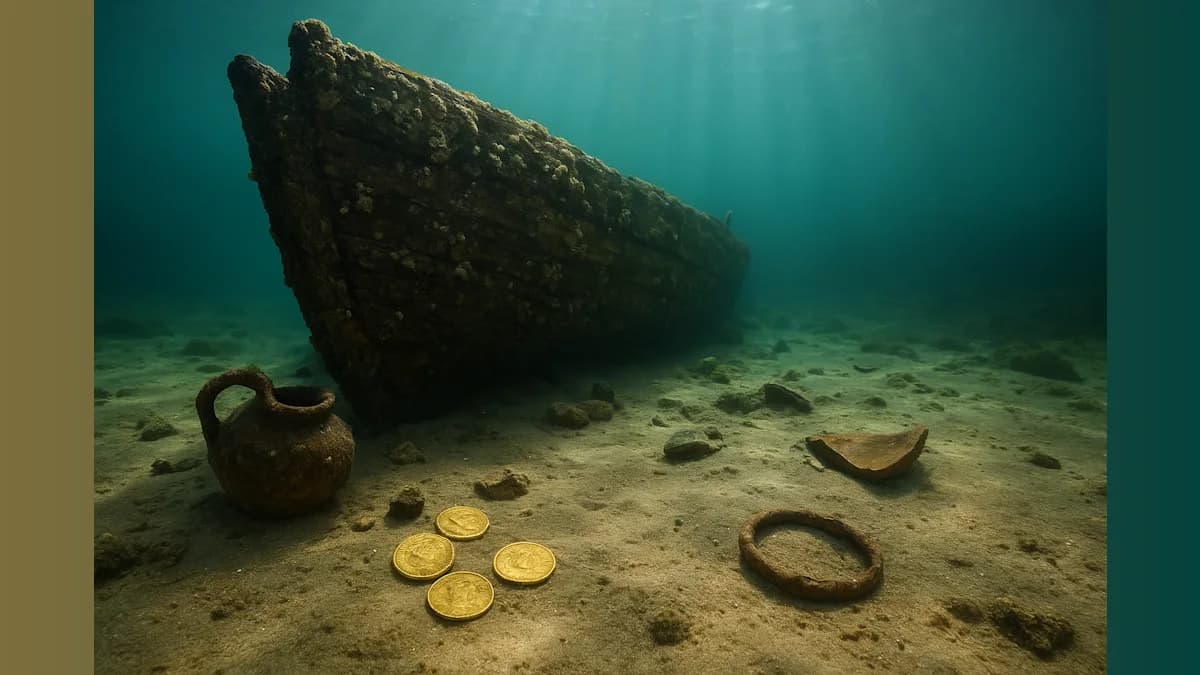
The identification represents a significant breakthrough in maritime archaeology, shedding light on the extensive trade networks that connected Morocco, the Low Countries, and Britain during the 17th century. The vessel's cargo included an impressive 9,000 Barbary ducats—widely used European coins made of gold or silver—along with gold Moroccan coins, 320 goat skins, 150 bags of gum arabic, and 64 bags of saltpeter.
The findings have been detailed in a new publication titled From Morocco to the Coast of England: The Story of the Dom van Keulen and its Remarkable Cargo. Professor Dave Parham, professor of maritime archaeology at Bournemouth University and the book's co-editor, collaborated with the British Museum on the extensive research required to piece together the vessel's history.
According to the research, most of the cargo was salvaged shortly after the ship sank. However, more than 400 coins remained on the seabed until their discovery by the South West Maritime Archaeology Group in 1995. These coins, along with other artifacts recovered from the wreck, are currently on display at the British Museum, providing tangible evidence of the flourishing maritime commerce of the era.
Independent Historian Ian Friel played a crucial role in identifying the vessel by uncovering documents in the National Archive that detail the Dom van Keulen's ill-fated voyage. The historical records reveal that the crew encountered severe weather conditions during their journey. The ship sprang a leak and ultimately sank close to the coastal town of Salcombe, off the south coast of England. Despite the vessel's loss, the entire crew survived the disaster.
The 400 recovered coins all originated along the Barbary Coast, the historical term for the North African coastline that corresponds to modern-day Morocco. The treasure provides valuable insight into the wealth and economic power of the Sa'dian Sharifs, an Arab dynasty that ruled Morocco from 1549 to 1659. The discovery illuminates the sophisticated trade in African gold that characterized this period of history.
Jeremy D. Hill, head of research at the British Museum, emphasized the significance of the find and the questions it raised about how African gold came to rest beneath the waters off the Devon coast. Answering those questions required years of collaboration among a team of experts from multiple disciplines, combining archaeological evidence with archival research and numismatic analysis.
The successful identification of the Dom van Keulen demonstrates the wealth of historical information still waiting to be discovered beneath the seas surrounding Britain. The wreck serves as a time capsule, preserving evidence of the complex international trade relationships that shaped the early modern world and connected distant regions through maritime commerce.
The artifacts on display at the British Museum offer the public a rare opportunity to view treasures from the Moroccan Sa'dian dynasty, recovered from Salcombe Bay and preserved for nearly four centuries beneath the waves. The exhibition provides a tangible connection to the merchants, sailors, and traders who risked their lives navigating treacherous waters in pursuit of profit and the exchange of goods between continents.