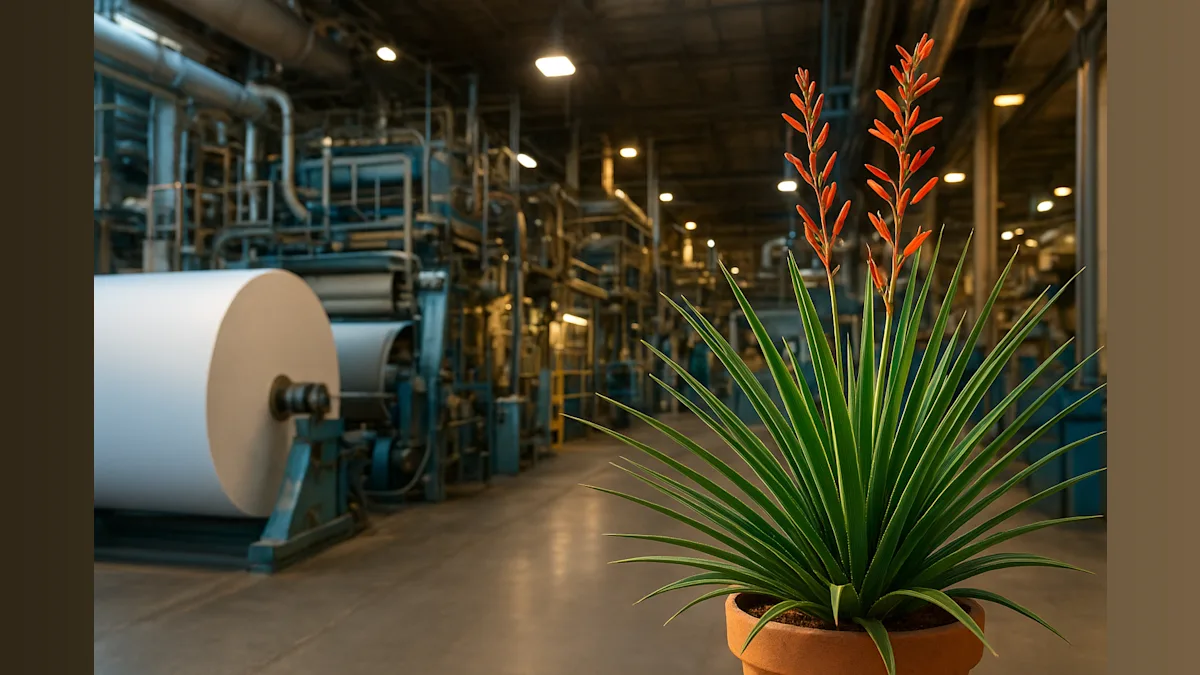
A major consumer products manufacturer has announced a potential breakthrough that could transform the paper industry while addressing environmental concerns tied to deforestation. Kimberly-Clark, the company behind Scott paper towels, Huggies diapers, and Cottonelle toilet paper, has developed a process to manufacture tissue products from hesperaloe, a hardy desert succulent that thrives in arid climates.
The discovery represents two decades of research and development, with the company investing $250 million in field and laboratory work to identify viable alternatives to traditional wood fiber. Craig Slavtcheff, the company's top research-and-development officer, characterized the finding as both a "Goldilocks discovery" and a "moonshot" when speaking to the Wall Street Journal, though he cautioned that commercial-scale testing remains ongoing.
The hesperaloe plant, a long-leaved succulent native to arid environments, emerged as the leading candidate after extensive testing of alternative materials. Jeff Melucci, Kimberly-Clark's top executive for strategy, explained the exhaustive search process to the Journal. The company evaluated 70 different substances, ranging from wood straw to bamboo, before researchers identified hesperaloe growing at an abandoned state test crop facility in Arizona.
The environmental implications of successfully replacing wood fiber with hesperaloe cultivation extend beyond reducing pressure on forests. The plant's ability to grow in desert conditions could decrease water consumption in agricultural production, particularly relevant as global temperatures rise. Converting arid land to hesperaloe farming might also provide an economic tool to combat desertification in vulnerable regions.
Preserving forested areas that would otherwise be logged for paper production could result in hundreds of thousands of additional tons of carbon dioxide removed from the atmosphere annually in major timber-producing nations such as Canada and Sweden. Trees sequester carbon as they grow, making their preservation a climate benefit beyond simply reducing emissions from logging operations.
The company faces significant challenges in scaling hesperaloe production to compete with established wood-fiber supply chains. Decades of efficiency improvements and distributed market knowledge have made conventional logging and pulping operations highly cost-effective. Slavtcheff told the Wall Street Journal that the company has not yet estimated the potential costs of a commercially viable crop-to-pulp supply chain, though preliminary testing suggests the process could achieve price competitiveness with wood.
Kimberly-Clark has been actively pursuing alternatives to wood fiber for environmental reasons, with the stated goal of eventually eliminating logging from its supply chains entirely. The company's current focus centers on a pilot facility in Yuma, Arizona, where researchers are testing both the cultivation and pulping of hesperaloe at larger scales. Results from this facility will determine whether the desert plant can transition from laboratory success to industrial reality.
The hesperaloe initiative joins a growing list of efforts by major corporations to develop sustainable alternatives to traditional raw materials. While hemp and bamboo have received attention as potential wood-fiber substitutes, the desert succulent's unique characteristics—particularly its drought tolerance and growth in marginal lands—could offer advantages that other alternatives lack.
The timeline for commercial production remains uncertain as Melucci and Slavtcheff await results from the Yuma pilot program. Success would mark a significant shift in how consumer paper products are manufactured, potentially reshaping agricultural practices in arid regions while reducing the environmental footprint of an industry that produces billions of rolls of toilet paper and paper towels annually.