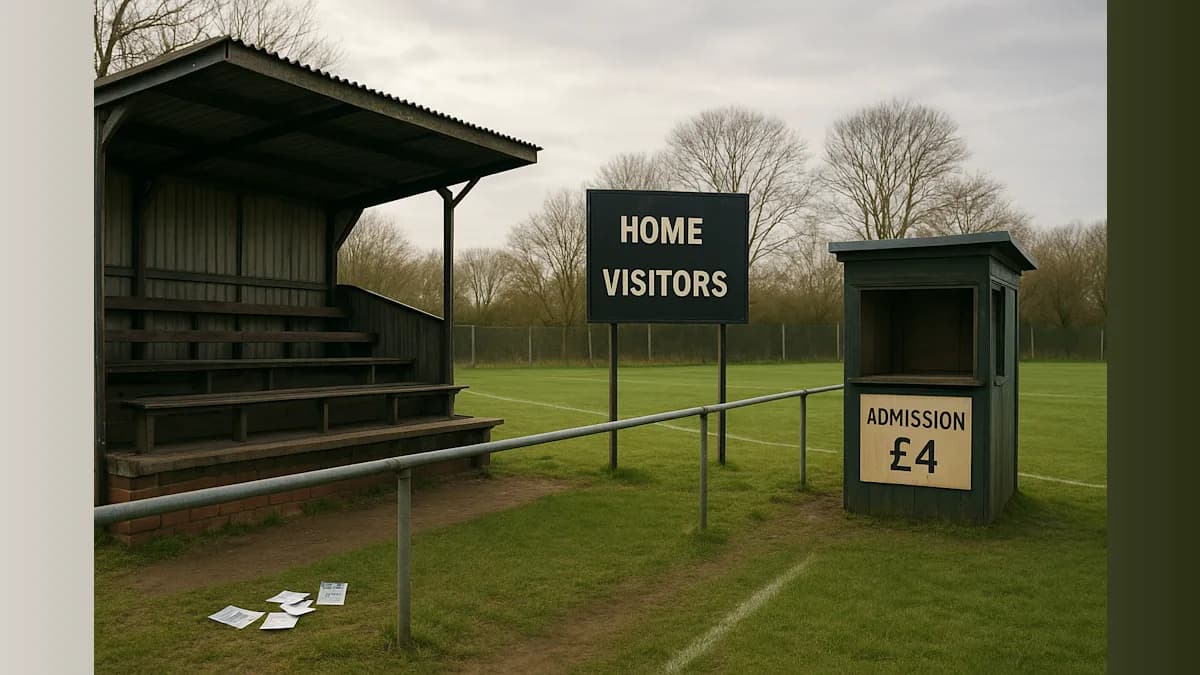
A remarkable shift is underway in English football as supporters abandon the Premier League's escalating prices and corporate atmosphere for something more accessible: non-league clubs where tickets cost less, fans stand closer to the pitch, and the experience feels authentically local.
The numbers tell a compelling story. National League South attendance reached a decade-high average of 1,221 spectators during the 2024/25 season, representing a 134% increase since 2014/15. The Isthmian Premier Division saw similar growth, with average crowds of 764 marking a 94% rise over the same timeframe.
The exodus from top-flight football stems from years of mounting frustration. According to the Football Supporters' Association, ticket prices at Premier League matches climbed far faster than inflation during the period spanning the late 1990s through the early 2000s. More recently, the organization documented price increases at 19 of the league's 20 clubs for the 2024/25 season, with 13 clubs raising prices again the following year. League data shows Premier League ticket costs have jumped 20% since the COVID-19 pandemic, and 71% of supporters believe traditional fans are being excluded by pricing.
Ownership structures have intensified the disconnect. Wealthy individuals from the United States, sovereign wealth funds from the Middle East, and multinational investment groups now control most Premier League teams. The financial stakes have become staggering, with Manchester United valued above £4 billion, while Liverpool, Manchester City, and Arsenal each command valuations exceeding £3 billion.
For Andy Chinneck, who supports both Manchester United and Real Bedford, the contrast is stark. "At United, unless you're lucky, wealthy or very organised, you can feel like a customer at a global entertainment business," Chinneck told Positive News. "At Real Bedford, I can turn up with mates, have a pint, stand near the pitch and feel like I'm actually part of the club. Having lived in Bedford most of my life it feels like it's brought a much needed sense of local community back to the town."
Real Bedford represents one of non-league football's most dramatic success stories. Local entrepreneur and podcaster Peter McCormack purchased Bedford FC in 2021 when the club competed in the 10th tier of English football. After renaming it Real Bedford, McCormack set an ambitious goal of climbing the football pyramid while maintaining local identity.
"Bedford has always had the people, the pride and the appetite for football, but it never had a club that matched the size of the town," McCormack told Positive News. "The ambition is huge, but it has to feel local first. If people in Bedford don't feel this belongs to them, then it doesn't work."
The club has secured three consecutive promotions and now competes in the seventh tier, regularly drawing crowds approaching 1,000 to Ledger Stadium. On a recent bank holiday Monday, nearly 500 supporters traveled from Bedford to Spalding, Lincolnshire, joining more than 2,700 fans packed into the Sir Halley Stewart Playing Field for a playoff match. Though Real Bedford ultimately lost 4-2 in extra time, the traveling support demonstrated the passionate following the club has cultivated.
The movement toward supporter-owned clubs gained momentum in 2005 with the founding of FC United of Manchester. Created by Manchester United fans outraged by American billionaire Malcolm Glazer's takeover, the club operates on a one-member, one-vote democratic model. The organization now counts 2,475 co-owners, comprising 2,137 adult members and 338 junior members.
"We are making football affordable for ordinary football supporters," FC United spokesman Jules Spencer told Positive News. "Many of us can no longer afford to go to Premier League games with our families, but we can afford to go and watch FC United where the quality of entertainment on offer in non-league football is real value for money."
FC United has risen to the seventh tier and consistently attracts crowds exceeding 3,000, making it among the best-attended non-league clubs in England.
James Doe, founder of Non-League Day, an initiative encouraging Premier League supporters to experience lower-tier football, attributes the growth to accessibility and authenticity. "People want to watch non-league football because they are discovering that it's a lot better than they think," Doe told Positive News. "It's very accessible – clubs are nearby, admission, food and drink are affordable, it's far more child friendly and you can get really close to the action. You can even change ends at half time."
Doe emphasized that many people have only experienced football through television broadcasts that suggest no alternatives exist to elite competition. "When you go to a local club you realise that's not the case and can quickly get hooked," he told Positive News. "Why stay at home when you can be out with your friends being part of something?"
The trend reflects a broader desire among supporters to reclaim football as a community experience rather than a premium entertainment product. As Premier League clubs pursue global audiences and maximize revenue, non-league football offers an alternative where fans can afford to bring their families, stand near the touchline, and feel genuinely connected to the club representing their town.