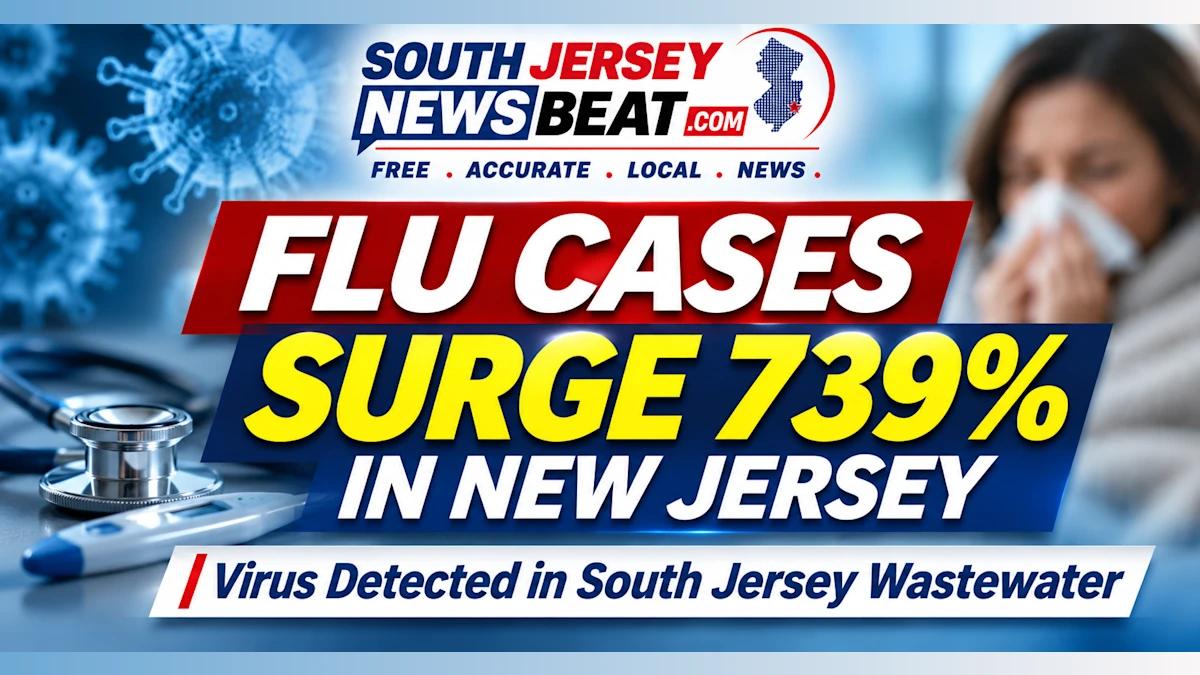
Flu Cases Surge More Than 700% in New Jersey as Virus Spreads Across South Jersey
State reports 2,508 confirmed cases in one week, with hospitalizations rising and children accounting for nearly half of infections. Wastewater testing detects influenza in Atlantic County and other South Jersey communities.
ATLANTIC CITY, N.J. — New Jersey is experiencing a significantly earlier and more widespread start to flu season than last year, with laboratory-confirmed influenza cases more than eight times higher than at the same point in 2025 and wastewater testing detecting the virus in communities across South Jersey.
According to the New Jersey Department of Health, the state recorded 2,508 laboratory-confirmed influenza cases during the week ending October 31, compared with just 299 during the corresponding week last year.
That represents an increase of approximately 739%, raising concerns about the potential impact on schools, hospitals, nursing homes and families as the state approaches the winter months.
The increase is also accelerating. Just one week earlier, New Jersey reported 1,283 confirmed flu cases, meaning the weekly total nearly doubled.
In its latest available respiratory illness surveillance report, released November 5, the Department of Health warned that seasonal influenza activity was rising and exceeding levels observed at the same time last year.
The increase is occurring considerably earlier than during the previous flu season, when New Jersey did not surpass 2,500 weekly confirmed cases until early December.
Influenza Detected in Atlantic County Wastewater
The growing number of cases is not limited to northern and central New Jersey.
An analysis of federal wastewater surveillance data published Thursday by SNJ Today found influenza A in samples collected during the final two weeks of October from treatment facilities in Atlantic, Burlington, Camden, Cumberland and Salem counties.
During the corresponding period last year, the virus was detected at only one of those monitored facilities, located in Atlantic County.
The findings suggest that influenza is circulating across a broader portion of South Jersey earlier in the season.
Wastewater monitoring allows public health officials to identify viruses circulating in a community even when infected residents have not sought medical care or undergone testing.
The Centers for Disease Control and Prevention uses wastewater surveillance to monitor influenza A, COVID-19 and respiratory syncytial virus, commonly known as RSV.
However, wastewater results do not establish how many people are infected, and detection at a treatment facility does not necessarily mean an entire county is experiencing high transmission.
Cape May County and Gloucester County do not have wastewater monitoring facilities represented in the CDC data examined for the report.
That does not mean influenza is absent from those counties. It means comparable wastewater results are unavailable through that surveillance system.
The state does not currently provide a publicly accessible breakdown of laboratory-confirmed influenza cases by individual county in the weekly figures cited in this report.
Hospitalizations Are Also Increasing
The rising number of infections is accompanied by an increase in flu-related hospitalizations.
New Jersey reported 253 influenza-associated hospitalizations during the week ending October 31, compared with 152 the previous week.
That represents an increase of approximately 66%.
The Department of Health said adults 65 and older continue to experience the greatest burden of influenza-associated hospitalizations.
Emergency departments are also seeing more patients with flu.
Influenza accounted for approximately 1.6% of emergency department visits statewide during the reporting week, compared with 0.3% during the same period last year.
Health officials are monitoring the trend as the state enters the months when respiratory illnesses traditionally become more widespread.
While the early increase is concerning, it does not necessarily establish that the entire 2026-27 flu season will ultimately be more severe than previous seasons.
Children and Teenagers Account for Nearly Half of Cases
School-age children are among the groups experiencing substantial influenza activity.
According to state surveillance data, children and teenagers ages 5 through 18 accounted for 755 confirmed cases during the week ending October 31, the largest total among the reported age categories.
Another 366 cases involved children ages 4 and younger.
Together, those two groups accounted for 1,121 cases, or approximately 45% of the statewide total.
New Jersey also reported 14 influenza outbreaks in schools during the same week.
The Department of Health said recently reported respiratory illness outbreaks in schools were attributable to influenza, while outbreaks in long-term care facilities involved influenza and COVID-19.
The figures underscore the importance of monitoring symptoms among children, particularly as schools approach Thanksgiving and the winter holiday season.
Influenza can spread rapidly in classrooms, child care centers and other environments where people spend extended periods in close contact.
Common symptoms include fever, chills, cough, sore throat, muscle aches, headaches and fatigue. Some children may also experience vomiting or diarrhea.
Not everyone with influenza develops a fever.
What South Jersey Families Should Know
Public health officials continue to recommend annual influenza vaccination as an important way to reduce the risk of infection and serious complications.
The Centers for Disease Control and Prevention recommends a seasonal flu vaccine for everyone 6 months of age and older, with limited exceptions.
Although September and October are generally recommended for vaccination, health officials emphasize that getting vaccinated later in the season can still provide protection.
Vaccines are available through many physicians' offices, pharmacies and community health providers.
The CDC also recommends several everyday precautions to help reduce the spread of respiratory illnesses:
Stay home when sick and avoid close contact with others until symptoms are improving and fever has been absent for at least 24 hours without fever-reducing medication.
Wash hands frequently with soap and water.
Cover coughs and sneezes.
Improve indoor ventilation when possible.
Clean frequently touched surfaces.
Consider additional precautions, including wearing a well-fitting mask, particularly around people at higher risk of severe illness.
People who develop flu symptoms and are at increased risk of complications should contact a health care provider promptly.
Prescription antiviral medications can help treat influenza, particularly when started within the first 48 hours after symptoms begin. Treatment may still be beneficial later for people with severe illness or elevated risk.
Groups at greater risk of serious complications include older adults, young children, pregnant women and people with certain chronic medical conditions.
Difficulty breathing, chest pain, confusion, severe dehydration or other serious symptoms warrant immediate medical attention.
COVID-19 and RSV Also Being Monitored
Influenza is not the only respiratory illness being tracked by New Jersey health officials.
The state reported 1,389 COVID-19 cases during the week ending October 31, with COVID-related emergency department visits and hospital admissions also increasing.
Hospitalizations associated with COVID-19 continue to be concentrated among adults 65 and older.
RSV activity remained relatively low during the reporting period, although hospital admissions increased from the previous week. The greatest hospitalization burden from RSV was among children ages 4 and younger.
The simultaneous circulation of multiple respiratory viruses can place additional demands on health care facilities, particularly when infections increase during the same period.
An Early Warning for South Jersey
For Atlantic and Cape May County residents, the statewide increase and regional wastewater findings serve as an early reminder that influenza is already circulating as the holiday season approaches.
The latest figures reflect the week ending October 31, rather than infections occurring on November 12, and subsequent surveillance reports may show additional changes.
State health officials continue to monitor infections, emergency department visits, hospitalizations, outbreaks and wastewater activity to assess how the season is developing.
The Department of Health's latest findings indicate that influenza activity is increasing substantially earlier than last year.
With Thanksgiving less than two weeks away, public health officials are encouraging residents to take preventive measures, especially when visiting older relatives, young children and others who may be vulnerable to serious respiratory illness.

About the Author
Karen Johnson
With over 30 years of news experience in major markets like Los Angeles, Denver, and Columbus, Karen now covers our area for South Jersey NewsBeat. She also brings her articulate and conversational news delivery to WOND radio listeners every weekday. Her background includes work with the NBC Radio Network, and she thrives in fast-paced news environments.