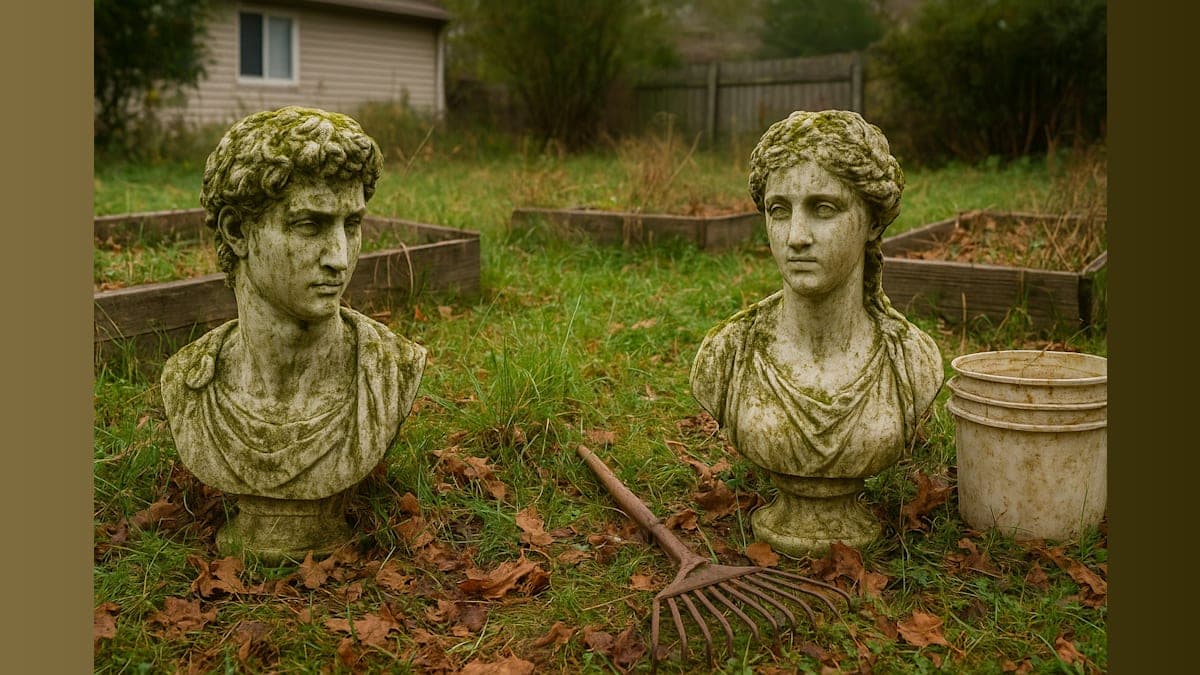
What appeared to be deteriorating concrete garden ornaments has proven to be a remarkable find of historical significance. Two chipped and weathered busts, long relegated to the overgrown corners of a Kent, England property, have been identified as authentic 18th-century Italian marble sculptures, commanding substantial value at auction.
The discovery occurred during an estate clearance in Kent, where a specialist examining the property noticed the neglected statues partially obscured by vegetation. The homeowner had utilized the pieces as garden decorations for years, completely unaware of their true composition and historical provenance. The busts' deteriorated condition and outdoor placement had concealed their genuine nature beneath layers of grime and environmental damage.
Upon closer examination, the estate-sale expert recognized characteristics inconsistent with modern concrete reproductions. The sculptures were subsequently authenticated as Italian marble works from the 1700s, a period renowned for exceptional craftsmanship in sculptural arts. The authentication process revealed the busts to be legitimate period pieces rather than the mass-produced garden ornaments the owner had assumed them to be.
The revelation transformed what the homeowner considered worthless yard decorations into valuable historical artifacts. Following authentication, the marble busts were consigned for sale, ultimately generating thousands of pounds for the fortunate property owner. The exact sale price has not been disclosed, though 18th-century Italian marble sculptures typically command premium prices in the antiques market due to their rarity and artistic merit.
This discovery underscores the potential value hidden in seemingly ordinary household items and garden decorations. Experts recommend professional evaluation of older decorative pieces, particularly those with uncertain origins or unusual weight and texture characteristics. The Kent finding serves as a reminder that valuable antiques may be concealed in unexpected locations, awaiting recognition by trained specialists who can distinguish authentic period pieces from modern reproductions.