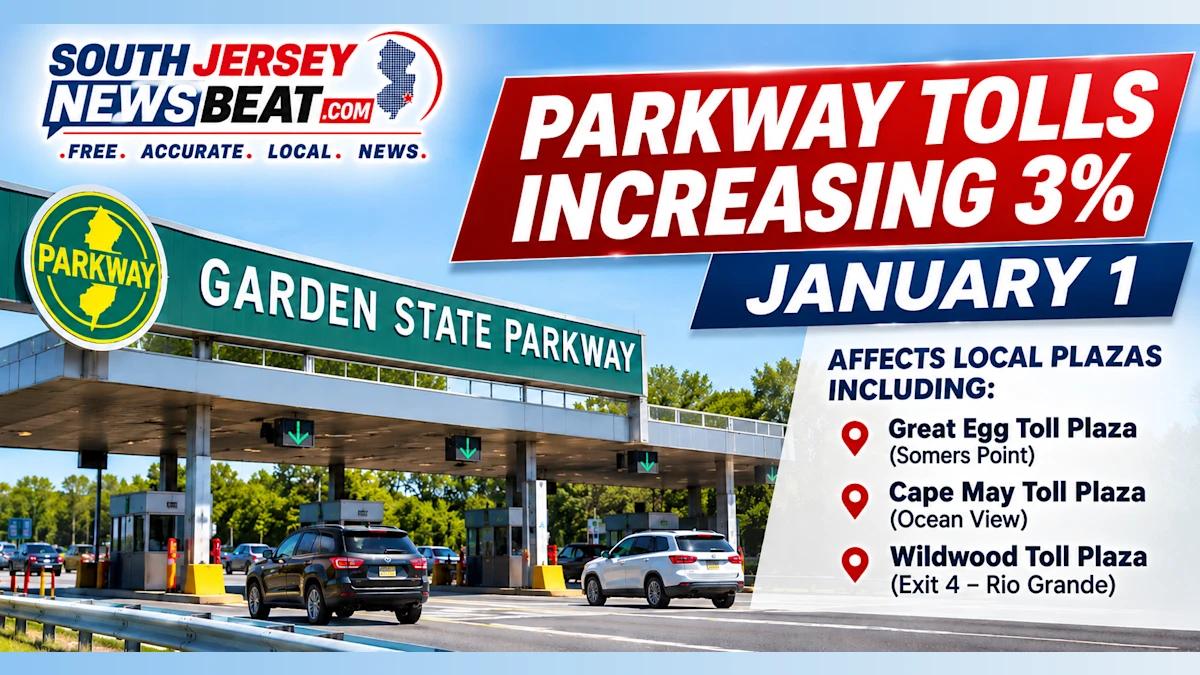
The latest 3% increase will affect drivers at the Great Egg, Cape May and Wildwood toll plazas as New Jersey approves a nearly $2.9 billion transportation budget.
ATLANTIC COUNTY, N.J. — South Jersey motorists will be paying more to travel the Garden State Parkway beginning January 1, 2027, following approval of another 3% toll increase by the New Jersey Turnpike Authority.
The increase, approved as part of the authority's 2027 budget on November 17, marks the sixth consecutive year of higher tolls on the Garden State Parkway and New Jersey Turnpike.
For drivers in Atlantic and Cape May counties, the increase will affect several familiar toll locations, including the Great Egg Toll Plaza in Somers Point, the Cape May Toll Plaza in Ocean View and the Wildwood entrance ramps at Exit 4 in Rio Grande.
The increase comes as residents continue to face higher costs for electricity, insurance, groceries and other everyday expenses.
Local Toll Plazas Affected
The Garden State Parkway serves as a major transportation route for South Jersey residents, commuters and millions of visitors traveling to the shore each year.
Among the local toll locations affected by the increase are:
Great Egg Toll Plaza — Somers Point, Atlantic County: A major toll location used by motorists traveling between Atlantic and Cape May counties.
Cape May Toll Plaza — Ocean View, Upper Township: A key toll location for motorists traveling through northern Cape May County.
Wildwood Toll Plaza — Exit 4, Rio Grande: Located at the Parkway entrance ramps serving the Wildwoods and surrounding communities.
The Turnpike Authority has not yet published its final 2027 toll schedule showing the exact new charges at individual plazas.
However, previous increases provide an indication of how the adjustments affect local drivers.
At the Cape May Toll Plaza in Ocean View, the passenger vehicle toll increased from $2.17 to $2.25 for E-ZPass users between 2025 and 2026. The cash toll rose from $2.30 to $2.40.
At the Wildwood entrance ramps in Rio Grande, E-ZPass tolls increased from 76 cents to 79 cents during the same period, while cash tolls rose from 85 cents to 90 cents.
Although the authority's annual adjustment is 3%, individual tolls can increase by slightly more or less because charges are rounded to the nearest applicable increment.
For motorists who regularly travel the Parkway, even relatively small increases can add up over the course of a year.
Nearly $2.9 Billion Budget Approved
The New Jersey Turnpike Authority's 2027 budget anticipates nearly $2.9 billion in revenue, an increase of approximately $127 million over the previous year's projections.
The authority expects toll revenue to increase by 4.1% on the Garden State Parkway and 4.8% on the New Jersey Turnpike.
Operating expenses are projected to reach approximately $845 million, an increase of 3.9%.
The authority also plans nearly $1.5 billion in capital spending for roadway improvements, bridge rehabilitation and other infrastructure projects.
The largest expenditures include work on the Newark Bay Bridge and improvements to other major transportation infrastructure in northern New Jersey.
According to the authority's spending plans, none of the largest capital projects identified for 2027 are located in Cape May County.
That distinction may raise questions among South Jersey motorists about how much of the additional toll revenue collected locally will be reinvested in transportation improvements in their communities.
The authority's overall capital program includes maintenance and rehabilitation work throughout the Parkway and Turnpike systems.
Sixth Consecutive Year of Toll Increases
The latest increase is part of an annual toll-indexing policy adopted by the Turnpike Authority in 2020.
The policy allows toll rates to increase by 3% annually to help fund transportation infrastructure, maintenance and long-term capital improvements.
The 2027 increase follows another 3% adjustment that took effect January 1, 2026.
The authority has defended the increases as necessary to maintain aging infrastructure and finance major construction projects.
However, the cumulative effect has made Parkway travel considerably more expensive than it was before the indexing policy began.
According to NJ Advance Media, Garden State Parkway tolls will have increased approximately 45% since the authority's major toll adjustments and indexing program began in 2020.
The authority's latest budget also includes approximately $1.1 billion for debt payments, reflecting the substantial cost of financing major transportation projects.
Another Expense for South Jersey Commuters
The Garden State Parkway is particularly important in Atlantic and Cape May counties, where it connects residential communities, employment centers, hospitals, shopping districts and shore destinations.
For many workers, including those employed in Atlantic City's casino industry and Cape May County's tourism and hospitality businesses, the Parkway is a regular part of their commute.
Higher tolls also affect businesses that depend on deliveries and transportation, as well as visitors traveling to South Jersey's beaches and resorts.
While the exact cost of the 2027 increase will depend on the toll plaza, vehicle classification and payment method, the additional charges will become part of the everyday transportation expenses faced by local drivers.
The Turnpike Authority is expected to publish updated toll schedules before the January 1 implementation date.
For now, motorists traveling through the Great Egg, Cape May and Wildwood toll plazas should prepare to pay more beginning with the new year.

About the Author
Karen Johnson
With over 30 years of news experience in major markets like Los Angeles, Denver, and Columbus, Karen now covers our area for South Jersey NewsBeat. She also brings her articulate and conversational news delivery to WOND radio listeners every weekday. Her background includes work with the NBC Radio Network, and she thrives in fast-paced news environments.