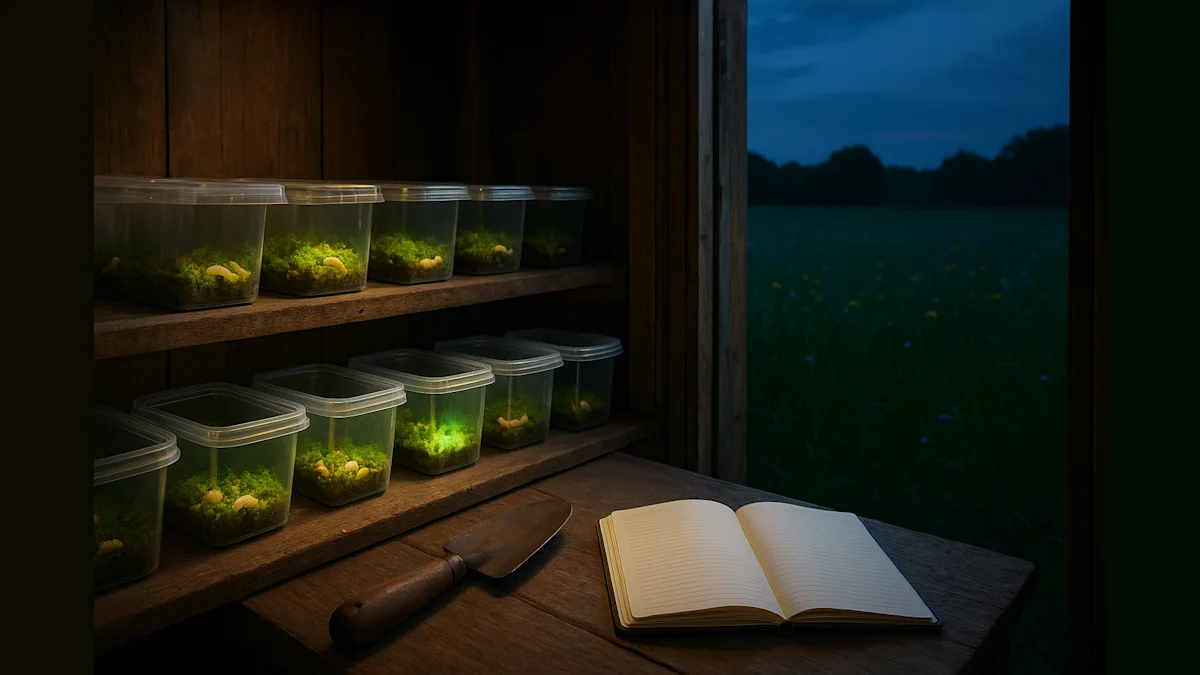
A century after glowworms vanished from a North Yorkshire wetland, the insects are being reintroduced through the unpaid efforts of a local wildlife enthusiast who raises their larvae in a garden shed. Peter Cooper, a volunteer, has counted 1,900 larvae in his shed that are scheduled for release at Nosterfield Nature Reserve this year, according to a report by the Good News Network.
Nosterfield Nature Reserve, described as one of North Yorkshire's most important wetland wildlife sites, spans roughly 600 acres across former limestone quarries. The nonprofit Lower Ure Conservation Trust has rewilded and naturally reclaimed portions of the site, shaping terrain suited to the Lampyridae family, the bioluminescent insects commonly known as fireflies, lightning bugs, and glowworms.
The poet Edmund Bogg likened the insects to "lamps lit by the hands of fairy folk." Simon Warwick, manager of the Nosterfield reserve, credited Cooper's "raw passion and enthusiasm" for restoring the population after its long absence, the Good News Network reported.
"They are incredibly rare in the region and I can't tell you how excited the volunteers have been about it," Warwick told the Guardian.
The Guardian reported that glowworms were once plentiful throughout Britain but have disappeared from large portions of the country and are notoriously hard to re-establish. Cooper and fellow volunteers, known as "glow-getters," have gradually developed the delicate techniques required to rear larvae in captivity, expertise they are now applying to the Yorkshire landscape.
Cooper has said the project cannot be declared a success until the wild-bred descendants of the shed-reared larvae mature and produce their own light in the Yorkshire darkness, a milestone expected around 2030. Until then, the reintroduction remains an experiment whose outcome will be measured years from now.