As midterm elections draw near, Americans are encountering a familiar seasonal phenomenon: an avalanche of polling data that can generate more anxiety than clarity. In a report published Tuesday by NPR, political correspondent Domenico Montanaro outlined several principles for interpreting surveys as early voting gets underway across the country.
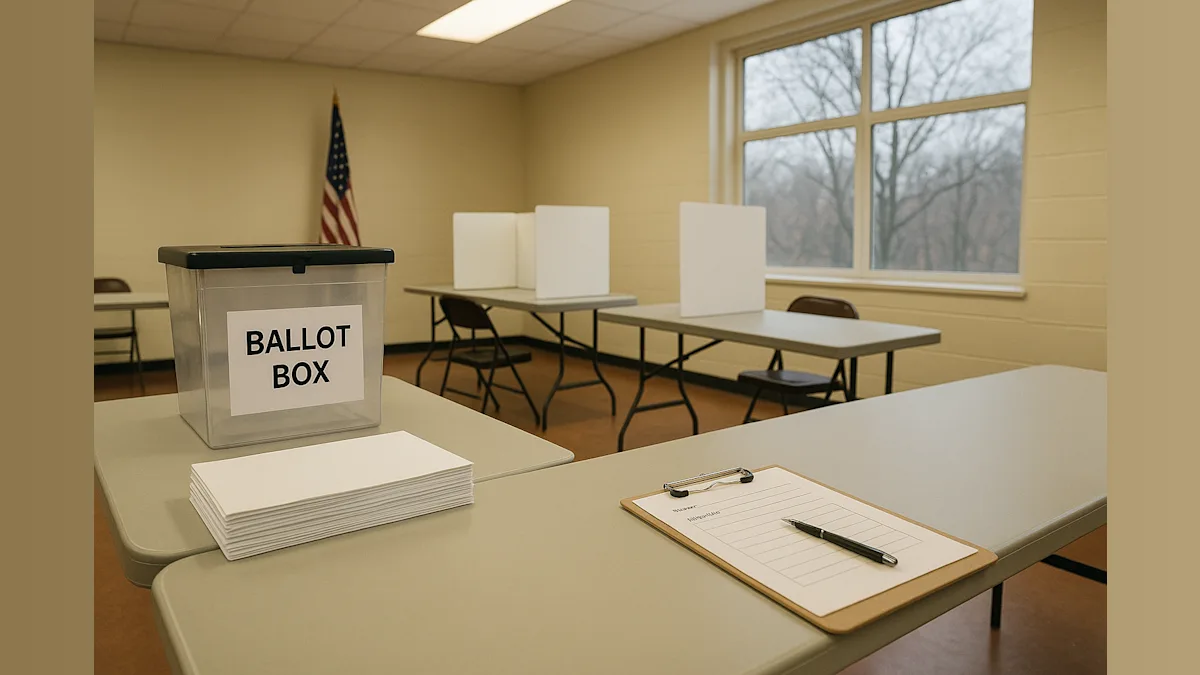
Residents in Arlington, Va., began casting early-voting ballots on Sept. 18, the first day of early voting in that state, according to NPR. The scene there reflects a broader national trend as voters head to the polls ahead of Election Day.
Montanaro's central argument is that the polls, taken together, indicate a clear directional shift. Over the past several months, the political momentum has favored Democrats, who are now positioned as the leading contenders to take control of the House of Representatives and have moved within competitive range of the Senate — a scenario that appeared unlikely when the election cycle began. This assessment, Montanaro wrote, draws not only on survey data but also on discussions with campaign operatives and firsthand reporting from the field.
For local voters trying to make sense of the constant stream of poll numbers, Montanaro offered five key points to keep in mind.
First, polls are not designed to forecast outcomes. They capture a moment in time — specifically, the period during which the survey was conducted — and should be understood as snapshots rather than prophecies.
Second, polls lack the precision that many people assume they possess. Montanaro described them as resembling fuzzy targets rather than sharp measurements. Margins of error matter: a candidate with a 2-point advantage may not actually be leading at all. If a survey carries a 3 percentage-point margin of error, the same candidate could be ahead by 5 points or trailing by 1.
Third, transparency is essential when evaluating pollsters. This election cycle has seen a surge of lower-quality polls, some generated by artificial intelligence, others from organizations lacking established track records, and at least one pollster exposed as fraudulent. Legitimate pollsters publish detailed methodology pages explaining how their surveys were conducted. The absence of such documentation, Montanaro wrote, should be treated as a warning sign.
Fourth, the reliability of state-level polling has diminished. As local journalism has contracted, so too has the frequency and rigor of well-conducted statewide surveys. Local news organizations have less funding available to commission polling, which is an expensive undertaking. As a result, Montanaro advised treating state poll averages with skepticism.
Fifth, voters should look past the headline numbers. Horse-race polling, Montanaro argued, is not the most valuable application of survey research. Polls are most useful when they track public attitudes over time, revealing how Americans feel about important issues. Beneath the top-line figures lies a wealth of information: job approval ratings, which voters are most motivated to cast ballots, and which political party the public trusts to address the concerns that matter most to them, among other insights.
Montanaro emphasized that many of this year's races are likely to be decided by narrow margins. With millions of ballots still uncast, he wrote, anyone claiming to know the precise outcome is not being truthful.
To illustrate his point about the limits of horse-race coverage, Montanaro offered an analogy: focusing exclusively on which candidate is ahead or behind is comparable to eating only the decorative toppings off a bowl of ice cream. Many people enjoy those toppings, he noted, but consuming nothing else leaves a person with a mouthful of wax and none of the substance beneath.
For local readers navigating the coming weeks of campaign coverage, the takeaway is straightforward: poll numbers will continue to arrive in abundance, but they are best understood as imperfect indicators of a moving picture. The full story of the election will be written not by surveys, but by voters casting ballots between now and Election Day.