Wildlife rehabilitators are employing an innovative treatment method to save a rare summer visitor after the bird suffered nerve and ligament damage in a roadside collision.
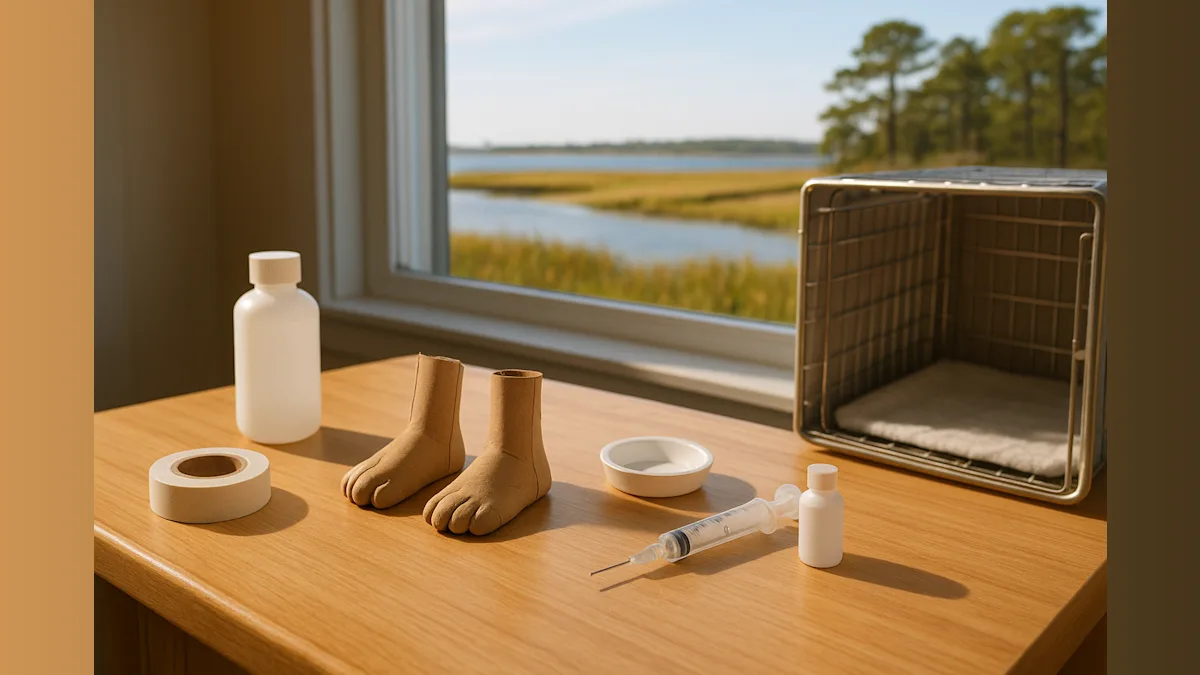
A whitethroat discovered lying stunned on a road following a vehicle strike on Saturday, August 8, 2026, has been fitted with specially constructed foot casts at Leicestershire Wildlife Hospital. The diminutive medical devices, fashioned from cardboard, cotton wool, and micropore tape, are holding the bird's curled feet in position while damaged nerves and ligaments heal.
Passersby who located the injured bird contacted the hospital and transported the whitethroat for emergency care. Upon examination, staff determined the songbird's feet had curled inward and lost their gripping ability due to the impact trauma, though no other injuries were detected.
"He was found last Saturday by some people who then called us and brought him in. We have used this technique before with other baby birds—but its usually when they have nutritional deficiencies," Amy Blower at Leicestershire Wildlife Hospital told Good News Network.
The treatment approach involves placing cotton wool between the feet and cardboard supports to provide cushioning, then securing the assembly with micropore tape. This stabilization allows the bird to stand while its damaged tissue repairs itself.
"We put a little bit of cotton wool between the feet and the cardboard to add a bit of cushioning and then use micropore tape to secure them," Blower told Good News Network. "It seems to be doing the trick and he is making a good recovery."
Hospital staff anticipate releasing the whitethroat back into its natural habitat within several days once full recovery is achieved. The makeshift casts appear to be facilitating the healing process effectively.
"Other than the issue with his feet he was uninjured so we'll release him hopefully in a few days when he is better. It's unusual for us to get whitethroats as they are only around in the summer and migrate from Africa," Blower told Good News Network.
The whitethroat holds amber status on the United Kingdom's conservation concern list, indicating the species requires ongoing monitoring and potential intervention measures, though not the most urgent level of protection reserved for red-listed species. These migratory songbirds spend only the summer months in the United Kingdom before returning to Africa for winter.
The successful application of this low-tech medical solution demonstrates how wildlife rehabilitation facilities can adapt simple materials to address complex injuries in even the smallest patients.