At 85, the Atlantic City businessman and philanthropist opens up about the clubs, celebrities, AIDS crisis, successes and mistakes of an extraordinary life in a new memoir
ATLANTIC CITY — Long before Atlantic City's casino towers reshaped the skyline, before social media and dating apps changed the way people met, John Schultz discovered something that would change his life.
There was a community looking for a place to go.
Schultz found it on the beach.
“I remembered the beach,” Schultz recalled during an appearance on Off The Press with Scott Cronick on News Talk 1400 & 92.3 WOND. “And I said to myself, you know, these guys, after they go to the beach, they go back, they shower, they get dressed, they go out to dinner, and then they go to the clubs.”
Schultz bought 50 beach umbrellas, painted the name of his bar on them and advertised 50-cent drafts after the beach.
“I hired a guy to go down to the Gay Beach and put the umbrellas out,” Schultz said. “Free advertising. Nobody could stop it. Just people with umbrellas.”
Looking out from the Boardwalk, Schultz recalled seeing “a maze” of his umbrellas covering the beach.
It worked.
That simple marketing idea became part of the foundation of an Atlantic City nightlife empire that would eventually include bars, clubs, hotels and entertainment venues catering largely to the city's gay community.
Now, at 85, Schultz is telling the story himself.
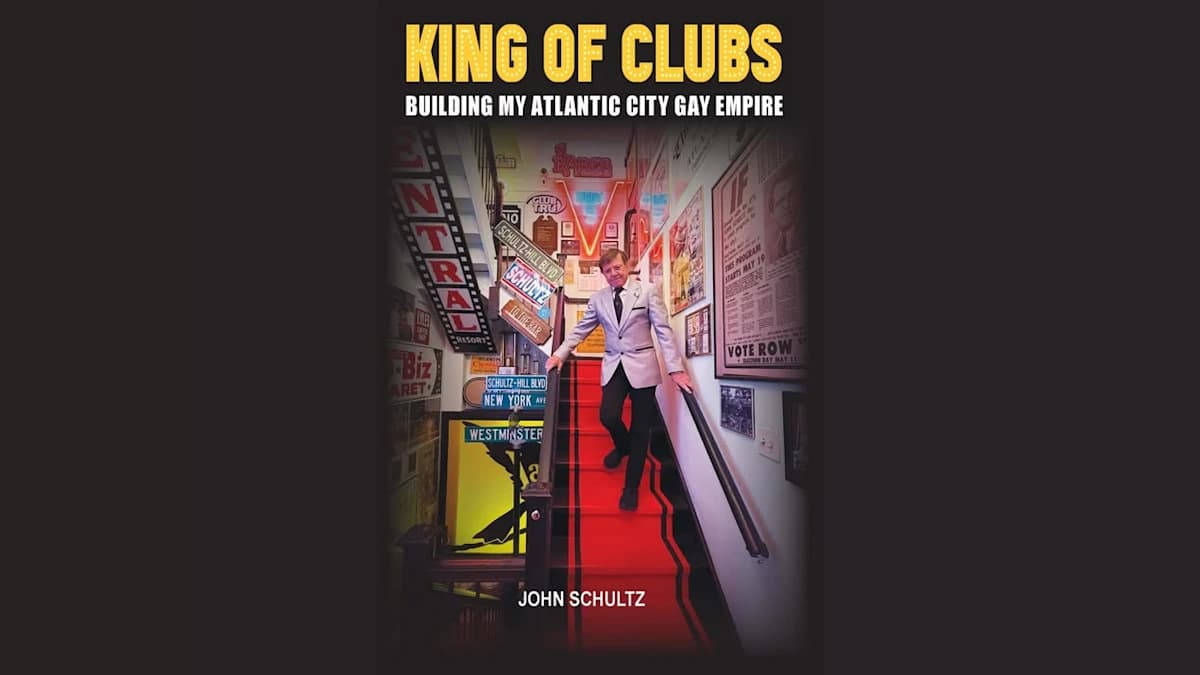
His new memoir, King of Clubs: Building My Atlantic City Gay Empire, chronicles a life that began in a working-class Atlantic City family and eventually encompassed nightlife, real estate, politics, philanthropy — and some extraordinary chapters of Atlantic City history.
“It took me four and a half years to write this book,” Schultz told Cronick.
“There’s no BS in it,” he said. “It's really all factual. I didn't exaggerate anything.”
The process stirred emotions Schultz hadn't necessarily expected.
“Brought back memories, brought back tears to my eyes, made me happy, made me sad,” he said. “It's an interesting book.”
Atlantic City's Gay History Goes Back Generations
Schultz didn't create Atlantic City's gay nightlife scene.
He inherited a tradition stretching back decades.
Historical accounts trace the city's reputation as a destination offering relative freedom to gay visitors to at least the late 19th and early 20th centuries. Louise Mack's Entertainers Club, which operated during the 1920s, has been described as one of the East Coast's earliest gay-oriented clubs.
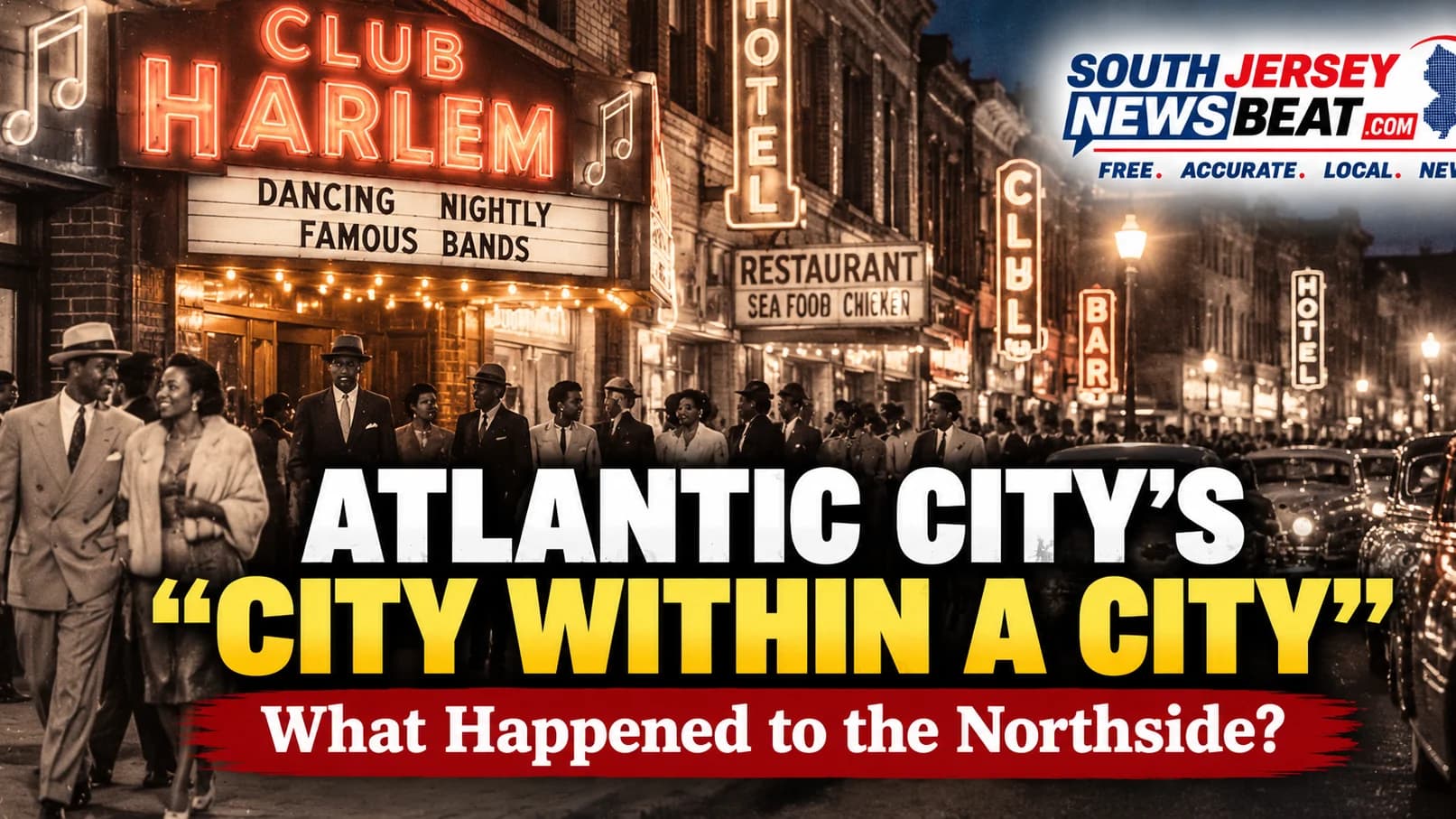
By the latter half of the 20th century, the area around New York and Kentucky avenues — including the twisting connector known as Snake Alley — had developed into the heart of Atlantic City's gay nightlife.
Schultz would become one of its dominant figures.
He owned numerous properties serving the gay community, including the Brass Rail, Lark Bar, Grand Central Resort and eventually Studio Six. Contemporary retrospectives describe the Grand Central as a major gay hotel and entertainment complex, while Studio Six survived until 2004 as the last of Schultz's gay nightclubs.
But Schultz's path to becoming the “King of Clubs” hardly suggested that's where he was headed.
‘Never Got the Bicycle for Christmas’
Schultz grew up in Atlantic City's Inlet.
“We were poor,” he told Cronick.
How poor?
“Never got the bicycle for Christmas,” Schultz said. “Couldn't afford the bicycle.”
But he immediately added that he considered himself fortunate in another respect.
“I love my parents,” Schultz said. “My parents were the best parents in the world. They were just loving, and my father was my mentor.”
His father gave him a piece of advice Schultz says remained with him throughout his life:
“Son, you've got to make your mark before you're 30.”
Entrepreneurship apparently came early.
Schultz remembers his first business venture beginning when he was about 7. His father acquired a damaged television for $60 and put it in the family's living room.
Neighborhood children could come watch Howdy Doody.
Admission?
Two returnable 2-cent bottles.
“That was my first business,” Schultz said.
Schultz left school after eighth grade and says he has always struggled with spelling and mathematics.
That didn't stop him.
“I still made a lot of money all my life and became successful,” he said.
The Weekend That Changed Everything
By the early 1970s, Schultz was working at the Flanders Retirement Hotel and earning about $15,000 a year.
Then came the opportunity to buy the Lark Bar near New York Avenue and the Boardwalk.
Schultz says the owners wanted $25,000. He couldn't afford it.
Eventually, he recalled, they agreed to take $5,000 down.
Schultz began thinking about Atlantic City's gay nightlife differently.
Instead of building one business aimed at everyone, he saw distinct groups of customers.
“What about the older guys that want a piano bar?” Schultz recalled thinking. “Or what about the lesbians? Or what about the locals?”
“I started figuring out this.”
Then came those beach umbrellas.
After his first Memorial Day weekend, Schultz went upstairs to count the cash.
He separated it into piles: payroll, liquor, rent, insurance and other expenses.
Then he looked at what remained.
“The last pile had $16,000 in it,” Schultz said.
He had just made more in one weekend than he earned in a year at his regular job.
“I went to my boss. I gave him my two-week notice,” Schultz said.
His boss offered him $25,000 to stay.
“No, it's too late now,” Schultz recalled responding. “I got it in my blood. Now I know I can make money.”
An Atlantic City Nightlife Empire
What followed was a collection of establishments that became an important part of Atlantic City's LGBTQ history.
Schultz expanded into the Brass Rail, Grand Central Resort and other venues, eventually creating different spaces for different audiences.
The Grand Central became what Schultz calls the crown jewel.
Asked by Cronick which business made him the most money, Schultz didn't hesitate.
“Grand Central.”
The complex included multiple entertainment spaces, among them Show Biz Cabaret, After Dark, Studio Five and other venues.
Schultz recalled one particularly unexpected visitor to After Dark.
“Billy Joel played the piano,” Schultz said. “He came in there with a group of people, and he sat and played the piano.”
Schultz lamented that the encounter came long before everyone carried a camera.
“I never got pictures,” he said. “If there was iPhones in the day, they would have been all over the place.”
South Jersey NewsBeat did not find independent documentation of that specific Billy Joel visit, so it is presented here as Schultz's recollection.
Other pieces of the nightlife history are independently documented.
Former Studio Six bartender and performer Mortimer Spreng has recalled packed bars where patrons knew one another and described the atmosphere as being like a family. Historical accounts identify Schultz as the owner of numerous gay-oriented properties in the New York and Kentucky avenues neighborhood.
Where Casino Stars Went After Hours
Studio Six developed another reputation.
It was where entertainers went after entertaining.
“Our motto in Studio Six was ‘where entertainers are entertained,’” Schultz said.
At the time, Atlantic City casinos were required to close their gaming floors for several hours overnight.
“When casinos had to close at four o'clock in the morning, all the entertainers would come to Studio Six,” Schultz recalled.
He remembers Peter Allen visiting while performing at Resorts and says they would have breakfast together.
He also recalled Connie Francis and Michael Feinstein among the entertainers who came through.
Some wanted to mingle.
Others wanted privacy.
Schultz said his security staff understood the difference.
“Someone came in and they didn't want to be bothered,” Schultz said. “We had a room upstairs called the green room. Then we had a room called heaven.”
“Some of the entertainers wanted a little privacy,” he said. “Some of them didn't mind if anybody bothered them.”
At least one celebrity's affection for Studio Six is independently documented. Author Jonathan Van Meter has recalled accompanying comedian Joan Rivers there and watching the crowd enthusiastically embrace her.
Then Came AIDS
The story eventually turns much darker.
The AIDS epidemic devastated the community Schultz's businesses served.
Schultz watched employees and friends become sick and die.
“I started the AIDS Alliance because they killed all my employees,” Schultz said during the WOND interview. “The AIDS is sad.”
The historical record confirms Schultz was instrumental in founding the South Jersey AIDS Alliance in 1985 as the crisis was devastating the region's gay community. A history published for the organization's 40th anniversary describes Schultz watching employees become ill and die, often without adequate support, before helping create the organization.
Today, the South Jersey AIDS Alliance continues providing services to people living with HIV/AIDS and their families and caregivers.
For Schultz, that work became part of a broader shift toward giving back to the city where he'd made his success.
From Nightclubs to Philanthropy
Schultz and longtime partner Gary Hill established the Schultz-Hill Foundation in 2002.
The organization supports arts, history and education in South Jersey through scholarships, grants, student arts programs and its Music & Memories outreach for seniors.
Schultz also helped found the Metropolitan Business & Citizens Association in 1989, an organization focused on Atlantic City's business community, neighborhoods and charitable causes.
“I made my success in Atlantic City,” Schultz said.
“And I get a big enjoyment out of giving back.”
The Schultz-Hill Foundation, he said, allowed him and Hill to help young people through scholarships while also creating programming for seniors.
“We give back,” Schultz said.
The Book Doesn't Hide His Mistakes
Schultz's memoir isn't solely a victory lap.
It also addresses a federal criminal case that resulted in him spending six months in prison.
Federal prosecutors said Schultz, William Boland and another conspirator were partners in Royal Rolling Chairs Inc., an Atlantic City Boardwalk rolling-chair business. Schultz admitted participating in a scheme that concealed cash receipts and maintained a second set of books containing unreported revenue.
The U.S. Attorney's Office said the conspiracy resulted in a total federal tax loss of $119,880.
In 2017, Schultz was sentenced to six months in prison followed by six months of home confinement. He was fined $3,000 and ordered to pay $31,110 in restitution.
Schultz discussed the episode candidly with Cronick, although he described the amount involved differently.
Rather than simply lamenting the prison sentence, Schultz said he eventually treated those six months almost like a forced retreat.
“When I went into prison, I knew what I was doing for the next two years,” Schultz said. “When I got out of prison, I knew what I was doing the rest of my life.”
He described the experience as “six months of recalculating your whole life and knowing what you want to do now.”
“And I'm doing it,” Schultz said. “Gary and I love to give back.”
‘I Have Nothing to Worry About’
The memoir is unusually personal in other ways.
Schultz writes about realizing he was gay in his 20s and about his relationship with Hill, which he said is approaching four decades.
He told Cronick some friends were surprised by how much of himself he was willing to put into print.
“A friend of mine said, ‘I wouldn't have the guts to write a book about what you revealed about yourself,’” Schultz recalled.
His response?
“Yeah, but I'm 85 years old. I have nothing to worry about.”
The book runs about 380 pages and contains more than 170 photographs, many in color, according to Schultz.
“I'm not worried about making a profit,” he said. “There's no profit. The profit all goes to the charities.”
“I just wanted to do something in my life to finish off all the things that people told me I should do with my stories I told.”
First Public Signing in Margate
Schultz's first public book signing for King of Clubs is scheduled for 4 to 6 p.m. Wednesday, Oct. 7, at Findz, 10 S. Essex Ave. in Margate.
The event is independently listed by the South Jersey Cultural Alliance, which says partial proceeds will benefit the South Jersey AIDS Alliance.
Schultz said the book is $54 and can also be ordered through the Schultz-Hill Foundation.
For Schultz, though, King of Clubs seems less about selling books than leaving behind his version of a chapter of Atlantic City history — one populated by bartenders and performers, beachgoers and casino stars, entrepreneurs and friends who didn't survive the AIDS epidemic.
Many of the buildings are gone.
The Grand Central is gone.
Studio Six is gone.
But Schultz remembers.
And when Cronick asked the 85-year-old what remains on his list — what he still hasn't accomplished — Schultz's answer was strikingly simple.
“I've done everything.”
“I go upstairs, have a glass of wine, look at the city, and [I'm] the happiest person in the world.”
Then Schultz summed up the philosophy with which he apparently hopes to close his story.
“I have no regrets,” he said. “I did everything I could to make life better for myself and anybody else.”
“And I'm just happy as hell.”
John Schultz made his comments on Off The Press with Scott Cronick, heard Monday through Friday from 4 to 6 p.m. on News Talk 1400 & 92.3 WOND.

About the Author
Karen Johnson
With over 30 years of news experience in major markets like Los Angeles, Denver, and Columbus, Karen now covers our area for South Jersey NewsBeat. She also brings her articulate and conversational news delivery to WOND radio listeners every weekday. Her background includes work with the NBC Radio Network, and she thrives in fast-paced news environments.