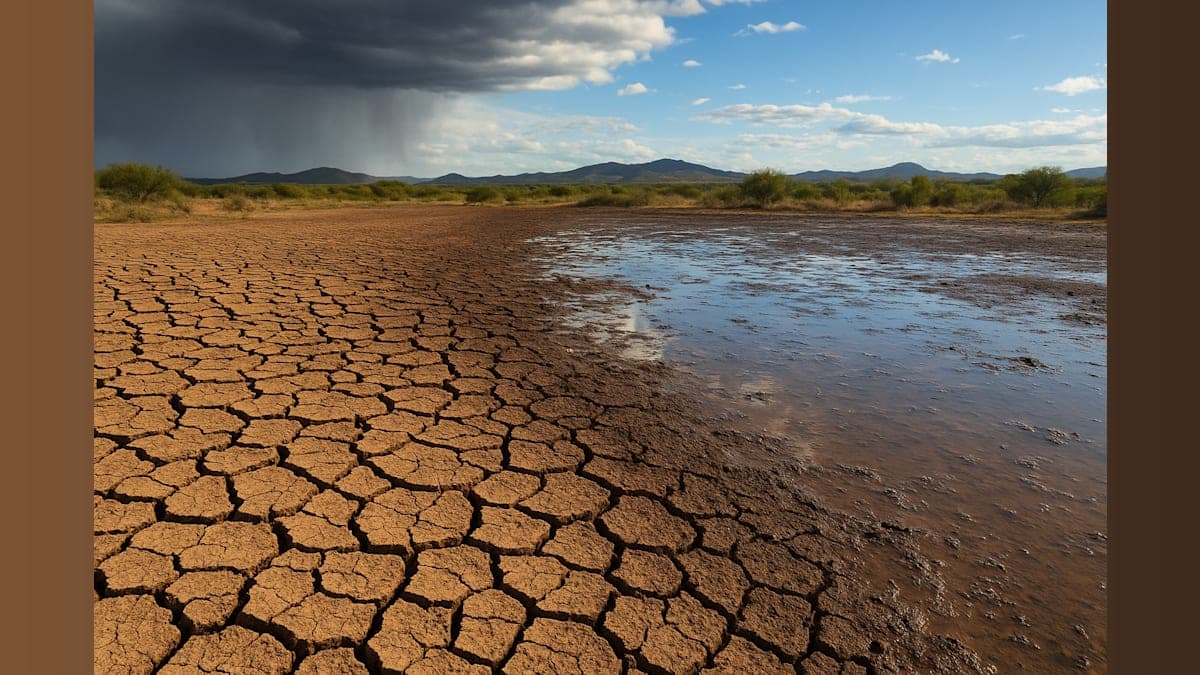
Mexico appears poised to emerge from a prolonged drought that has gripped the nation for six years, as abundant rainfall during the current wet season brings relief to communities from the arid northern regions to the tropical south.
The transformation has been remarkable. Current forecasts indicate the country may achieve complete drought recovery by the conclusion of its rainy season, which extends from May through October. An El Niño weather pattern stronger than typical has delivered substantial precipitation across Mexican territory during recent months.
Dante Sinohé Hernández Padrón, a researcher with the National Water Commission (Conagua), presented encouraging data during the 40th Climate Perspectives Forum in May. The nation has achieved a 94 percent recovery from existing drought conditions across the country, according to his analysis.
The improvement becomes even more striking when examining the timeline. Before the 2025 rainy season commenced, approximately 596 municipalities—representing 46.5 percent of Mexico—were experiencing drought conditions ranging from moderate to extreme on the government's measurement scale.
By June 15, that figure had plummeted to just 2.4 percent of national territory still facing drought conditions. The dramatic reversal represents one of the most significant environmental recoveries in recent Mexican history.
Conagua measures drought severity using a classification system ranging from D0 through D5, with higher numbers indicating more severe conditions. The majority of Mexico now registers at D0, the baseline level indicating normal moisture conditions. Some scattered areas show D1 classification, representing abnormal dryness that precedes actual drought, with even smaller pockets reaching D2.
Only one small desert region in Chihuahua State continues to experience severe drought at the D3 level, and that area is limited to territory along the United States border.
The widespread recovery carries significant implications for Mexican agriculture, municipal water supplies, and ecosystems that have struggled under years of water scarcity. Reservoirs across central Mexico have filled substantially, providing crucial water storage as the nation moves beyond the crisis that has challenged communities and industries since 2020.