A team of scientists in northern China has pioneered a method for separating crude oil at room temperature, a breakthrough that could dramatically reduce the energy required to produce gasoline, diesel, and plastics. The research, conducted at the Dalian Institute of Chemical Physics, was published in National Science Review.
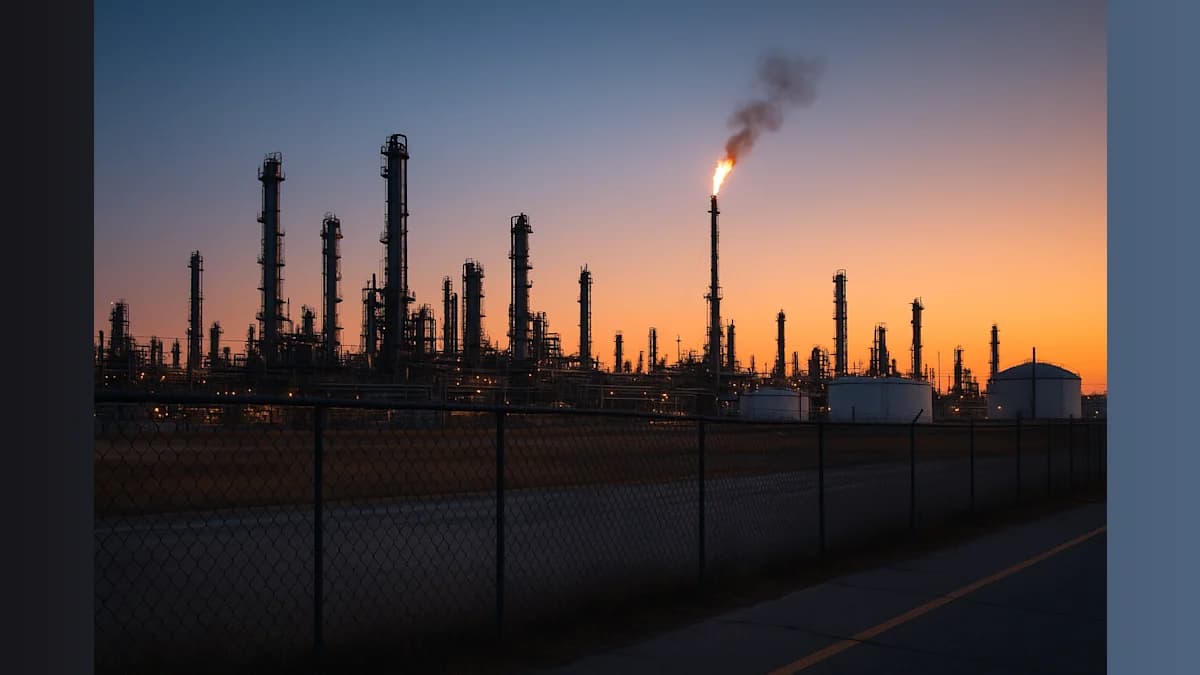
Traditional oil refining relies on distillation, which exploits slight differences in boiling points among the hundreds of chemical compounds in crude oil. This process requires heating the mixture repeatedly to extreme temperatures, consuming vast amounts of energy. The new approach, termed "molecular refining," instead uses specially designed chemical membranes to sort molecules by size and shape, allowing certain components to pass through while filtering out others.
The membranes function like microscopic sieves. For instance, straight-chain and single-branched alkanes—used to produce ethylene—can pass through one membrane because their dimensions differ from those of multi-branched alkanes and cycloalkanes, which are the building blocks of gasoline. The size gap between these two groups is roughly one-hundredth of a nanometer, necessitating extensive fine-tuning of the membrane design.
After perfecting the membranes, the researchers tested them on a light sweet crude mixture containing 15 different chemicals. In the lab, the process separated the mixture into three groups of high-value products with a recovery rate between 85 and 90 percent. Because no boiling, vaporization, or condensation was required, the method consumed 91 percent less energy than conventional distillation.
The implications for global emissions are significant. A 2021 estimate identified oil refining as the third-largest stationary source of carbon dioxide emissions, releasing approximately 1.3 gigatons of CO2 annually—at its peak, about 4 percent of all human-related CO2 emissions. If molecular refining can be scaled up, it could substantially reduce both the cost and the carbon footprint of producing fuels and petrochemical feedstocks.
However, the discovery has only been demonstrated in the laboratory. Whether the technique can be adapted for the massive scale of the global petroleum industry remains uncertain. Crude oil and its refined derivatives are essential inputs for thousands of everyday goods, and any shift in refining technology would have far-reaching economic and environmental consequences.
The research team's findings were published in the journal National Science Review. The study's authors report that the membrane-based separation achieved high recovery rates and a dramatic energy reduction, offering a promising alternative to energy-intensive distillation.