Cape May County is alerting residents to new federal eligibility restrictions as New Jersey officials say as many as 25,000 people statewide could lose Medicaid coverage
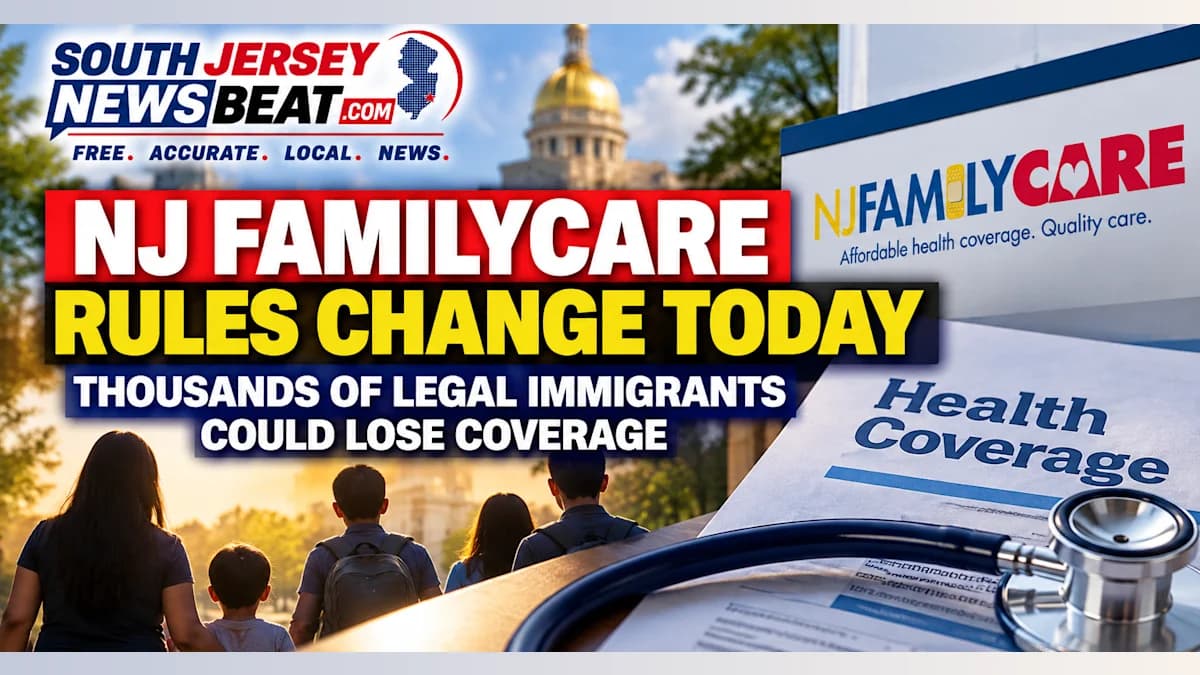
SOUTH JERSEY — Thousands of legally present immigrants in New Jersey could lose their health insurance beginning Wednesday as new federal eligibility restrictions take effect for NJ FamilyCare, the state's Medicaid program.
The change took effect Oct. 1 and is already prompting warnings in South Jersey, where the Cape May County Division of Social Services has posted information alerting residents that some noncitizen immigrants may no longer qualify for NJ FamilyCare.
State officials estimate as many as 25,000 noncitizens statewide could lose Medicaid coverage because of the new rules, according to the New Jersey Monitor. Those potentially affected include some refugees, asylees, humanitarian parolees and victims of domestic violence or human trafficking — people who are lawfully present in the United States but whose immigration classifications no longer qualify under the new federal Medicaid rules.
But state officials are stressing an equally important point:
The change does not mean all immigrants — or even all noncitizens — are losing NJ FamilyCare.
“The most important thing is that it is not a loss of Medicaid for all immigrants or even all noncitizens,” New Jersey Human Services Commissioner Stephen Cha told the New Jersey Monitor. “There are multiple categories of noncitizens that will continue to remain eligible.”
Who Could Lose Coverage?
The changes stem from the federal tax and spending legislation signed into law by President Donald Trump in July 2025.
New Jersey's Department of Human Services says the law changes which immigration statuses qualify for federally funded Medicaid beginning Oct. 1.
Among the groups that may no longer qualify under the new rules are some:
Refugees and asylees
Humanitarian parolees
Victims of domestic violence or human trafficking
There are important exceptions. Someone in one of those categories who has since adjusted to qualifying lawful permanent resident status may remain eligible.
Groups that can continue to qualify include lawful permanent residents — commonly known as green card holders — who meet applicable requirements, Cuban and Haitian entrants, migrants covered by the Compacts of Free Association, children under 19 and certain other young people and pregnant residents who are lawfully present.
Because immigration categories and exceptions can be complicated, the state is urging residents not to assume on their own that they are no longer eligible.
These Are Legal Residents
One potential source of confusion is who exactly is affected.
The 25,000 figure does not refer simply to people living in New Jersey without legal immigration status.
Cha specifically emphasized that people facing the loss of coverage include residents who are legally in the United States.
“We're talking about victims of trafficking. We're talking about the husbands, wives, and children of lawfully residing veterans,” Cha told the Monitor. “We're talking about refugees who have fled persecution in their own country.”
The change is national. The Washington Post reported Wednesday that hundreds of thousands of immigrants with legal status around the country could be at risk of losing Medicaid under the new federal restrictions.
That report also included a direct South Jersey connection.
Andrea Mendez Perez, director of Interfaith-RISE, a refugee resettlement organization serving southern New Jersey, told the Post that delays in obtaining green cards have compounded the problem for some refugees who otherwise might have obtained permanent residency before the Medicaid rules changed.
Did You Get a Letter? Don't Ignore It
New Jersey has spent months attempting to determine which NJ FamilyCare members remain eligible.
In July, the state mailed letters to certain members whose records did not clearly establish eligibility under the new federal rules and requested additional immigration documentation.
Receiving one of those letters does not automatically mean someone is ineligible.
It means NJ FamilyCare needs more information.
The state says members who believe they still qualify should submit the requested documentation. NJ FamilyCare will review the documents and determine whether coverage can continue.
For people who received an initial letter but have not received confirmation that they remain eligible, the state says their final day of NJ FamilyCare coverage was Sept. 30.
Residents with questions about whether NJ FamilyCare sent them a letter or about the status of submitted documents can call the state's HMS hotline at 833-635-7060.
Legal Services of New Jersey also operates a HealthLine at 833-576-5776 for people seeking help understanding eligibility or documenting immigration status.
Cape May County Posts Warning
The change is now appearing directly on South Jersey government websites.
The Cape May County Division of Social Services has posted a notice telling residents that federal rules governing NJ FamilyCare are changing beginning this fall.
“Beginning October 1, 2026: Some non-citizen immigrants may no longer qualify for NJ FamilyCare,” the county states.
The notice also alerts residents to a much larger second round of Medicaid changes scheduled to arrive Jan. 1.
South Jersey NewsBeat could not find a publicly available county-level breakdown showing how many of the approximately 25,000 people potentially affected by Wednesday's immigration-status change live in Atlantic or Cape May counties.
There is, however, substantial reliance on NJ FamilyCare in both counties.
State enrollment data from October 2025 showed 28,296 non-aged, blind or disabled adults enrolled in Medicaid categories in Atlantic County and 6,452 in Cape May County. Those figures include citizens and other people completely unaffected by Wednesday's immigration change and therefore should not be interpreted as estimates of how many local residents will lose coverage.
South Jersey Advocates Are Already Preparing
The impact is also being felt by organizations that help South Jersey residents navigate health coverage.
A virtual program scheduled for Thursday by Tri County ResourceNet focuses specifically on the Oct. 1 NJ FamilyCare immigration changes.
The featured speakers include Cassandra Stabbert, chief counsel of Legal Services of New Jersey's Health Care Access Project, who previously worked in the Atlantic County office of South Jersey Legal Services.
Meanwhile, Colleen McCauley, policy and advocacy director at the Camden Coalition, which works to connect South Jersey residents with health care, told the Washington Post the loss of coverage is particularly difficult because those affected had previously qualified under federal rules.
“None of them did anything wrong,” McCauley said. “And they are losing coverage.”
Losing NJ FamilyCare May Not Mean Going Uninsured
There is another important option for some residents affected by the change.
People losing NJ FamilyCare may qualify for coverage through Get Covered New Jersey, the state's Affordable Care Act marketplace.
The state says affected residents should complete marketplace enrollment within 60 days after their NJ FamilyCare coverage ends to avoid a coverage gap.
For the remainder of 2026, some affected residents may also qualify for financial assistance that reduces premiums and out-of-pocket expenses.
But another federal change arrives Jan. 1, 2027, when immigration-status restrictions on who can receive marketplace financial assistance become tighter.
An Even Bigger NJ FamilyCare Change Is Coming
Wednesday's change is only the first major NJ FamilyCare eligibility shift.
Beginning Jan. 1, 2027, certain adults ages 19 to 64 will have to demonstrate that they are working, volunteering or attending school to qualify for or maintain NJ FamilyCare coverage.
Those affected will generally need to document at least 20 hours per week of qualifying activity and will have to renew their coverage every six months rather than annually.
State officials estimate roughly 540,000 NJ FamilyCare members could be subject to the new requirements, according to the New Jersey Monitor.
Cape May County is already alerting residents to that change as well.
For now, state officials are urging anyone who received correspondence about their NJ FamilyCare eligibility to respond rather than assume their coverage is gone.
Greg Woods, who oversees New Jersey's Medicaid program, said many noncitizens may still qualify if the state receives documentation establishing their status.
“It's getting late because we're coming to October 1st,” Woods said before the deadline, “but people absolutely should still send back their responses.”
Official NJ FamilyCare information on the changes: New Jersey Department of Human Services NJ FamilyCare changes
Information specifically for noncitizen members: NJ FamilyCare noncitizen eligibility guide

About the Author
Peter Killeen
A 25-year radio news veteran, Peter covers South Jersey for NewsTalk 1400 & 92.3 WOND radio. Known for his concise and impactful delivery, he ensures listeners and readers stay informed without unnecessary filler.