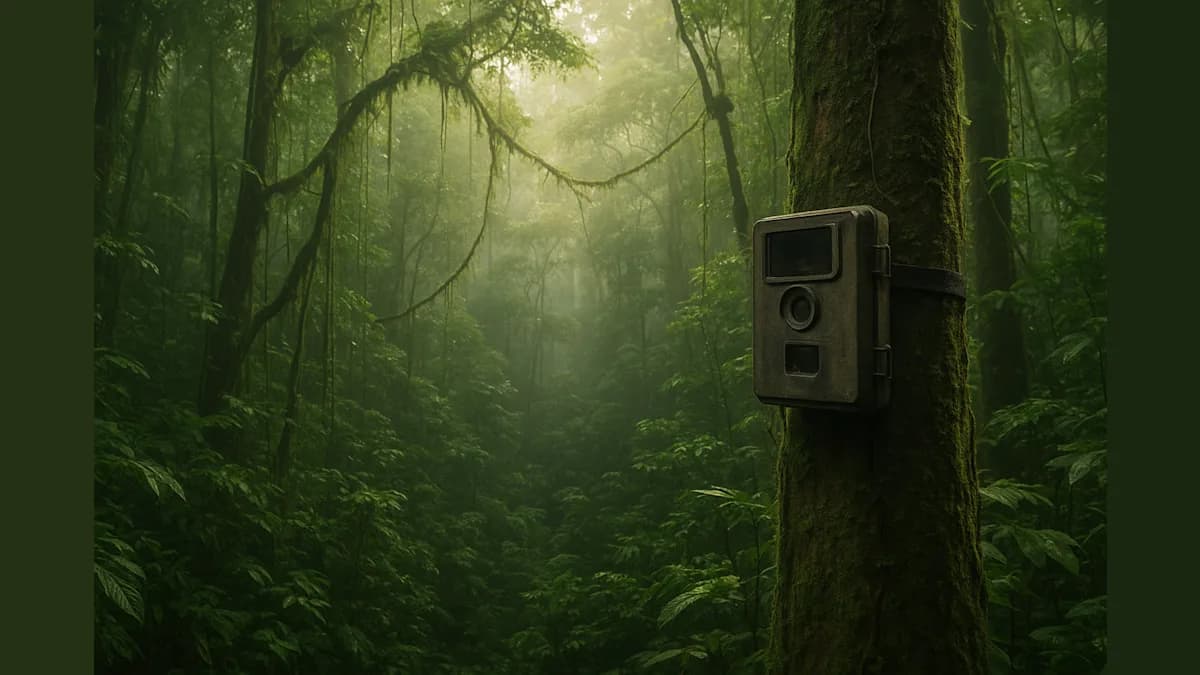
Camera trap footage from Malaysian Borneo has captured the oldest known Sunda clouded leopard ever documented in the wild, offering scientists unprecedented insight into one of the planet's most secretive feline species.
The female leopard, estimated at 8.5 years old, was recorded in the rainforests of Borneo through research conducted by Panthera, a conservation organization dedicated to wild cat protection. The study represents the first documentation of a female Sunda clouded leopard's lifespan in natural habitat, according to findings released by Panthera in partnership with the Sabah Forestry Department and the Leibniz Institute for Zoo and Wildlife Research.
The research has fundamentally altered scientific understanding of these animals' behavior and range. Contrary to previous assumptions about their limited mobility, the study confirmed that individual leopards traverse distances up to 19 miles between separate forest reserves, demonstrating a far more expansive territory than researchers had documented before.
The data also revealed a striking disparity in detection rates between sexes. Female Sunda clouded leopards proved 68 percent more difficult to capture on camera than males, a difference the research attributes to distinct behavioral patterns. Females spend considerably more time in tree canopies, where their slender physiques and fuller tails provide superior balance for arboreal hunting and movement.
Male leopards, by comparison, dedicate substantial time to ground-level activities, primarily patrolling and marking territorial boundaries. This terrestrial focus explains their more frequent appearance in camera trap imagery.
Native to the islands of Borneo and Sumatra, the Sunda clouded leopard has earned the moniker "ghost of the forest" due to its rarity and elusiveness. The species possesses a remarkable anatomical feature: the largest canine teeth relative to body size of any wild cat species, a characteristic that has drawn comparisons to prehistoric saber-toothed cats.
The comprehensive dataset underlying this research emerged from collaboration with indigenous communities in Sabah, working alongside the forestry and wildlife departments of Sabah state. These community members serve as wildlife rangers and community engagement officers for Panthera, performing essential conservation work that includes patrolling challenging terrain, maintaining camera trap networks, and acting as frontline defense against poaching activities.
The partnership between Panthera and Sabah communities began in 2020, initially focused on addressing human-elephant conflict. The collaboration expanded to include community reporting of illegal logging operations and ultimately resulted in government-funded stipends for ranger positions, creating sustainable conservation employment in the region.
This documentation of the 8.5-year-old female represents a significant milestone in understanding Sunda clouded leopard longevity and behavior in wild populations, providing crucial baseline data for conservation efforts aimed at protecting this vulnerable species and its rapidly diminishing rainforest habitat.