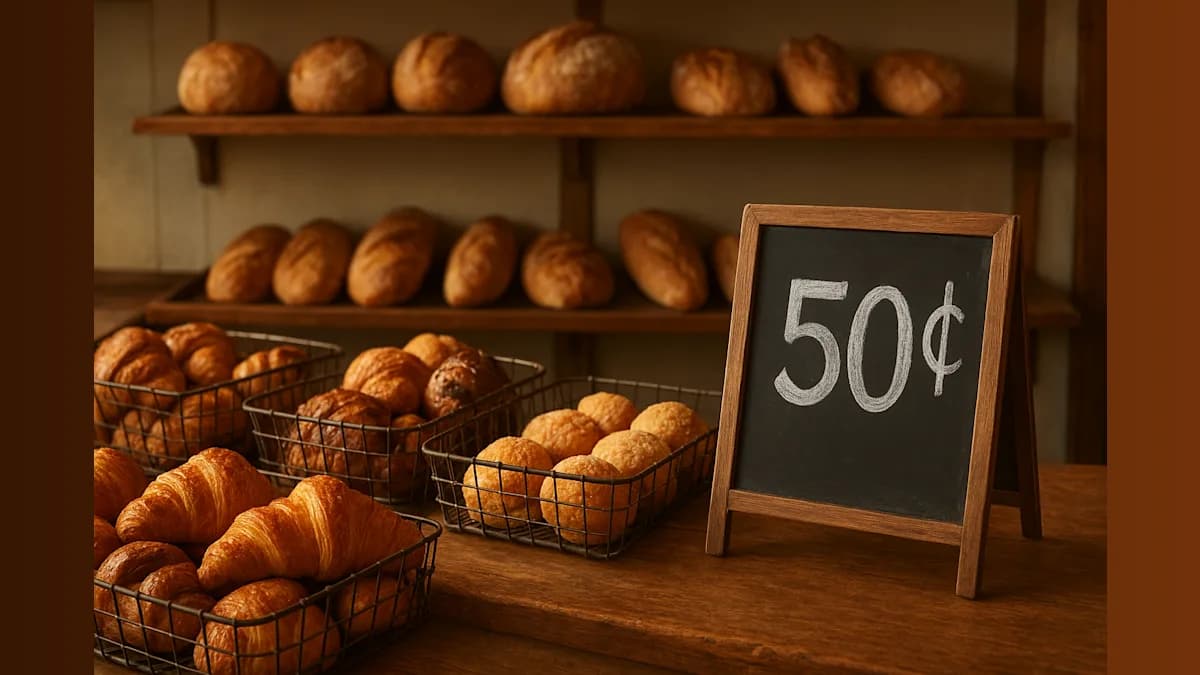
In a city renowned for its culinary perfectionism, one Paris bakery has discovered that yesterday's croissants deserve more than the garbage bin. Demain, whose name translates to "tomorrow" in French, has built its entire business model around rescuing unsold pastries from partner bakeries across the capital and offering them to customers at half price.
The operation saves approximately 50,000 pastries from waste every single month. Co-founder Martin Herbelin surveys counters laden with almond croissants and lemon meringue tarts that would otherwise have been discarded. The bakery's approach demonstrates that the distance between waste and value often depends less on the quality of food itself and more on creative problem-solving and efficient distribution networks.
Demain has developed innovative techniques to transform day-old products into new offerings. Stale croissants receive new life as "smash croissants," flattened and caramelized to create an entirely different texture and flavor profile. Old pain au chocolat gets rebaked into what the bakery calls "Chocobread." These transformations allow the business to extract maximum value from products that traditional bakeries would simply throw away.
The economic proposition has proven compelling for customers who previously purchased inexpensive supermarket baguettes. Through Demain, they now access artisanal sourdough at comparable prices, upgrading their daily bread while simultaneously participating in waste reduction. The model succeeds because it aligns environmental responsibility with tangible consumer benefits rather than asking shoppers to sacrifice quality or pay premium prices for the privilege of doing good.
Professor Béatrice Siadou Martin frames the issue in stark terms, characterizing food waste as a moral problem that demands practical solutions. Demain's growing success suggests that when waste-reduction initiatives are concrete, locally focused, and genuinely appealing, public participation follows naturally. The bakery does not require customers to compromise on taste or convenience; instead, it makes waste reduction the path of least resistance.
While Demain remains a relatively small operation within Paris's vast food ecosystem, its model carries broader implications for how communities approach resource efficiency. The bakery demonstrates that reimagining the treatment of existing products may prove as consequential as innovations in production itself. By creating systems that capture value before it reaches the waste stream, businesses can address environmental concerns while building economically sustainable enterprises.
The initiative reflects a fundamental shift in thinking about food retail. Rather than viewing yesterday's inventory as a liability, Demain recognizes it as an opportunity. The bakery's success in moving 50,000 pastries monthly from potential waste to paying customers illustrates that solutions to food waste need not be complex or expensive. Sometimes they simply require rethinking assumptions about freshness, value, and what constitutes a desirable product.