In a world where machines and computers produce most of what people use, a podcast from NPR member station KJZZ examines why some individuals remain devoted to making and repairing objects by hand. The show, The Analogs, is hosted by Sam Dingman and features profiles of people who work with their hands. Dingman discussed the project with NPR's Rob Schmitz in a conversation that aired this week.
Dingman traced his interest in the subject to his upbringing. He said his mother made nearly everything in their home, including the tables the family sat at, coffee mugs, cabinets, and couches. She is also an analog photographer who works in a wet darkroom and insists that this is the best method for producing photographs. According to Dingman, his mother often said she always wants to be able to see the mark of the hand. He explained that if she cannot see what she calls the mark of the hand, she is not pleased.
When Schmitz suggested that Dingman's mother is likely not a fan of artificial intelligence, Dingman laughed and agreed. He said that part of the motivation for the project was to understand why she holds this passion so strongly.
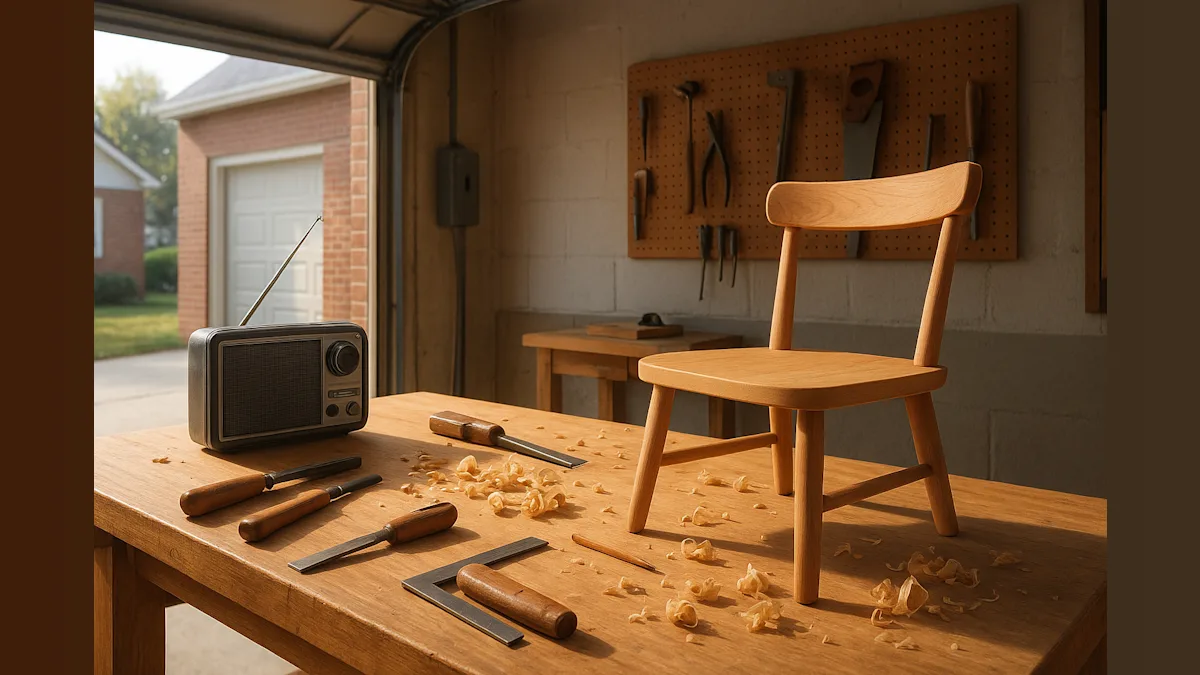
The first person profiled in the series is Duane Jensen, who repairs typewriters in his garage, a pursuit he has followed since the 1980s. In a clip from the podcast, Jensen is heard describing the physical toll of the work. He said he has chronic obstructive pulmonary disease, which he attributed to a shop he operated 20 years ago without ventilation. According to Jensen, a lack of ventilation and exposure to fumes deteriorated his lungs and caused chemical burns. He now uses an oxygen machine and said the condition affects his mobility and makes breathing difficult.
Dingman said his conversation with Jensen, the first he conducted for the series, established a theme that recurred throughout the project. He argued that such work is not a quaint pursuit but something existential. In Jensen's case, Dingman explained, he began fixing typewriters as a teenager to escape an abusive household. The job gave him a measure of control over his life. Dingman observed that the same activity that gave Jensen freedom also threatens to end his life, and he described sitting with someone who expressed that as a powerful experience. He emphasized that these are not trivial pursuits.
Schmitz asked whether Jensen is still alive. Dingman said that he is not and that he learned recently that Jensen had passed away. Dingman said he does not know the specifics of his passing. He noted that he had been in touch with Jensen late last year, when Jensen told him he was in poor health. Dingman said he is haunted by the last line Jensen speaks in the episode, in which Jensen asks that a typewriter and some Rush records be tossed into his coffin. Dingman said it seems to him that Jensen, in a fairly literal sense, gave his life to the work.
The conversation also addressed nostalgia. Dingman said the first episode of the second season of The Analogs features another subject who is also named Duane: Duane Roen, a former professor at Arizona State University who spends hours each day refurbishing old hand tools. Dingman said Roen told him the work is explicitly about nostalgia. In a clip, Roen describes having nostalgia for everything, even for things he did 10 minutes earlier. He opens a drawer and pulls out an old pair of pliers, explaining that when he was a child his family did fencing and that these are the exact same kind of fencing pliers his father owned and that the children used every day.
Dingman said that when he asked Roen whether part of the reason it feels good to hold onto such objects is the story they contain, Roen replied that working with, using, and looking at the tools reminds him of his father and his Grandpa Roen. Dingman explained that Roen grew up on a dairy farm in Wisconsin and holds a profound reverence for his father and grandfather, who maintained the farm for generations. Dingman said Roen can barely speak about the farm without crying, partly because when Roen was in about eighth grade a fire nearly killed him and the family lost the farm. In a clip, Roen says the family went to town and his whole world changed. Dingman observed that the way Roen delivers that line makes it seem as though his spirit falls. He said Roen's adult life of refurbishing tools has been about reconciling parts of himself that do not fit together: a forced push toward modernity and a deep connection to a past that was taken away. Dingman described that as what feels so significant about these stories, in which people wrestle with the most contradictory parts of themselves by creating physical objects that contain those contradictions.
The Analogs is produced by KJZZ, an NPR member station. Sam Dingman is the host, and Rob Schmitz conducted the interview for NPR.