
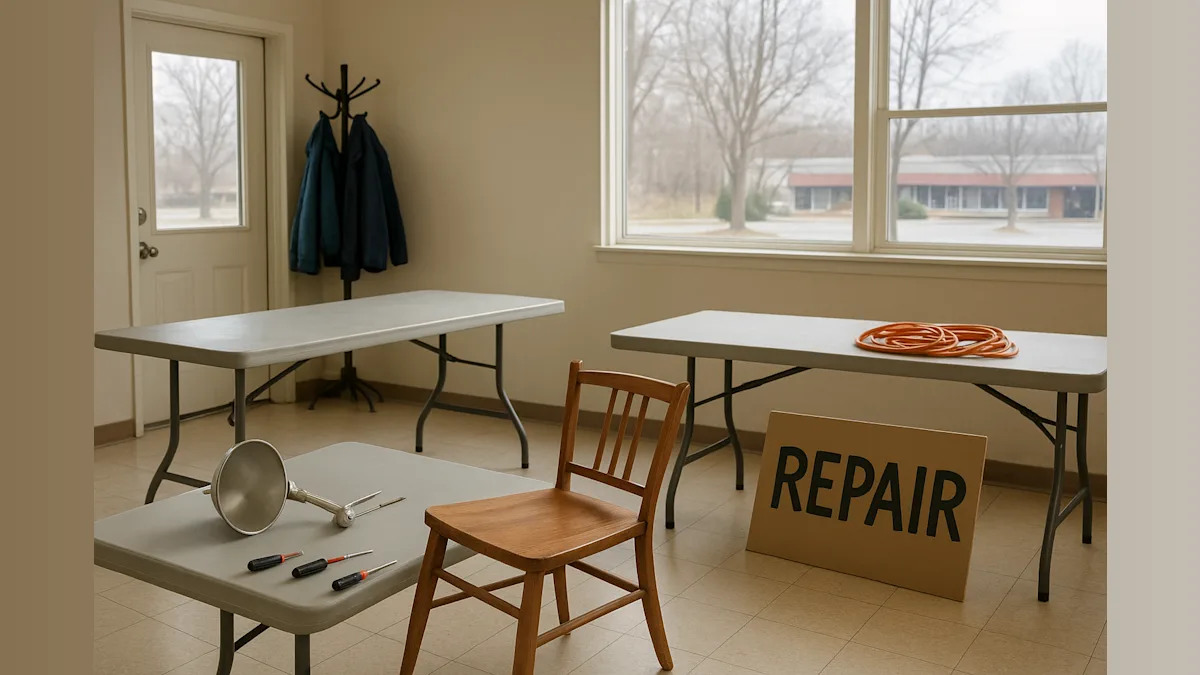
DECATUR, Ga. — In church basements and community halls across the United States, a growing movement is turning small repairs into a form of resistance against an economy built on disposability and isolation. At the center of this movement is Repair Café International, an organization founded in 2010 by Martine Postma that has helped establish repair cafés around the world.
One example unfolded in Decatur, Georgia, where Lilly Pettus arrived with a dining room chair that had traveled with her family across six states over thirty years. The chair carried decades of shared meals, family laughter, and difficult conversations in its wood. Pettus left not only with a repaired joint but with the experience of strangers working together to restore a piece of her family's history.
Postma frames the work in emotional terms. "When a product breaks and you have to throw it away, it's very lonely," she told DailyGood. The repair cafés she helped seed, she suggests, offer a quiet counterargument to that loneliness.
The motivations behind these gatherings vary by neighborhood. In some communities, the need is economic as much as environmental; in others, it is sentimental. Yet the underlying impulse is consistent: a refusal to let objects and the connections they represent be discarded without a fight.
What these gatherings demonstrate, almost as a side effect, is that the skills of care have never truly vanished. They have simply been waiting for a place to gather.