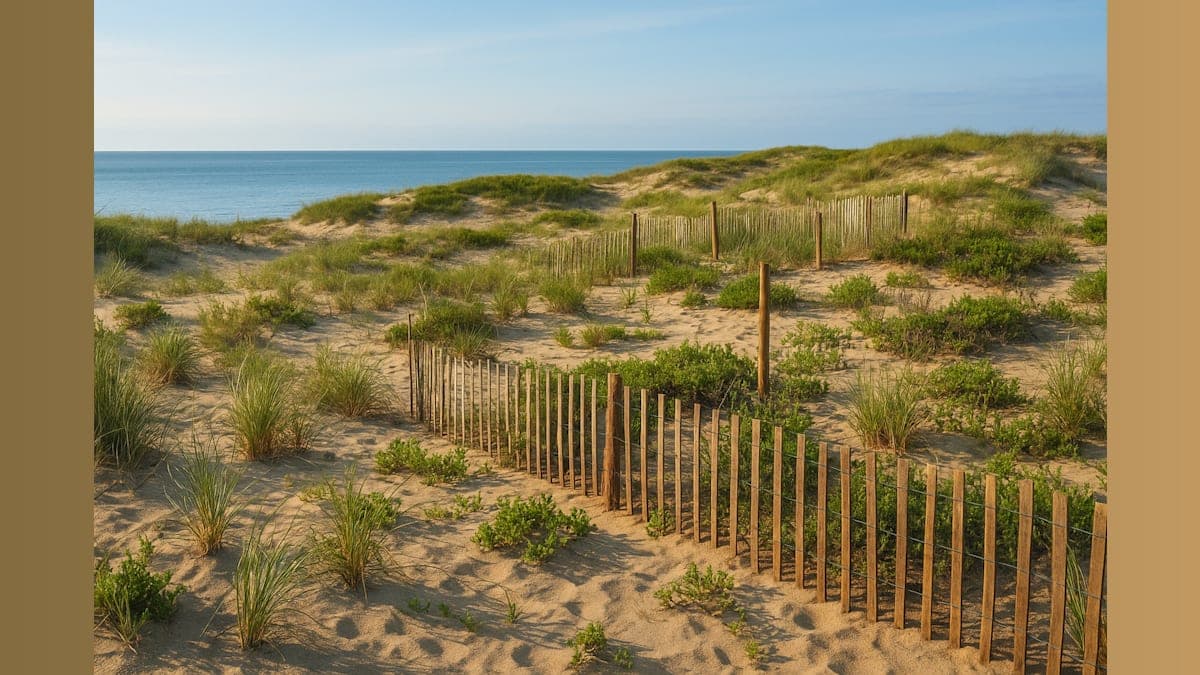
A significant ecological restoration effort along the Santa Monica coastline has reached a milestone, with The Bay Foundation completing the restoration of 8 acres of natural sand dunes designed to protect both wildlife and coastal infrastructure from increasingly severe weather events.
The nonprofit organization has roped off designated sections of Santa Monica Beach to allow native vegetation to reestablish itself in what was once a landscape of vegetated dunes covering much of Los Angeles County. The California Coastal Commission has now authorized an expansion of the project, permitting an additional 30 acres of natural dune creation extending southward to Venice Beach.
Tom Ford, representing The Bay Foundation, emphasized that the restoration enhances rather than diminishes public beach access. "Your beach is still your beach, only better," Ford told CBS News, addressing potential concerns from beachgoers about the cordoned-off restoration areas.
The ecological significance of the project extends beyond aesthetics. Native plant species provide critical habitat for endangered wildlife, including the El Segundo blue butterfly, which depends on Sea Cliff Buckwheat for survival. "The native plants provide that habitat value for native wildlife. So, if you want to have endangered El Segundo blue butterflies, you need Sea Cliff Buckwheat, which is the plant that they count on," Ford explained to CBS News.
The restoration process relies on natural mechanisms to build dune structures. As native plants establish root systems in the sand, wind-blown grains accumulate on the vegetation. This accumulation forces the plants to grow taller, creating additional surface area that captures more sand and gradually builds higher dunes over time.
These vegetated dunes serve a crucial protective function for coastal communities. Unlike seawalls, which shield only the infrastructure behind them, natural dunes provide defense for both inland and oceanside areas. The dune systems absorb wave energy during storm surges, slow coastal erosion, and protect valuable real estate from flooding and damage.
Ford characterized the beaches as a non-optional feature of priceless necessity for Los Angeles and the broader county, referencing their role in establishing the region's international reputation. The Bay Foundation has coordinated extensively with local stakeholders to ensure the restoration does not interfere with existing beach activities and uses.
"We work extremely hard with the lifeguards, with the police, with the sports groups, with the various clubs down here to make sure that all that space for those activities is preserved," Ford told CBS News. The organization has worked to balance ecological restoration with maintaining public access and recreational opportunities that define the Southern California beach experience.
Early response to the initial 8-acre restoration has been positive, paving the way for the significantly larger expansion. The 30-acre extension represents a substantial commitment to restoring the native dune ecosystems that historically characterized the Los Angeles coastline before urban development eliminated most of these natural features.
The project positions Los Angeles among a growing number of coastal communities worldwide that are turning to nature-based solutions for climate adaptation and coastal resilience. As climate change intensifies storm activity and raises sea levels, vegetated dunes offer a sustainable alternative to hard infrastructure for protecting vulnerable shorelines.