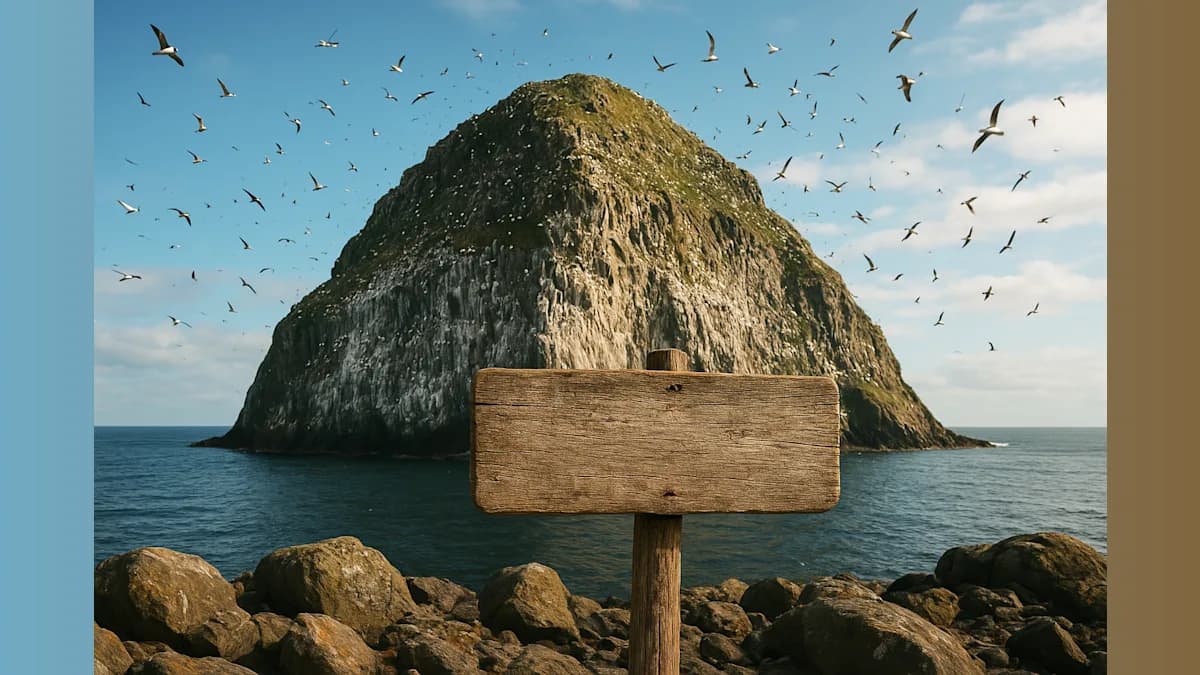
A landmark conservation transaction has secured the future of one of Scotland's most significant seabird colonies. The Dalrymple family, who held ownership of Bass Rock for more than three centuries, has sold the island along with neighboring Craigleith to the Royal Society for the Protection of Birds.
The transfer represents a pivotal moment for avian conservation in Scotland. Bass Rock and Craigleith support a combined population exceeding 110,000 seabirds, including approximately 100,000 gannets and 10,000 puffins. These uninhabited islands have served as critical breeding grounds for generations of seabirds, earning Bass Rock recognition as a wildlife wonder of global importance.
The Dalrymple family's stewardship of these islands spanned 320 years, during which time the seabird populations flourished. The decision to transfer ownership to the Royal Society for the Protection of Birds ensures that professional conservation management will guide the islands' future. This specialized oversight will prove essential as seabird populations worldwide face mounting pressures from climate change, overfishing, and habitat degradation.
The Royal Society for the Protection of Birds brings extensive experience in managing critical wildlife habitats across the United Kingdom. The organization's acquisition of Bass Rock and Craigleith positions these islands to receive dedicated resources and scientific expertise tailored to seabird conservation needs.
Gannets, which comprise the overwhelming majority of the islands' avian residents, are known for their spectacular diving behavior and striking white plumage. The concentration of these birds on Bass Rock creates one of the most remarkable natural spectacles in British waters. Puffins, with their distinctive colorful beaks and charismatic appearance, add further ecological and aesthetic value to these protected sites.
The sale reflects a growing recognition among private landowners of the importance of placing ecologically sensitive properties under professional conservation management. As biodiversity loss accelerates globally, such transfers play an increasingly vital role in preserving natural heritage for future generations.