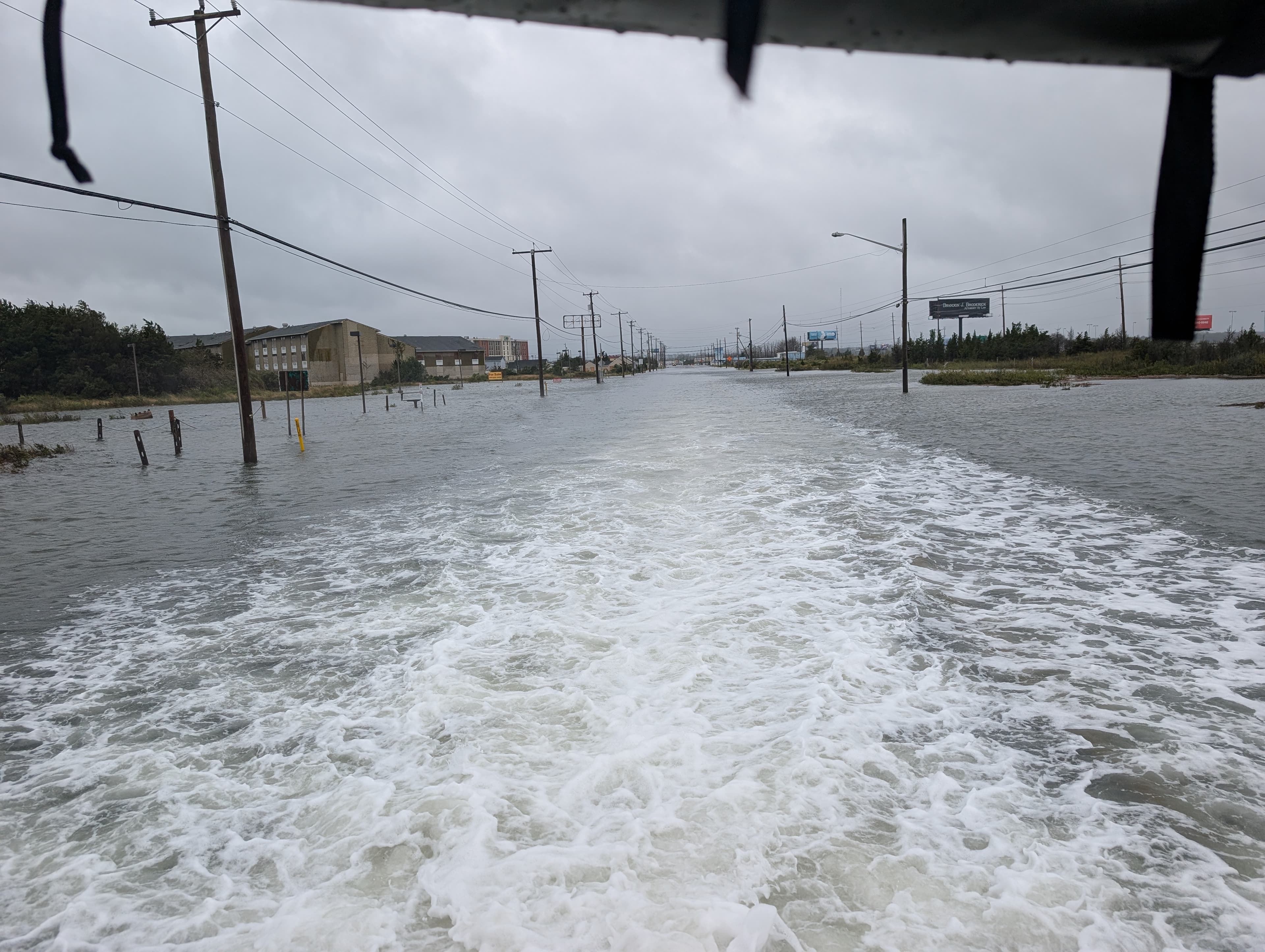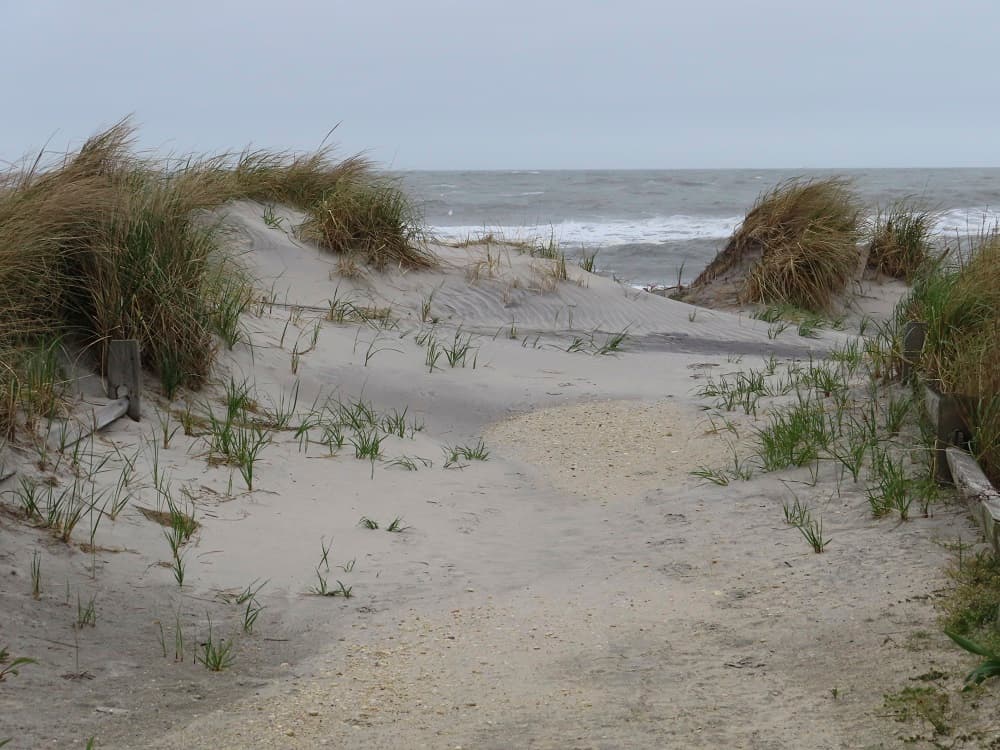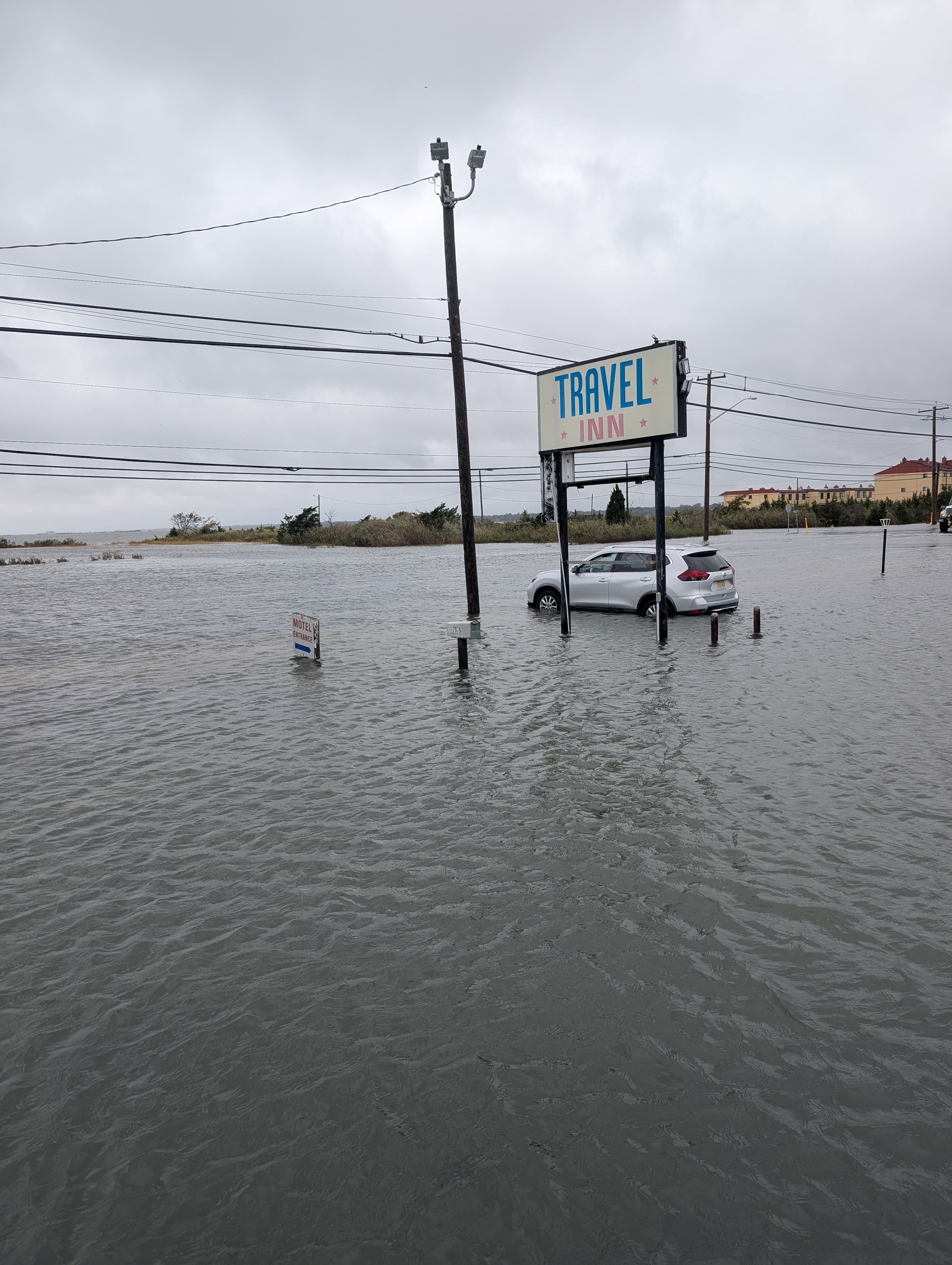
BRIGANTINE — Brigantine's protective seawall held during last weekend's punishing nor'easter — but Mayor Vince Sera says it came frighteningly close to failing at the north end, leaving city officials racing to strengthen the coastline before another major storm arrives.
“The promenade really took a beating during that storm, and the north end of it almost breached,” Sera said Friday morning on The Don Williams Show on News Talk 1400 and 92.3 WOND.
Now Brigantine is pursuing emergency beach replenishment, a proposed 275-foot extension of the north-end promenade and seawall, temporary protection near the vulnerable end of the structure and attention to a deteriorating jetty at the other end of the island.
“Our greatest need right now is recovering from this last nor'easter and also protecting against the next storm,” Sera said. “As you know, Brigantine and many shore communities lost a lot of beach, and we need emergency beach replenishment in order to protect those homes that are down there and protect all our infrastructure.”
Residents Feared Waves Could Reach Their Homes
Sera's comments came one day after U.S. Rep. Jeff Van Drew brought officials from FEMA, the U.S. Army Corps of Engineers and New Jersey Department of Environmental Protection to Brigantine to see the damage firsthand.
The tour was part of a larger inspection of storm damage along the South Jersey coast as officials consider immediate recovery needs and longer-term coastal protection projects.
Sera said the visit gave residents living near the damaged north end an opportunity to explain what they experienced during the storm.
“A lot of them are really scared that they're going to lose their homes,” Sera said.
He described one woman who watched waves repeatedly slam into a retaining wall next to her property.
“She thought any moment that those waves were going to break through and take out her home and take out the whole neighborhood,” Sera said.
Brigantine wants to extend the existing promenade and seawall approximately 275 feet farther north to provide additional protection.
But Sera said the city also needs something sooner.
“When the federal government moves, it was big, but it moved slow,” Sera said. “And I think one of the things we're really trying to work on right now is what we can do for immediate protection.”
“This was a really early nor'easter, and we expect to have more,” he added. “We need to make sure that our island and all of our residents are protected for that next storm.”
Sera: ‘I Don't Know How Long That Wall Is Going to Hold’
Sera said one possibility being discussed with the Army Corps and DEP is placing large jetty stones near the north end of the promenade as temporary protection.
Brigantine is also looking at reinforcing vulnerable street ends following severe erosion that Sera said stretched from the north end south to approximately 18th Street.
“We'd like to put in large jetty stones, especially around the north end of that promenade, in order to protect the homes and protect the dunes that are in place,” Sera said.
“We also want to make sure that this works,” he added. “We know with the DEP and Army Corps, they have a lot of great engineers and people who look at this all the time, and we want to make sure that this plan will work.”
The mayor said the existing structure proved its value during the storm.
“When you look at the damage to the promenade, people are like, ‘Oh, that's going to be so expensive to fix,’” Sera said.
His response is to look behind it at what survived.
“We're fixing superficial things on the promenade,” he said. “Imagine if we didn't have it and we had to fix all of these homes and we had to fix all of our streets and all of our infrastructure. How much more expensive would that be? And how disruptive would that be to people's lives?”
“So that seawall down there did its job,” Sera said. “And that's why we want to extend it.”
But Sera also offered a sobering description of how close the structure came to being overwhelmed.
“I stood on that seawall every high tide of the storm, and I watched, and the waves would hit that retention wall,” Sera said. “It would start to buckle, and then it held.”
“I couldn't believe how strong it was, and we're grateful that it was there,” he added. “But we want to do all we can to reinforce that area because I don't know how long that wall is going to hold.”
Would More Jetties Solve the Problem?
Sera said city officials directly asked the Army Corps whether additional jetties or groins could provide a more permanent answer.
The answer was more complicated than simply adding structures.
According to Sera, Corps officials explained that jetties work in some locations but can make erosion worse elsewhere by changing how sand moves along the shoreline.
Sera pointed to Brigantine's south-end jetty as an example of sand accumulating on one side of a structure.
“The concern they have is if you drop a large jetty right in front of the promenade there, does that then starve the south end of the island of sand?” Sera said.
“They want to make sure that they're not solving one problem and then creating another one.”
Sera said the Army Corps is using modeling to study potential solutions.
“They've seen in some communities where they put it in and it helps, and they've seen in other communities where they put jetties in and it actually made the problem worse,” Sera said. “That's the last thing we want to do.”
Sera: Measure Beach Replenishment ‘In Storms’
Sera also pushed back against criticism that beach replenishment is wasteful because newly placed sand can disappear during major storms.
“I think sometimes people try to measure beach replenishments in time when really we should be measuring them in storms,” Sera said.
The purpose of a replenished beach, he said, isn't simply to provide more recreational space.
“People think we put beach out there in order for people to have fun and hang out on them,” Sera said of discussions with Army Corps officials. “They said we put beaches in place in order to protect communities and protect infrastructure.”
He pointed to the recent storm as an example of sand and dunes absorbing wave energy that otherwise could have reached homes and streets.
“The money they spend in beach replenishments is way cheaper than the money that the federal government in disaster relief would spend in repairing communities, homes and lives,” Sera said.
The Army Corps says Brigantine's federal Coastal Storm Risk Management Project consists of a dune and beach berm covering approximately 1.8 miles along the northern third of the island.
The project is normally eligible for periodic nourishment on a six-year cycle, subject to funding. Its most recent nourishment was completed in September 2023, when approximately 850,000 cubic yards of sand were placed on Brigantine's beaches.
The storm has prompted Brigantine officials to seek emergency replenishment rather than wait for the normal cycle.
Another Problem Emerging at South End
Sera revealed Friday that the north end isn't Brigantine's only concern.
“The south end jetty really settled and is starting to breach itself,” Sera said. “Some of the homeowners are having issues down there.”
He said the city's recovery effort is essentially being approached on several fronts: emergency beach replenishment, extension of the promenade and seawall, interim protection and addressing the south-end jetty.
“All of our state and federal partners have committed to working with us to finding the best solutions to protect our community,” Sera said. “And that's exactly what we needed.”
Van Drew's office also singled out both areas following Thursday's tour, saying Brigantine needs immediate protection at the North End while officials pursue longer-term solutions and that erosion and the condition of the Brigantine jetty need to be addressed at the South End.
Homes and Businesses Largely Spared
For all the damage to Brigantine's beaches and protective infrastructure, Sera said the outcome could have been dramatically worse.
Unlike Superstorm Sandy, he said, the latest storm caused very little damage to homes.
“We've done a lot to raise homes and also for flood resiliency,” Sera said. “So we had water into the streets, but really no damage to homes, no damage to businesses.”
Sera credited higher bulkheads and Brigantine's pumping system with helping keep water from remaining in neighborhoods.
“I think one of the misconceptions is people think when we have the pumps in that the streets are going to be completely dry,” Sera said. “That's not the case.”
Instead, the pumps are designed to minimize flooding and remove water more quickly.
“I remember in the past, especially as a kid, we would have some of these storm events and the water would sit in the streets for days, if not weeks,” Sera said.
“And now we're able to pump it out in a couple of hours and keep those water levels low so that the waters aren't ending up in homes and businesses.”
For Sera, the storm provided evidence that Brigantine's previous investments worked — while simultaneously exposing where the island remains vulnerable.
The immediate question is whether the city can reinforce those areas before the next nor'easter tests them again.
Mayor Vince Sera spoke Friday morning on The Don Williams Show on News Talk 1400 and 92.3 WOND. The Don Williams Show airs Monday through Friday from 6 to 10 a.m.

About the Author
Scott Stephens
Scott has been an on-air personality, producer and newscaster for 30+ years. He has been a mainstay in the South Jersey Community and on the air across many different area stations. Scott can currently be heard on Kool 98.3 and News Talk 1400 & 92.3 WOND.