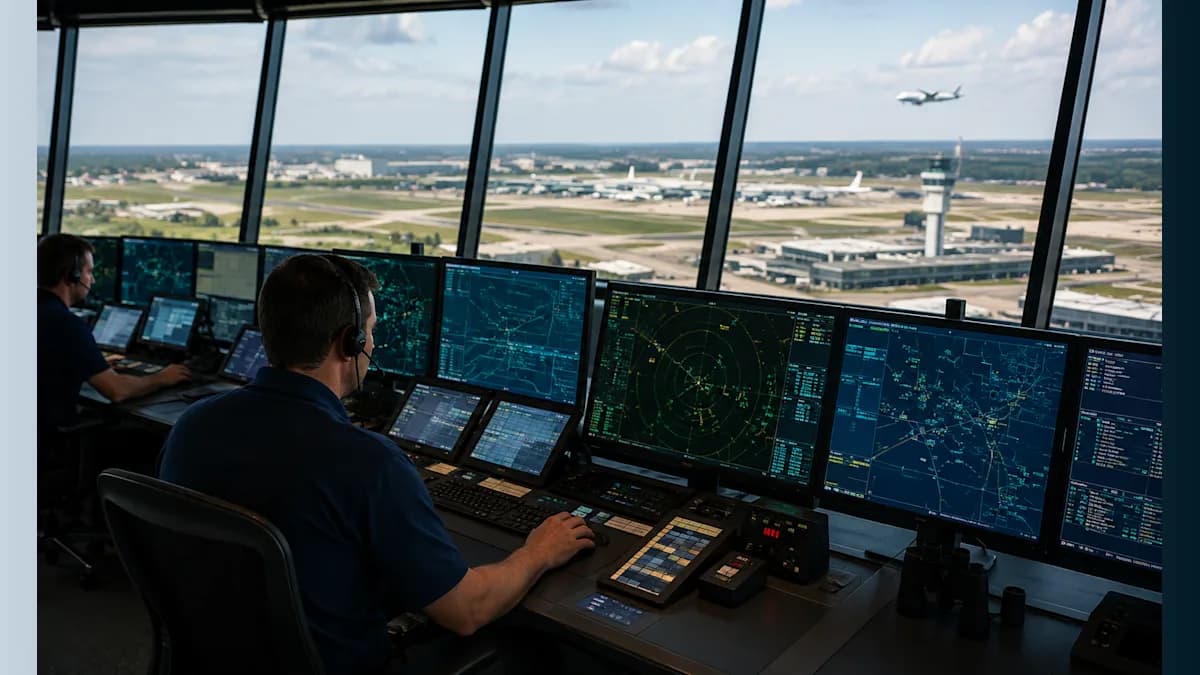
EGG HARBOR TOWNSHIP — A multibillion-dollar modernization of America's air traffic control system is underway, and a key part of the work is taking place at the William J. Hughes FAA Technical Center in Atlantic County.
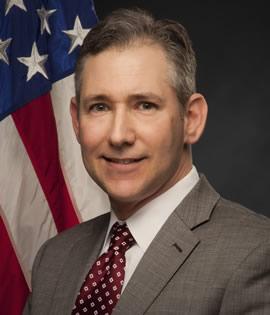
Dr. Eric Niederman, director of the FAA Technical Center, said an initial $12.5 billion federal appropriation is helping lay the foundation for what the FAA calls its Brand New Air Traffic Control System, or BNATS.
Niederman and retired Col. Jon Schliefer discussed the modernization Saturday during an appearance on The Gabe Staino Show on WOND.
Niederman said U.S. Transportation Secretary Sean Duffy visited the Technical Center about a year ago and outlined the administration's vision for modernizing the nation's aging air traffic control infrastructure.
“We were very fortunate to, as an agency, to have funding for what's known as the brand new air traffic control system,” Niederman said. “BNATS is what the acronym is.”
“The first appropriation was $12.5 billion,” he said.
Communications, Radar and Computers All Targeted
The initial investment encompasses some of the fundamental technology used to manage aircraft across the United States.
Niederman said the money will support “new communication systems,” “new navigation systems,” new surveillance equipment and computer automation.
“That's sort of the foundation of it,” Niederman said.
But the longer-term goal is even more ambitious.
“The next step, and there's hope for additional appropriation, is really to fundamentally re-architect the national airspace system,” he said.
The challenge isn't simply replacing old equipment.
The FAA must prepare the nation's airspace for technologies that barely existed when much of the current system was designed.
Those include drones, electric air taxis, supersonic aircraft and commercial space operations.
“How do we incorporate all these new entrants, you know, all the things that are coming?” Niederman said. “How do we make it so that we're safe or safer, as safe it is now, we're safer, and that we can incorporate all these new technologies and be as efficient and more efficient?”
More Than 600 Radar Systems Targeted for Replacement
Niederman said the modernization is already progressing rapidly.
The FAA has replaced more than 60% of its copper telephone wires, he said.
“So now it's voice over IP. It's high speed fiber, 5G, low Earth orbit satellite,” Niederman said. “So the communication is more reliable, faster, more responsive.”
Then there's radar.
“We're on track to replace over 600 radar systems by June of 2028,” Niederman said.
“That is just amazing how quickly we're rolling out the new technologies.”
Schliefer pointed to a new surface radar system recently unveiled in Newark as an example of modernization passengers may never notice.
“The American public will have no idea that it even exists,” Schliefer said.
And in some ways, that's the point.
Passengers May Notice Fewer Delays — Not the Technology
Schliefer said the public shouldn't necessarily expect to see the technology transforming the system behind the scenes.
Instead, travelers may experience the results.
“The American people, they're not going to see something or perhaps feel something other than more efficiencies, perhaps fewer delays at airports, perhaps smarter reroutes around the number one delay, which is weather,” Schliefer said.
“That's how the American public will feel it.”
Schliefer said Technical Center experts have been preparing for many of these changes for years.
“A lot of these things, you guys are like amazed,” he told the WOND hosts. “And for Eric and myself, we've been talking about this for over a decade. And now, it's the reality of it.”
“We're in this third revolution of innovation,” Schliefer said.
Nearly Seven Decades of Aviation Research in South Jersey
The Technical Center's role in the modernization continues a mission that began before the FAA itself formally existed.
Niederman said the facility dates to 1958 and has been involved in essentially every generation of U.S. aviation advancement since then.
“Every single aviation innovation, safety improvement, advancement in the air traffic control system has been either developed, conceptualized, tested, matured, fielded, and then we support the technology once it's in the field,” Niederman said.
The Technical Center also tests how new technology can be safely integrated with existing systems.
That work includes digital air traffic control towers, new surveillance technology, aircraft materials, fire safety and numerous other areas.
The stakes are significant.
Niederman said the United States operates the world's safest and most complex airspace.
Schliefer said the job of the FAA is to make sure that remains true even as the technology controlling that airspace changes dramatically.
“The highest compliment that we can receive as a regulatory agency is for people to know that we're not here, right?” Schliefer said. “We're safe, right? You don't see an aircraft landing on the news, right? It's only when bad things happen.”
And while travelers across the country may never know where many of those new systems were tested, much of the work helping to bring the nation's air traffic control system into a new era is happening right here in South Jersey.

About the Author
Peter Killeen
A 25-year radio news veteran, Peter covers South Jersey for NewsTalk 1400 & 92.3 WOND radio. Known for his concise and impactful delivery, he ensures listeners and readers stay informed without unnecessary filler.