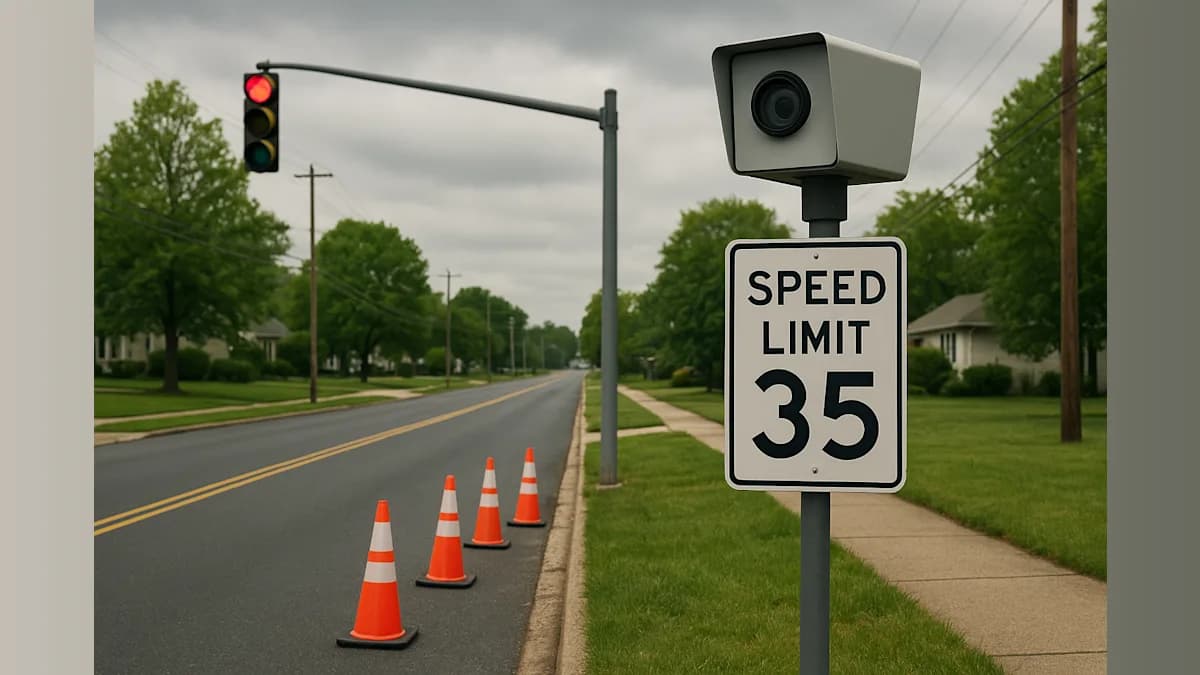
Automated speed cameras are appearing on roadways across the United States at an accelerating pace, bringing with them both documented safety improvements and mounting opposition from motorists who question the programs' true intentions.
More than two dozen states now permit speed camera enforcement, with Florida, California, Hawaii, Michigan, and Minnesota among those recently authorizing the technology. Each state has adopted distinct regulations governing camera placement and revenue allocation, creating a patchwork of enforcement approaches nationwide.
Carlos Acosta, who spent 27 years working in the Miami-Dade Sheriff's Office before retiring, received two speed camera citations this spring near his suburban Miami residence. Both tickets were issued in school zones during midday hours when students were inside classrooms.
"I think it's a money grab," Acosta told NPR. "That's what irks me the most. It's all about making money."
While Acosta expressed support for protecting children traveling to and from school, he objected to enforcement during periods when students are not present. "So they're basically giving you a citation for going over the regular speed limit," he told NPR. "That's where you get popped."
Safety research organizations present compelling evidence supporting camera effectiveness. Raul Avelar, an engineer with the Insurance Institute for Highway Safety, a nonprofit research organization funded by the auto insurance industry, cited multiple domestic studies demonstrating cameras can reduce speeding by 70 percent or more. Research conducted in Maryland found speed cameras decreased the likelihood of serious injury by 39 percent.
"The whole point of the cameras is reducing the speeds, which leads to crashes at lower speeds when they happen, so there's fewer people dying," Avelar told NPR.
Legal challenges to the programs are mounting. Ted Hollander, an attorney with The Ticket Clinic, a law firm monitoring speed camera locations throughout Florida and contesting citations in court, questioned the safety justification for around-the-clock enforcement in school zones.
"We don't really think it's truly about safety, because if it was, it would only be during the times when the kids are around, not when they are in school," Hollander told NPR. "We feel like it's an illegal tax and we want to do what we can to protect people."
The debate has reached the federal level. Last month, the Federal Highway Administration removed speed cameras from its list of "Proven Safety Countermeasures" — strategies demonstrated to reduce crashes and save lives. The agency also eliminated bike lanes and other speed-related measures from the list.
The FHWA stated the website modifications are part of a comprehensive review of safety recommendations to ensure alignment with the Trump administration's priorities. Safety advocates have argued the Department of Transportation is undermining strategies with established effectiveness records.
Program supporters reject characterizations of revenue-driven enforcement. Rep. Laura Friedman, D-Calif., who represents part of the Los Angeles area, authored California's speed camera legislation while serving in the state assembly. The law mandates that all revenue generated from speed camera programs be reinvested in safety improvements on the streets where citations were issued.
"We have so many safeguards built into this to make sure it is purely a traffic calming and speed reduction effort and not a money grab, not a surveillance tool," Friedman told NPR.
California's first speed cameras became operational last year in San Francisco, with Oakland activating its system earlier this year. The most significant test of the state's approach will unfold in the coming months when Los Angeles — a city historically defined by automobile culture and high-speed driving — activates its speed camera network.
Friedman reported positive constituent response to the technology. "When people come forward and they say, 'I've been scared to cross the street in this area, or we have had street racing constantly all night long,' seeing them have a chance now to do something about it" has been satisfying, she told NPR. "It is going to make it harder for people to speed, and that's a good thing."
As automated enforcement expands, the tension between documented safety benefits and public skepticism over implementation continues to shape the national conversation around traffic safety policy.