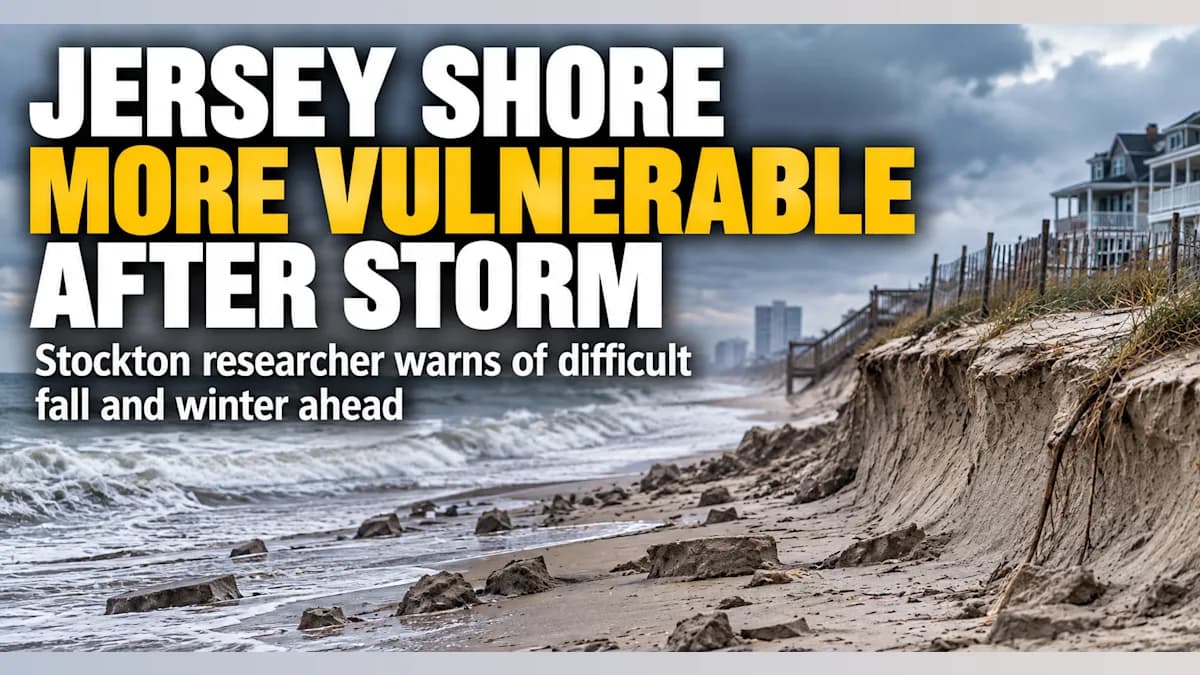
With a potentially historic El Niño strengthening, researcher Steve Hafner says another coastal storm could cause greater damage if battered beaches don't have enough time to recover.
GALLOWAY, N.J. — The weekend nor’easter may be gone, but a Stockton University coastal researcher is warning that what happens next could be just as important for the Jersey Shore.
Beaches and dunes from Brigantine south through Avalon were battered by the prolonged storm, with some of the most significant damage occurring along the northern ends of barrier islands.
Now Steve Hafner, a research scientist and principal investigator with Stockton University's Coastal Research Center, says the early timing of the storm could create additional vulnerability if more coastal storms arrive before beaches have time to recover naturally.

“The fact that the storm came very early in what is predicted to be a historic El Niño season could be very problematic for New Jersey coastal communities this fall and winter,” Hafner said.
During a typical El Niño, Hafner said, Mid-Atlantic shorelines can experience an increase in the number and intensity of coastal storms.
And this year's El Niño could be particularly significant.
The National Oceanic and Atmospheric Administration said earlier this month that El Niño is strengthening and there is a greater than 90% chance of a very strong event during the Northern Hemisphere fall and winter of 2026-27.
NOAA also says there is a 75% chance the El Niño reaches historic strength during the October-through-December period.
That doesn't guarantee South Jersey will experience another destructive coastal storm. But Hafner says the condition of the beaches following this weekend's nor’easter is important.
“If there is insufficient time for sand to move naturally back on shore from the offshore bars in between storms, the vulnerability increases and impacts will be intensified,” Hafner said.
Damage Followed a Familiar Pattern
According to Hafner, the storm's impact largely followed a pattern coastal researchers have seen before.
During South Jersey nor'easters, northern portions of barrier islands often suffer some of the greatest damage because they are directly exposed to waves coming from the northeast while inlet currents rapidly move sand during changing tides.
“This storm followed these trends as the north-end beaches in every shore town from Brigantine to Avalon were affected,” Hafner said.
“Beaches were flattened in elevation and dunes were cut, leaving steep near-vertical escarpments behind.”
Those observations are consistent with some of the damage reported across the region since the storm.
In Brigantine, Mayor Vince Sera told South Jersey NewsBeat that dunes along the city's north end were stripped back by an estimated 10 to 15 feet in places.
Atlantic City Beach Patrol officials described the erosion there as the worst since Superstorm Sandy, with particularly significant damage north of Steel Pier.
Ocean City is still assessing its losses. Mayor Jay Gillian said Monday that a team from the New Jersey Department of Environmental Protection's Office of Coastal Engineering was conducting post-storm surveys of the city's beaches.
North Wildwood Among Hard-Hit Areas
Hafner identified North Wildwood as another particularly hard-hit location.
“In North Wildwood, waves overtopped the seawall and the remaining beach and dunes to the south and along the inlet were heavily impacted,” he said.
Even Wildwood's unusually wide beaches were unable to completely contain the storm.
“The waves and tidal surge flooded even the wider Wildwood beaches, sending water under the boardwalk,” Hafner said.
Farther north, Stockton researchers found substantial beach and dune damage in Holgate at the southern end of Long Beach Island.
Beach Replenishment Helped Prevent Worse Damage
Despite widespread erosion, Hafner said New Jersey's beach nourishment projects appear to have done what they were designed to do: absorb the punishment of the storm before waves could inflict more extensive damage on buildings and infrastructure.
“Things could have been much more severe if it weren't for the in-place beach nourishment projects along most of the coast,” Hafner said.
“These helped to reduce property and infrastructure damage from direct wave impacts.”
That assessment echoes Gillian's comments Monday about Ocean City.
Gillian said the ocean never breached Ocean City's dune system despite the severity of the storm and credited the city's recently completed beach replenishment project with helping protect property.
The distinction is important because a beach that loses large amounts of sand during a storm has not necessarily failed.
Beach nourishment and dune systems are designed in part to sacrifice sand and absorb wave energy, reducing the force reaching homes, roads and other infrastructure behind them.
Much of Flooding Came From the Bay
Hafner also distinguished the extensive beach erosion from another major problem during the storm: flooding.
He said severe flooding occurred in numerous low-lying communities and likely caused property damage.
But much of that water did not come directly over the oceanfront dunes.
“Most of that was created by back-bay flooding rather than waves over washing street ends,” Hafner said.
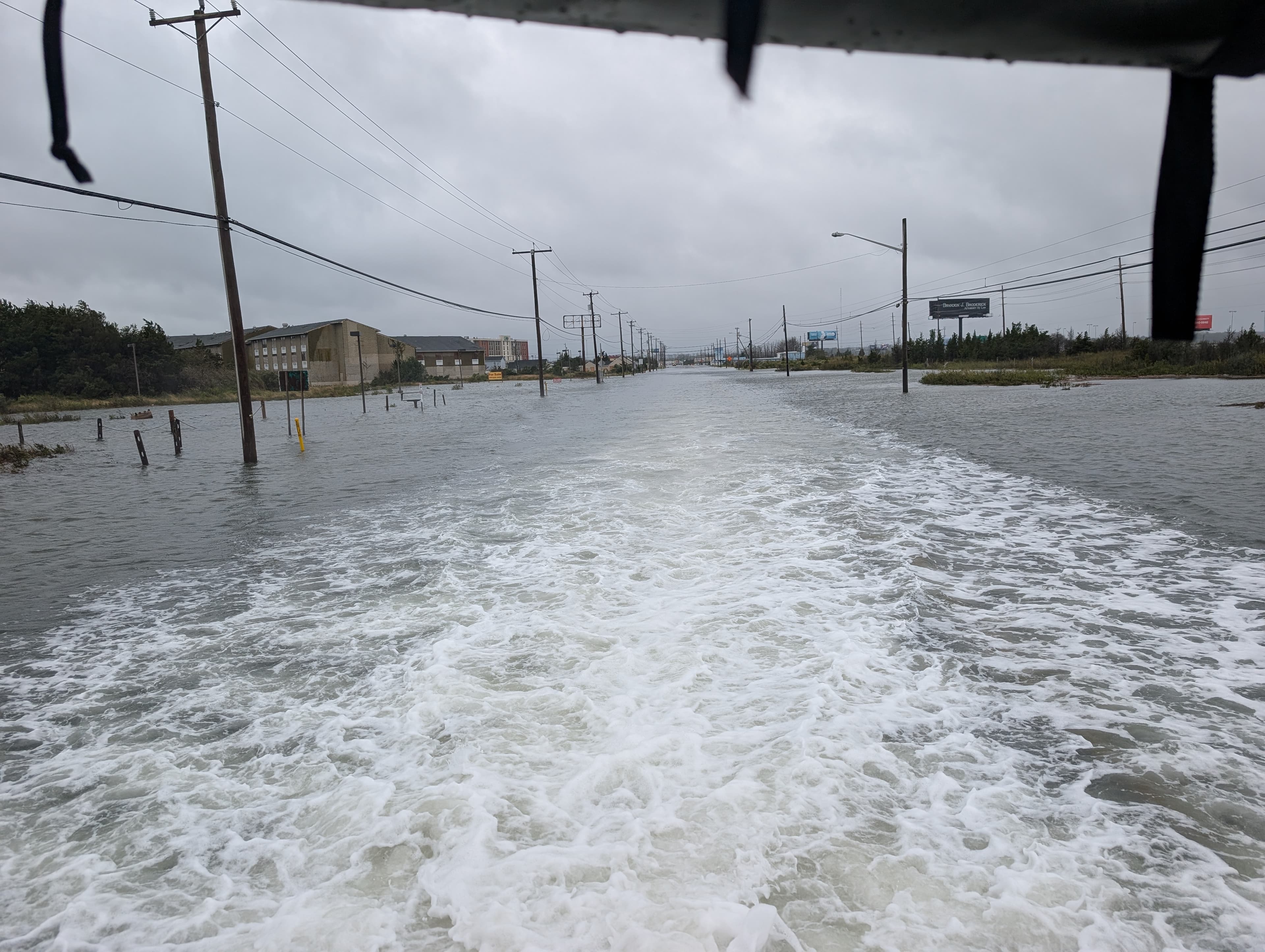
That distinction was evident throughout the weekend as bay waters inundated roads and neighborhoods in communities including Ocean City, Wildwood and West Atlantic City.
Researchers Heading Back to the Beaches
Stockton's Coastal Research Center has studied New Jersey's shoreline for decades and operates the New Jersey Beach Profile Network, which monitors changes to beaches, dunes and nearshore areas at locations along the coast.
The center serves as a state resource for coastal research and has worked with the New Jersey Department of Environmental Protection, U.S. Army Corps of Engineers, FEMA and coastal municipalities.
For now, researchers are still gathering data.
Stockton said Coastal Research Center crews are conducting surveys and expect to provide more detailed information about specific storm damage in the coming weeks. Those findings will be shared with state and local officials as they conduct their own assessments.
The concern now is whether the Jersey Shore gets enough time to recover before the next significant storm arrives.
With a potentially historic El Niño developing, Hafner's warning is straightforward: beaches already weakened by one major storm may be more susceptible to the next.
And this year's coastal storm season is only beginning.