The new facility features a mock crime scene, fingerprint analysis equipment and specialized technology as student interest in forensic investigation continues to grow.
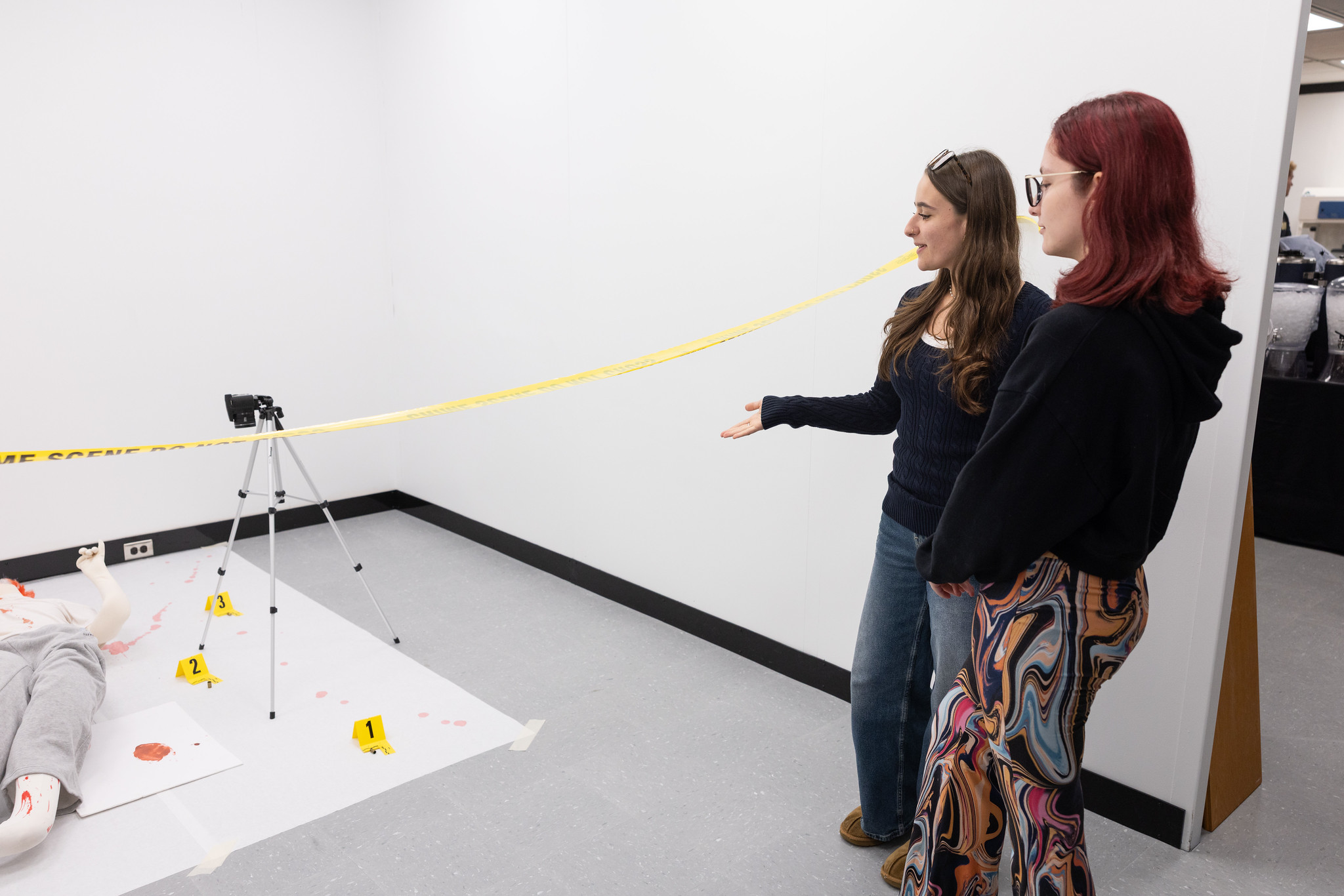
GALLOWAY, N.J. — A mannequin lying on the floor with a knife protruding from its torso, simulated blood spatter and yellow crime scene tape might seem like an unusual sight on a college campus.
But at Stockton University, it's all part of a new learning experience designed to prepare students for careers in criminal justice and forensic investigation.
The university unveiled its expanded Forensics Lab this week, giving students access to a realistic crime scene environment and specialized equipment used to examine physical evidence.
The new facility represents a significant expansion of Stockton's forensic investigation program, which had outgrown its previous laboratory space.
For students like Branna Foy, a junior criminal justice major from Brick Township, the opportunity to work in the new lab is an exciting step toward a future career in law enforcement.
"I'm very happy the lab is here. I'm so excited. It looks so awesome. It's the first time I've seen it fully complete and I'm just really excited to be able to use it," Foy said.
Foy, who is concentrating in forensic investigation, hopes to work for the Ocean County Sheriff's Office after graduation.
A Crime Scene Students Can Investigate
The expanded laboratory includes a mock crime scene area where students can practice investigating simulated incidents, documenting evidence and applying forensic techniques.
During a tour of the new facility, Foy encountered an autopsy table before entering the mock crime scene, which featured crime scene tape, simulated blood spatter and a mannequin representing a stabbing victim.
The laboratory is designed to give students practical experience with the types of evidence and investigative procedures they may encounter in their future careers.
Criminal Justice Teaching Specialist Barbara LeClair told students the pristine condition of the new facility probably won't last long.
"Don't expect this room to stay this clean and new once we start doing blood spatter analysis," LeClair said.
The lab will allow students to conduct experiments and develop investigative skills in a dedicated environment rather than relying on temporary classroom setups.
Fingerprints, Blood Spatter and Ballistics
The expanded facility provides space and equipment for several types of forensic investigation.
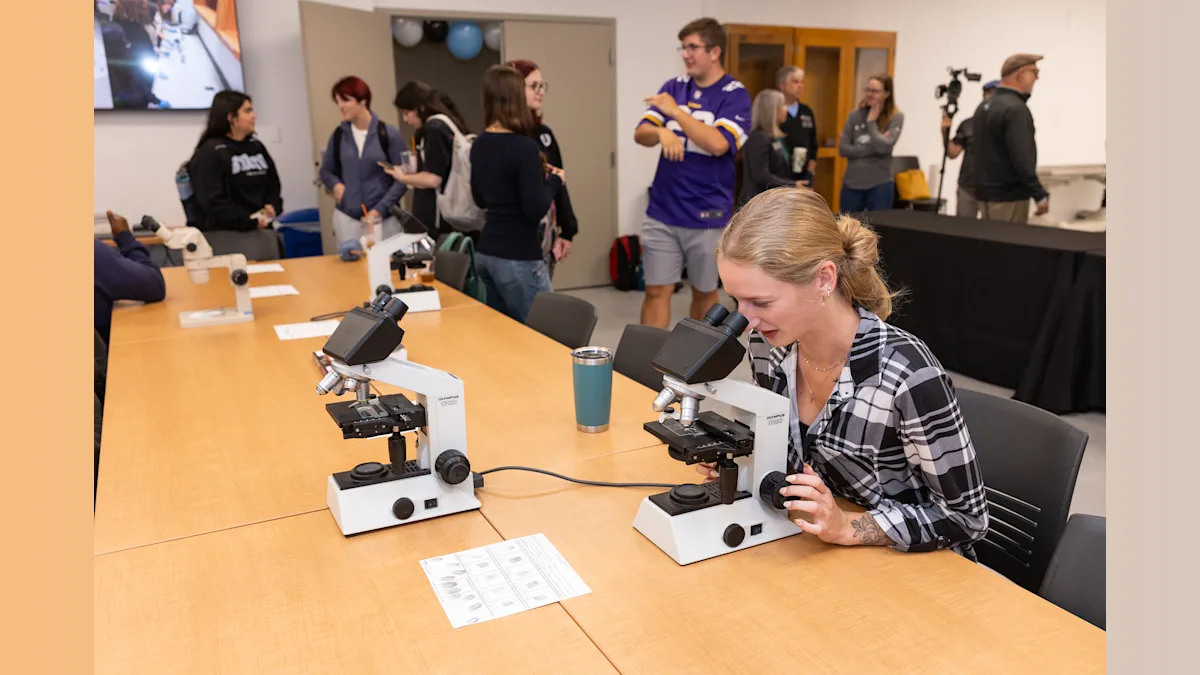
Students will be able to use fuming hoods to develop fingerprints on objects, examine evidence using different colored lights and conduct hair and fiber analysis with microscopes.
The laboratory also includes space for analyzing blood spatter patterns and studying ballistic evidence trajectories.
Criminal Justice Teaching Specialist Bill Dineen said the additional space will allow faculty members to incorporate more practical exercises into their courses.
"This affords us more of an opportunity to conduct experiments," Dineen said. "It's more practical, and that's what we were looking for — practicality."
Dineen and LeClair had advocated for a larger laboratory for several years after the university's forensic investigation program outgrew its previous space.
"We try to touch every component within the forensic space, some more in-depth than others, but we will give the students at least an introduction to it," Dineen said.
Student Interest in Forensics Continues to Grow
Stockton currently offers forensic psychology and forensic investigation as concentrations within its criminal justice major.
According to the university, the percentage of criminal justice students enrolled in those concentrations increased from 24.4% in 2016 to 44.3% in 2025.
The university also offers a Forensic Science Certificate Program for criminal justice majors and current students and alumni in select other programs.
Marissa Levy, dean of Stockton's School of Social and Behavioral Sciences, said the new laboratory is part of a long-term effort to expand forensic education.
"We have been working to improve our forensics program for nearly 30 years," Levy said.
"We first did that incrementally with portable fingerprint kits and later with temporary lab space. Now, we have a beautiful space with permanent features including a room to analyze blood spatter and technology to support medicolegal investigations."
The expanded facility is expected to provide additional opportunities for students to apply classroom lessons to simulated criminal investigations.
Preparing Students for Careers in Crime Scene Investigation
For junior criminal justice major Hailey Corvino of Toms River, the new laboratory offers an opportunity to develop skills she hopes to use as a professional crime scene investigator.
"That's my dream. That's my passion. To help families get the answers they need. That they are entitled to when tragedy strikes. I want to make communities feel safer," Corvino said.
Faculty members say the expanded space will also allow Stockton to introduce additional equipment and investigative technology as the field evolves.
"We'll be building it out as we go," Dineen said. "As we go forward, this place will allow us to adapt to any changes."
LeClair said the new laboratory is only the beginning of the university's plans for its forensic investigation program.
"The new lab is definitely a big steppingstone in growing the program," she said.
"This is modern. This is new. It's in its infancy, but it's only going to be expanded. We want students to actually be able to do these things."
For students preparing to enter law enforcement, forensic science and related criminal justice fields, the new facility provides an opportunity to gain practical experience before beginning their professional careers.
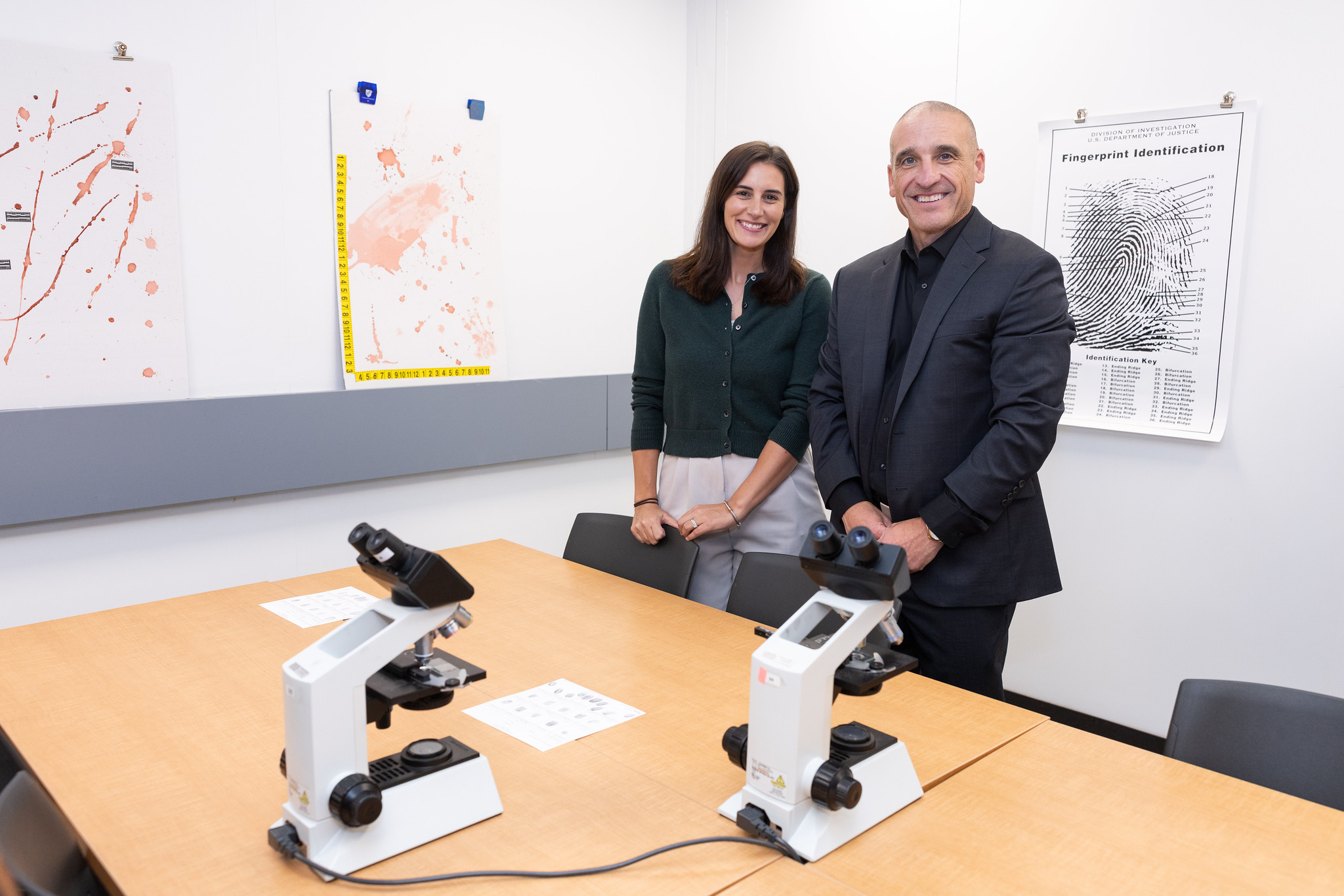
Criminal Justice Teaching Specialists Barbara LeClair and Bill Dineen stand in front of posters on fingerprint identification and blood spatter analysis in the new Forensics Lab.