Americans describe their country as deeply polarized, and on that point the research agrees. What the research challenges is the assumption that the divide is as wide as it feels. A growing body of survey work indicates that a substantial share of the electorate holds views that cross party lines, and that the loudest voices on either flank represent a smaller slice of the public than the national conversation suggests.
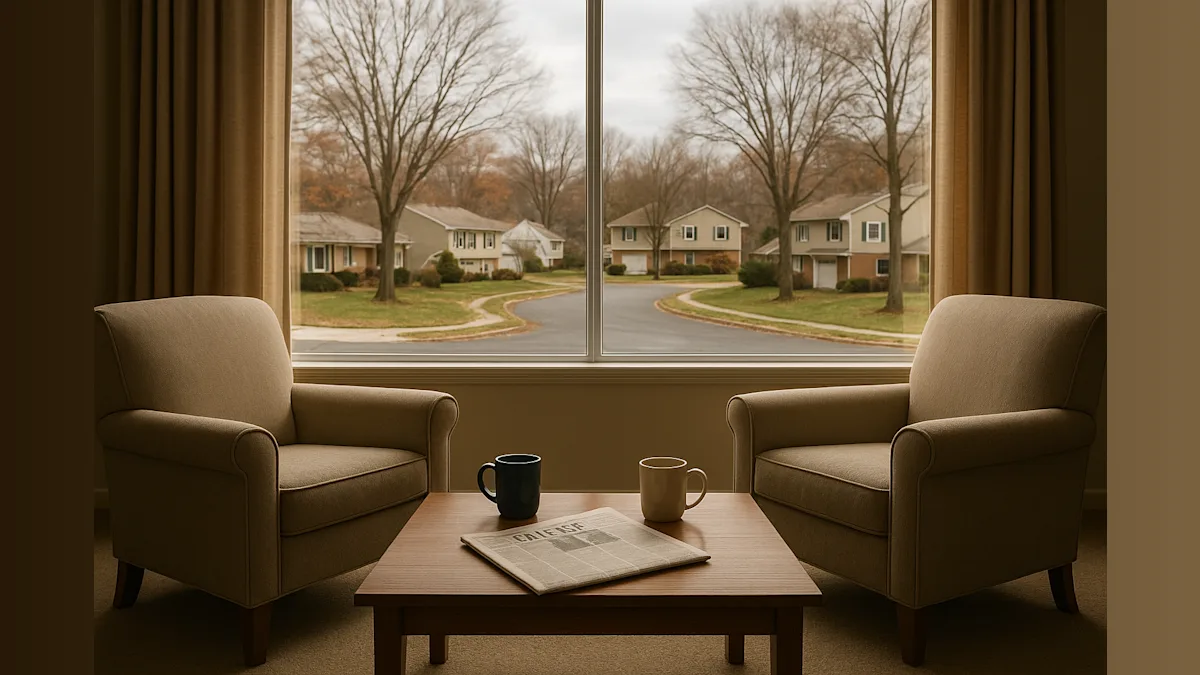
The gap between what people believe and what they believe about each other was on display in a cafe conversation between two friends, Shanna Berry and Alma Ong, both in their early 50s. The pair, who said they preserve their friendship in part by avoiding political discussion, were asked in January about the U.S. capture of Venezuela's then-president Nicolas Maduro. They initially declined to answer, citing their relationship.
Berry, a Christian, retired hairdresser and Air Force veteran who has supported President Trump, eventually offered her view. "I feel like the end of the regime was necessary," Berry told NPR Topics: National. She added that she was uncertain about the legalities of how it was carried out and said she was somewhat jaded by the appearance of a strong interest in Venezuelan oil, while noting that many Venezuelan people appeared pleased by the outcome.
Ong, a Buddhist who grew up in London, came to the U.S. in the 90s and does not support the president, reacted with visible surprise. She said she agreed with everything Berry had just said, expressing astonishment at the alignment.
Kristin Laurin, a professor of psychology at the University of British Columbia, said the exchange illustrates two patterns documented in polarization research. "That was just such a perfect example of two things that I see in the literature," Laurin told NPR Topics: National. One pattern is that people avoid political conversation out of concern about conflict, and that avoidance can cause them to overestimate how far apart they are. "These two friends were making assumptions about each other that turned out to be totally wrong," Laurin told NPR Topics: National. "It turned out, actually, they kind of believed the same thing."
Laurin attributed the perception gap in part to political elites, who she said work to cast opponents as extreme in order to alarm and energize their own supporters. Social media, she added, magnifies inflammatory political content because outrage drives engagement. "Our perceived polarization far outstrips the actual polarization," Laurin told NPR Topics: National.
The non-partisan Pew Research Center has found that the political landscape is more varied than many Americans appreciate. Pew sorts the public into nine groups based on values and attitudes. One of them, which Pew calls the "Pragmatic and Polite Right," is 56% Republican or Republican-leaning and 37% Democratic or Democratic-leaning. It has the oldest average age of the nine groups, prizes civility in politics, leans conservative on economic questions and takes more moderate positions on race and immigration.
Jocelyn Kiley, who leads politics research at Pew, said the party labels conceal considerable internal variety and overlap. "Once you look beneath Republican and Democratic labels you see a lot of variation within the parties and a lot of overlap," Kiley told NPR Topics: National. She added that this untidy center is larger than the groups anchored on the ideological right and left.
By Pew's estimate, that middle accounts for roughly 60% of the electorate. The groups farthest to the right, which Pew labels the "No Apologies Right" and the "Faith First Conservatives," together make up just 21% of the population. Pew offers a public quiz that allows individuals to identify which of the nine groups fits them best.
Kiley said the country's divisions are genuine, but that agreement runs deeper than many people assume. "We are a highly polarized country and there's also a lot of nuance underneath that," she told NPR Topics: National.
For local communities, the findings suggest that the sharpest political rhetoric may not reflect the views of most neighbors. Researchers point to everyday conversations, such as the one between Berry and Ong, as evidence that assumptions about the other side are often wrong, and that the reluctance to discuss politics can itself widen the perceived distance between people who agree more than they know.