State Senate hopeful says the hotel should remain part of the Convention Center complex, criticizing plans to convert part of the property into senior housing.
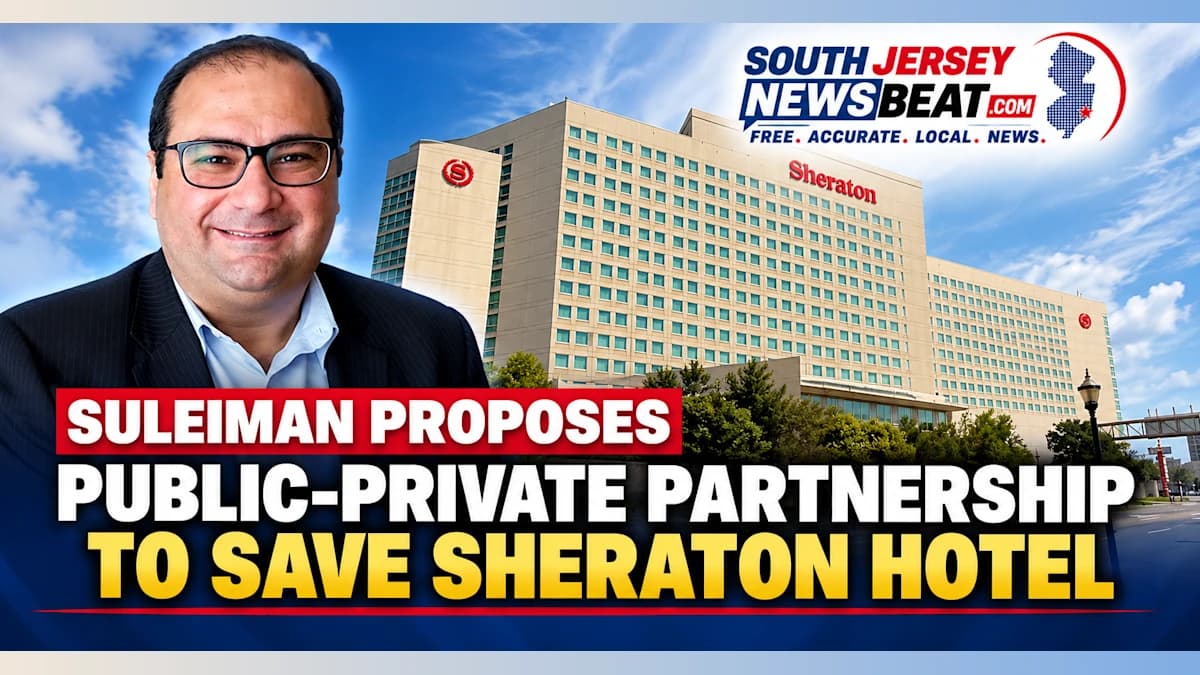
ATLANTIC CITY — Former Atlantic County Democratic Chairman Michael Suleiman is proposing a public-private partnership to preserve the Sheraton Atlantic City Convention Center Hotel, arguing that converting much of the property into senior housing would undermine the city's ability to attract conventions and trade shows.
Suleiman, who recently announced his intention to run for state Senate in 2027, outlined his proposal during an Oct. 8 appearance on Off The Press with Scott Cronick on News Talk 1400 & 92.3 WOND.
His comments come as the future of the 502-room hotel remains uncertain, with its owners warning that the property could close Dec. 15 unless they secure state financial assistance for a proposed $100 million redevelopment.
"We need to make the Sheraton part of the convention center," Suleiman told Cronick. "This asinine idea to do senior housing is nuts. It's stupid, it's dumb."
Suleiman said Atlantic City cannot afford to lose a major hotel connected to its Convention Center at a time when the city is facing increasing competition for tourism, conventions and casino visitors.
"We need more conventions and trade shows here," he said.
A Different Plan for the Sheraton
The hotel's owner, LINY Investor LLC, has proposed converting part of the property into 130 age-restricted residential apartments while renovating 252 remaining hotel rooms.
The Casino Reinvestment Development Authority approved the project's land-use application in March, and Atlantic City Council has approved a long-term payment-in-lieu-of-taxes arrangement.
Developer Thomas Scannapieco has argued that the hotel has struggled financially for years and cannot continue operating in its current configuration without significant investment.
The redevelopment plan is intended to generate residential income that would help support a smaller, renovated hotel operation.
But Suleiman believes government officials should explore a different approach that preserves the property's role in the convention business.
He suggested a partnership involving the state, the Casino Reinvestment Development Authority, Atlantic City and a private hotel operator.
"You're saying the convention center, so should the state buy the Sheraton from the owners or a public-private partnership?" Cronick asked.
Suleiman pointed to New Brunswick, where Middlesex County has pursued a public-private approach involving the Heldrich Hotel.
"You could have a similar situation here," Suleiman said.
He suggested that public agencies could help finance or acquire an interest in the Atlantic City property while leaving day-to-day hotel operations to an experienced private company.
"You have an operator. Government should not be in the business of running" a hotel, Suleiman said.
The proposal represents an alternative to the current redevelopment plan, although Suleiman did not identify a specific funding commitment, potential operator or agreement with the hotel's owners.
Should Taxpayers Have an Ownership Stake?
One of Suleiman's central arguments is that if New Jersey provides substantial financial assistance to rescue the property, taxpayers should receive something in return.
The current owners are seeking state tax credits to help finance the redevelopment.
Suleiman questioned whether such a large public investment should be made without some form of public ownership or financial participation.
"If you're going to give $100 million in state tax credits to Sheraton, the state should have some points in the business," he said.
He clarified that he was not advocating government management of the hotel.
"I still want the private sector to be involved," Suleiman said.
His proposal would require additional discussions about the property's value, ownership structure, financing and whether the existing developer would be willing to participate.
No public-private partnership of the kind Suleiman described has been announced.
Convention Business at Risk
The debate over the Sheraton extends well beyond the hotel itself.
The property is directly connected to the Atlantic City Convention Center, making it particularly valuable to organizations booking large meetings, trade shows and conferences.
Visit Atlantic City President and CEO Gary Musich has warned that losing the hotel or substantially reducing its available guest rooms could make it more difficult to compete for major events.
Convention organizers frequently consider the number of hotel rooms available within walking distance of a meeting facility when choosing a destination.
That makes the Sheraton's future particularly important for the city's restaurants, transportation businesses, entertainment venues and other establishments that benefit from convention visitors.
At a recent Stockton University discussion about the region's tourism industry, Musich again identified uncertainty surrounding the Sheraton as a significant challenge.
The hotel's owner has said that without state assistance, the property could close in December.
Suleiman believes the potential economic consequences justify greater government involvement.
He also criticized Atlantic City Council's support for the residential redevelopment, arguing that officials should have placed greater emphasis on preserving the property's convention-related use.
Funding the Convention Center
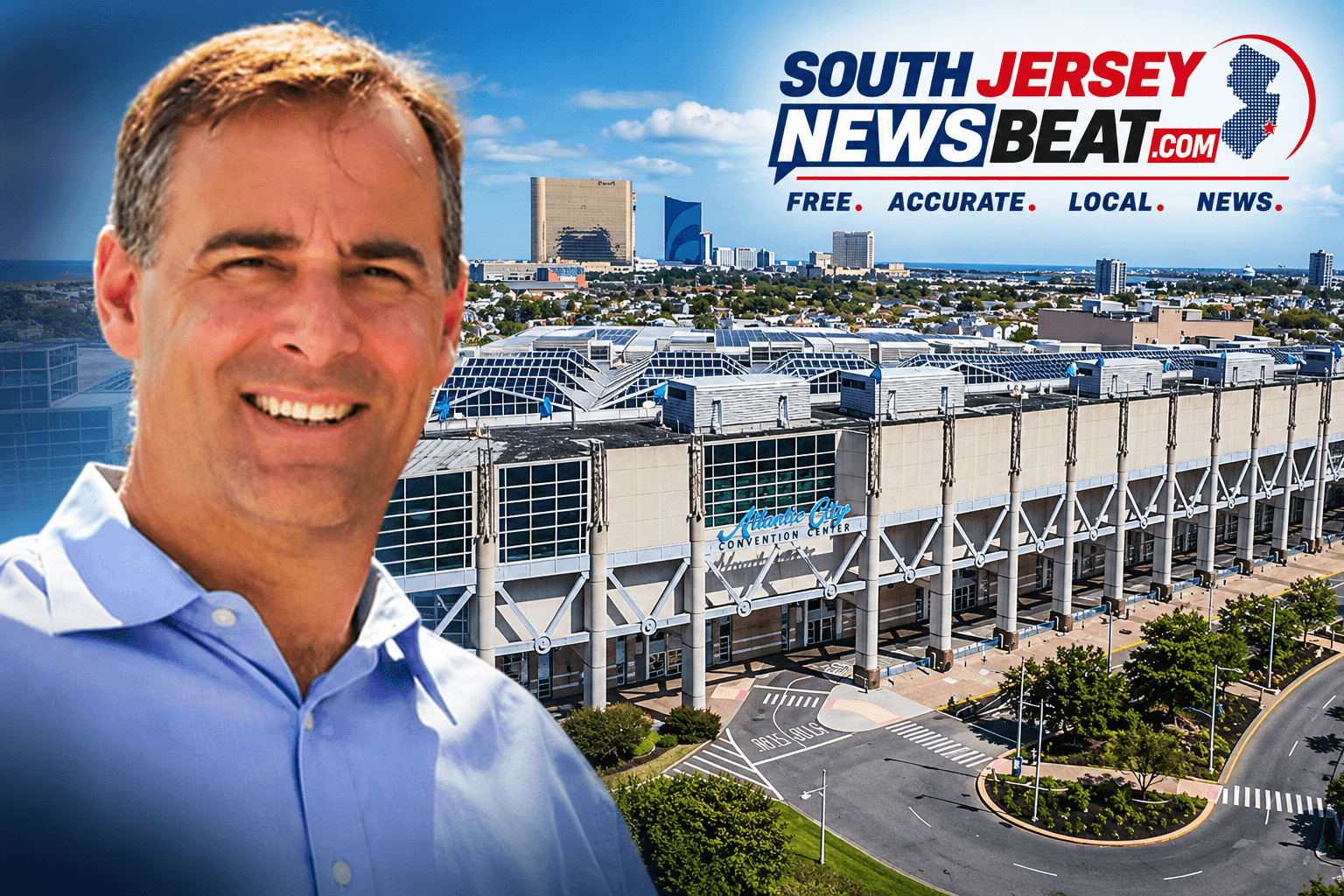
Suleiman's concerns extend to the Atlantic City Convention Center itself, which faces its own infrastructure and investment challenges.
During the interview, Cronick questioned where the money would come from to address those needs.
Suleiman acknowledged that securing substantial state assistance would not be easy.
"We're not going to get $50 million overnight from Trenton," he said.
But he argued that another potential funding source already exists: investment alternative tax revenue historically associated with the Casino Reinvestment Development Authority.
"We need to bring the IAT, investment alternative tax money, back to CRDA," Suleiman said.
The investment alternative tax system was created to direct casino-related revenue toward redevelopment and economic investment. How those funds could be redirected or restored would depend on existing state law and any legislative changes required.
Suleiman believes those resources should be part of a broader strategy to strengthen Atlantic City's convention infrastructure.
"Let's get to work," he said.
A Larger Debate About Atlantic City's Future
The Sheraton controversy has become part of a larger discussion about Atlantic City's economic direction.
The city faces growing competition from casino markets in neighboring states, including planned gaming expansion in New York.
Tourism officials have emphasized the importance of conventions, meetings and other nongaming attractions as Atlantic City seeks to diversify its economy.
Suleiman has made that issue central to his criticism of Republican state Sen. Vince Polistina, whom he expects to challenge in the 2027 election.
He argues that Atlantic County has not received its fair share of state economic development assistance compared with other regions.
During the same interview, Suleiman pointed to major redevelopment incentives elsewhere in New Jersey and questioned why Atlantic City has struggled to secure comparable investments.
He said preserving the Sheraton as a full-service convention hotel would be one example of the kind of economic development initiative he would pursue.
But the existing redevelopment proposal presents a competing argument: Without a residential component and public financial assistance, the property's owners contend that the hotel cannot remain economically viable.
That leaves policymakers facing a difficult choice between preserving convention hotel capacity and supporting a redevelopment that the owner says is necessary to keep the property operating.
Suleiman believes there is another option.
His proposal would require public investment, private-sector participation and agreement among agencies and property owners that have not yet committed to such a partnership.
With the hotel's potential December closure approaching, the question is whether an alternative can be developed before the current financial pressures force a decision.
Michael Suleiman discussed the Sheraton and Atlantic City's convention industry on Off The Press with Scott Cronick, airing weekdays from 4 to 6 p.m. on News Talk 1400 & 92.3 WOND.

About the Author
Peter Killeen
A 25-year radio news veteran, Peter covers South Jersey for NewsTalk 1400 & 92.3 WOND radio. Known for his concise and impactful delivery, he ensures listeners and readers stay informed without unnecessary filler.