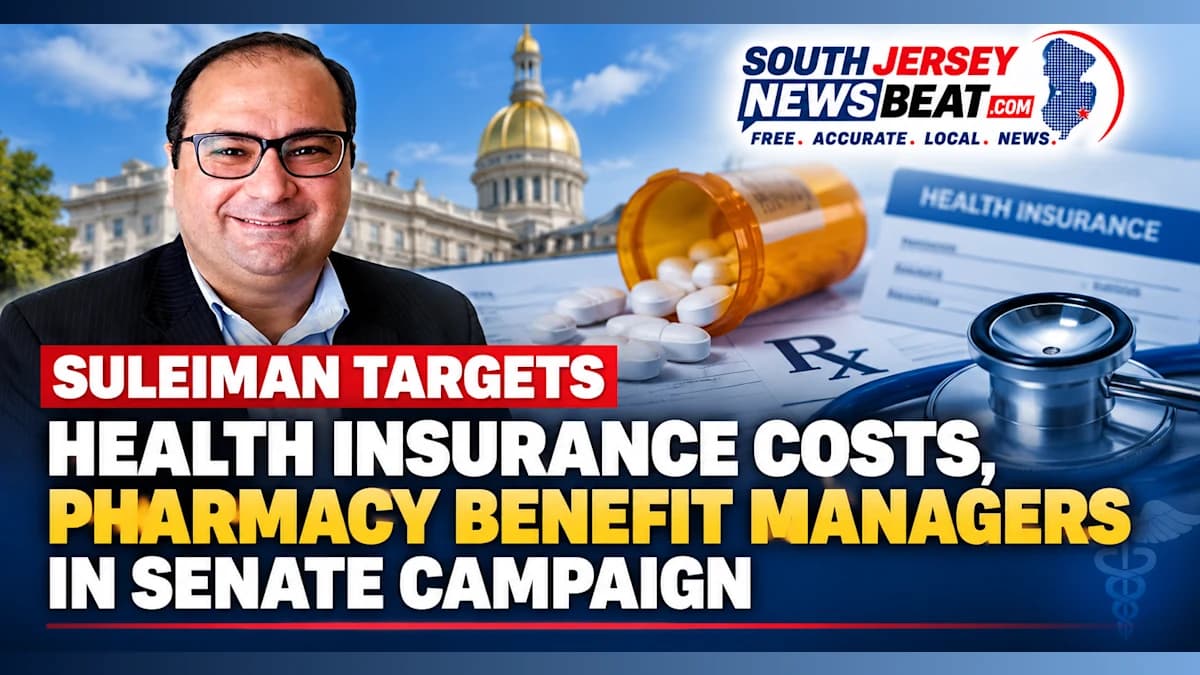
Democratic candidate calls for greater oversight of prescription drug pricing and insurers, while outlining his views on health care reform during WOND interview.
ATLANTIC COUNTY, N.J. — Michael Suleiman, the former Atlantic County Democratic chairman who recently announced his candidacy for state Senate, says lowering health insurance costs and increasing oversight of prescription drug pricing would be major priorities if he is elected to represent New Jersey's 2nd Legislative District.
During an Oct. 8 appearance on The Don Williams Show on News Talk 1400 & 92.3 WOND, Suleiman outlined a health care agenda that includes examining the practices of pharmacy benefit managers, scrutinizing major insurance companies and addressing problems with New Jersey's public employee health benefits system.
Suleiman, 36, is seeking the Democratic nomination for the Senate seat currently held by Republican Vince Polistina.
"We've got to tackle these pharmacy benefit managers in New Jersey that are ripping us off," Suleiman told Williams. "We've got to make sure we look at Horizon, the biggest insurer in the state."
Suleiman argued that lawmakers should examine whether health insurance companies and the businesses involved in managing prescription drug benefits are adequately protecting consumers.
"We've got to make sure they're doing the right thing and not so focused on the bottom line versus patient care," he said.
His comments come as New Jersey lawmakers are considering additional restrictions on pharmacy benefit managers, commonly known as PBMs, which negotiate drug prices and administer prescription benefits for insurers, employers and government programs.
Taking Aim at Prescription Drug Costs
Pharmacy benefit managers occupy a central position in the prescription drug industry. They negotiate rebates with pharmaceutical manufacturers, develop lists of covered medications and determine reimbursement arrangements with pharmacies.
Supporters of the industry say PBMs help control prescription drug spending through negotiations and benefit management. Critics contend that certain financial arrangements can create incentives that do not always align with patients' interests.
Suleiman believes the state should take a closer look at those arrangements.
"They're literally skimming money off the top," he alleged during the interview. "They're rigging the system so they have more money in their pocket based on the type of pharmaceuticals you use."
He also questioned whether financial incentives can encourage the use of more expensive medications.
"They'll steer you towards more expensive pharmaceuticals versus generics," Suleiman said.
Those are Suleiman's criticisms of industry practices, not findings established against any particular company during the interview.
The issue is already receiving attention in Trenton.
On Oct. 5, the state Senate Commerce Committee advanced a substitute for Senate Bill 2345, known as the Patient and Provider Protection Act.
Among its provisions, the legislation would restrict certain pharmacy benefit manager compensation arrangements, prohibit spread pricing and limit rebate agreements that discourage coverage of therapeutically equivalent generic drugs.
The proposal also seeks to establish additional consumer and pharmacy protections.
The committee action does not mean the legislation has become law. Further legislative approval would be required.
New Jersey already regulates pharmacy benefit managers, including through licensing requirements administered by the state Department of Banking and Insurance.
Suleiman did not identify a specific bill he would sponsor during the interview, but his comments indicate that prescription drug pricing oversight would be an important part of his legislative agenda.
Questions About Horizon and Public Employee Benefits
Suleiman also singled out Horizon Blue Cross Blue Shield of New Jersey, one of the state's major health insurers, as a company whose practices deserve greater examination.
He did not cite a specific finding of wrongdoing by Horizon during the interview.
His broader criticism centered on whether the state's insurance system is doing enough to make health care affordable.
Suleiman was particularly critical of the State Health Benefits Program, which provides coverage to participating public employees and retirees.
"This state health benefits plan, I won't bore your listeners on it, but it's a total disaster," he said.
The program's financial sustainability and affordability have become major issues in Trenton.
On Oct. 1, Gov. Mikie Sherrill announced the creation of a State Health Benefits Program Reform Working Group, bringing together state officials, labor representatives, health care organizations, insurers and other stakeholders.
The group is charged with developing recommendations to improve affordability and the program's long-term sustainability.
Its first meeting is scheduled for Oct. 16, with additional work expected to continue into 2027.
Horizon is among the participating program vendors represented in the process.
The administration has said that any resulting changes would need to proceed through the appropriate bargaining, administrative or legislative processes.
Suleiman's comments place him among those calling for changes to the system, although he has not yet released a detailed plan for restructuring it.
A Broader Vision for Health Care
Beyond the specific issues that could come before the state Legislature, Suleiman expressed support for expanding access to health insurance nationwide.
"I do believe that health care should be a universal right," he told Williams.
"I do think we need to get to a point eventually of universal health care," he added.
Suleiman described himself as a capitalist with progressive values, rejecting the suggestion that support for broader health care coverage necessarily makes him a socialist.
"Look, I am not a member of DSA, and I am a capitalist," he said, referring to the Democratic Socialists of America.
He said his views are shaped in part by conversations with residents struggling to pay for private insurance.
"I've talked to folks just this week that are really struggling to pay for their private insurance after the subsidies went away," he said.
Suleiman also defended the Affordable Care Act, citing its provision allowing young adults to remain on their parents' health insurance policies until age 26.
He said that protection helped him when he was younger and not yet financially established.
"I think that helped," Suleiman said. "We just haven't done anything since then, Don, since 15 years."
He suggested that federal policymakers should consider creating a public health insurance option and examining whether Medicare eligibility could be expanded to younger Americans.
"I think nationally we do need some sort of public option," he said. "I think we've got to look at the feasibility of lowering the eligibility age for Medicare."
Those proposals would require action at the federal level and are not changes a New Jersey state senator could enact independently.
Suleiman acknowledged that distinction.
"But, look, I'm focused on the state level," he said.
Health Care Becomes Part of the Senate Race
Suleiman's health care comments were part of a broader discussion about his decision to challenge Polistina, whom he expects to seek reelection in 2027.
He described the Republican incumbent as a formidable opponent but criticized his legislative record, arguing that Atlantic County needs more effective representation in Trenton.
"I happen to like Vince," Suleiman said. "I think he's wholly ineffective, and I don't think he's been a good legislator."
That assessment is Suleiman's campaign position. Polistina's response to the health care criticisms was not included in the interview.
Suleiman also criticized what he described as Polistina's handling of efforts to prohibit smoking on Atlantic City casino floors, an issue that has generated debate among casino workers, business representatives and lawmakers.
Suleiman argued that voters want clear positions and specific solutions rather than campaign promises that are difficult to fulfill.
"People want someone to be honest with you, Don," he said. "Even if it's an answer they don't like or not the answer that satisfies you, you've got to be honest with people."
More Details Expected After November
Suleiman said his campaign remains focused on the Nov. 3 election before a more formal launch of his Senate candidacy in December.
He reported raising $30,000 during the first 48 hours after opening his campaign account and said the early fundraising was intended to help prepare for a potentially expensive race.
He also acknowledged that a Democratic primary could develop before the general election.
On health care, Suleiman said voters should expect additional policy details as the campaign progresses.
"Health care is a huge issue," he said.
He indicated that further proposals would be released through campaign videos and a website expected to launch after November.
For now, his interview offers an early look at the issues he intends to emphasize: prescription drug costs, insurance affordability, oversight of health care intermediaries and changes to the state's public employee benefits system.
"We've got to help folks afford their health care," Suleiman said.
Michael Suleiman appeared on The Don Williams Show on News Talk 1400 & 92.3 WOND. The program airs weekdays from 6 to 10 a.m.
About the Author
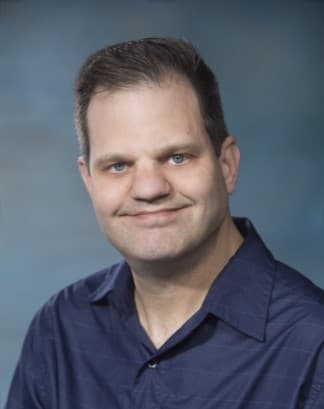
Scott Stephens
Scott has been an on-air personality, producer and newscaster for 30+ years. He has been a mainstay in the South Jersey Community and on the air across many different area stations. Scott can currently be heard on Kool 98.3 and News Talk 1400 & 92.3 WOND.