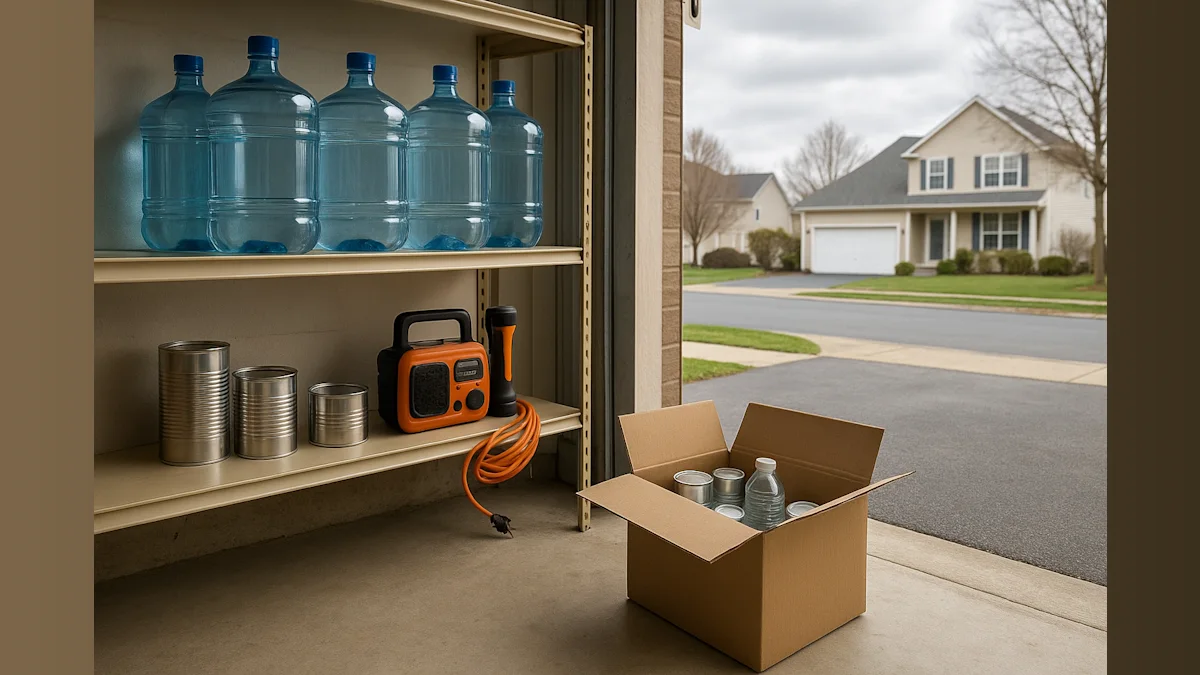
A string of technology failures in recent days is reshaping how Americans view emergency preparedness, according to reporting by NPR. What was once dismissed as fringe behavior is gaining mainstream traction as households confront the possibility of prolonged disruptions to critical services.
Teri Brown, 47, and her husband Richard have spent the last couple of months stockpiling supplies at their home in the Denver suburbs. Their stores include extra food, some of which they have begun freeze drying, along with two 55-gallon tanks for additional water. Brown said her motivation stems from worries about the U.S. electrical grid, artificial intelligence, and the potential for political unrest.
"Those things were always kind of in the back of my mind, pushing me towards wanting to be prepared for some kind of a disaster," Brown told NPR.
Despite her preparations, Brown acknowledged the social cost of identifying as a prepper. "It's one of those things I don't really often offer freely that I'm doing, because I feel like it makes me look a little bit like a tinfoil hat person," she told NPR.
That stigma may be fading. In the past week alone, Microsoft experienced an outage that blocked Outlook users from their email, Apple Pay became inaccessible, and a nationwide ground stop halted flights at airports last Friday. The incidents followed a Pentagon announcement that it was preparing major U.S. military bases to function without outside support should a major war or cyberattack cripple power grids or disrupt supply chains. European governments have also advised citizens to gather essential supplies, including shelf-stable food and medicines.
Krystal Christensen, known online as CharminglyFrugal and DoomsDayQueen, produces educational videos for more than 400,000 combined followers and subscribers. She reported a surge in inquiries from viewers across generations. "I'm seeing Gen Z showing up and going, 'I'm nervous. If the lights go out, what do I do?'" she told NPR. "I think that there's ten times as many people asking questions [in the wake of the disruptions]."
Christensen advises households to purchase only what they will actually consume and strongly discourages panic buying. Nevertheless, she documented shortages in a video posted 13 days ago from her Costco in Utah, where shelves previously full of generators were reduced to a few boxes. Costco did not respond to NPR's questions about whether the retailer has seen a rush on water, generators, or toilet paper.
Derrick James, a longtime prepper in rural Maine who produces videos and books on emergency preparedness, confirmed the buying surge. "New preppers are rushing to buy products for sure," he told NPR. He said an emergency radio he featured in a recent video sold out on Amazon within two days, and prices for MREs — ready-to-eat meals traditionally used by the U.S. military — have doubled on the platform.
Deanne Criswell, former administrator of the Federal Emergency Management Agency under President Biden, said the clustering of disruptions makes the anxiety understandable. She argued that preparedness should be tailored rather than uniform. "We've gotten into this point of having these very generalized, one-size-fits-all preparedness approaches. But it doesn't work for everybody. Not everybody needs the same things," she told NPR.
Criswell recommends assessing local risks — such as tornadoes, hurricanes, or blizzards — and preparing accordingly. She noted that not every household will face prolonged cutoffs from food or supplies, so maintaining weeks of food is not always necessary.
Monique Imroth, 64, of San Diego County, and her wife have focused their efforts on wildfire risk, having evacuated quickly during recent fires that affected their area. Imroth said preparedness extends beyond catastrophic scenarios. "It's not like you're prepping for the zombie apocalypse, although some do. You're prepping for whatever weird thing happens on Tuesday," she told NPR.
Simple steps such as canning fruit or buying extra canned beans during a routine grocery trip can provide a buffer for more common hardships, including a sudden job loss. "You want to make sure you have a deeper pantry and you have a little extra money set aside so you can get through that rough time," Imroth told NPR. "You prepare for what happens. So you don't suffer from the panic or the anxiety."