
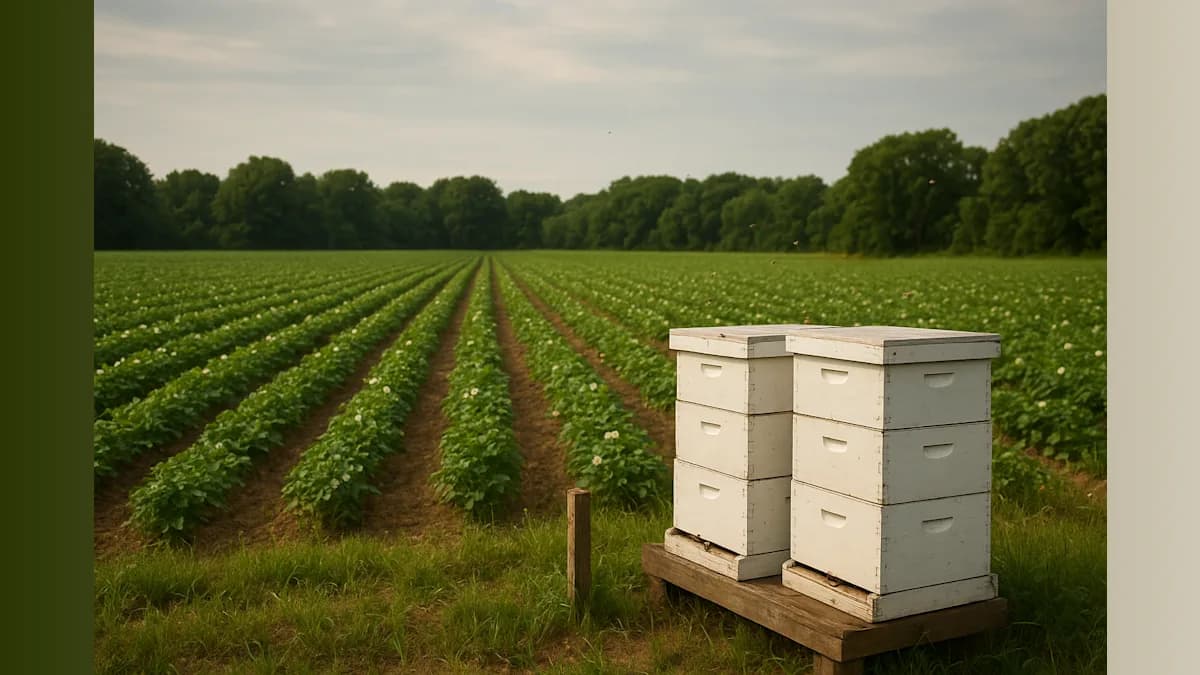
Scientists at the University of California, Riverside have discovered chemical compounds that can safely keep honey bees away from pesticide-treated crops, a finding that could offer a new tool in the effort to protect pollinators.
The work, led by biologist Anandasankar Ray, an expert on insect olfaction, addresses one of the most pressing problems in modern agriculture: pesticides contributing to the ongoing decline of honey bees. By identifying odors that repel the insects, the researchers suggest a path toward reducing bee exposure to these chemicals without harming the pollinators themselves.
The research was conducted at the University of California, Riverside, and was reported by the Good News Network. The findings represent a potential breakthrough for pollinator conservation, offering a way to guide bees away from treated fields while allowing farmers to continue using necessary pest controls.
For local communities, the implications are significant. Honey bees play a critical role in pollinating crops and wild plants, and their continued decline threatens food supplies and ecosystems. A safe repellent could help balance agricultural productivity with environmental stewardship, a concern shared by growers and conservationists alike.