The elaborate art of tablescaping has captured attention across social media platforms, transforming ordinary table settings into creative exhibitions that blend design, theme, and meticulous attention to detail. Marc Sebastian, a TikTok content creator whose judging videos from the OC Fair competition generate significant engagement annually, has shared insights into what separates exceptional tablescapes from standard dinner arrangements.
Sebastian, recognized for his viral travel series including the Great American Gay Sidequest and explorations of haunted hotels, approaches tablescaping evaluation with a specific framework. He emphasizes four critical components: Self-Awareness, Execution, Resourcefulness, and Visual Appeal—collectively forming what he calls SERV.
"It's an art," Sebastian told E! Online. "I want to be drawn to your table, and every time I look at it I want to discover something new. I think sometimes the tablescapers think about the big picture too much. Focusing in on the details is just as important."
The practice itself represents far more than arranging plates and silverware. Tablescaping combines the words table and landscaping, reflecting its nature as an artful, decorative approach to creating themed dining displays for social events, competitions, and exhibitions. The tradition traces its roots to the late 1700s, when upper-class households employed elaborate table settings as both creative expression and demonstration of wealth. Formal competitions emerged in the 1930s, with judges evaluating entries based on creativity, thematic interpretation, and the quality of glassware, cutlery, and plateware.
Sebastian particularly appreciates unconventional material choices that demonstrate ingenuity. "I really love when anyone uses unconventional materials to create their work. An old watch as a clock tower, a child's chew toy as a remote control," he told E! Online. The dedication required extends throughout the year, with serious competitors searching continuously for distinctive glassware and other elements.
"Some of these tablescapers search for the entire year leading up to the fair for their glassware. It's that dedication that sets them apart. In the end, buy what you like because your POV is the one I'm interested in. Anyone can set a table; not everyone can scape one," Sebastian told E! Online.
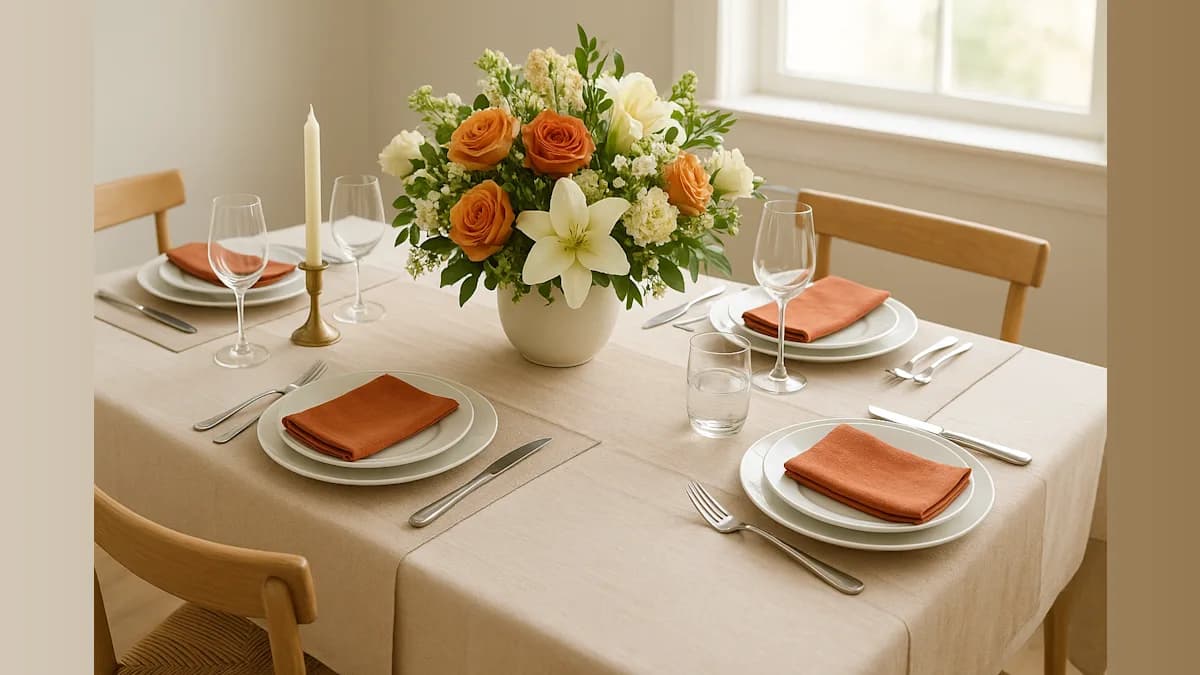
For those beginning their tablescaping journey, tabletop brand founder Louise Roe recommends starting with a clear vision and color palette. The foundation begins with selecting appropriate tablecloths, placemats, and linens. Layering follows with charger plates, dinner plates, and smaller accent pieces. Final touches include candles, centerpieces, and decorative elements that complete the thematic vision.
The creative process involves sourcing diverse elements and constructing a balanced composition through mixing colors, patterns, and artistic touches. Success requires genuine human creativity and personal perspective—qualities that distinguish memorable tablescapes from generic arrangements.
Essential components for aspiring tablescapers include quality base elements such as velvet tablecloths in rich colors like olive green, hand-dyed fabric runners in terracotta shades, and glass charger plates featuring decorative details. Stoneware dinner plates with hand-painted designs, etched glassware crafted from recycled materials, and linen-cotton blend napkins with floral patterns provide layered visual interest.
Flatware selections in stainless steel with golden finishes, including dinner forks, salad forks, soup spoons, dinner knives, and teaspoons, add refined touches. Finishing elements such as borosilicate glass taper candle holders in warm neutral tints complete the presentation.
The growing popularity of tablescaping competitions and their viral social media presence has introduced the art form to broader audiences. While professional competitors dedicate substantial time and resources to their creations, the principles apply equally to home entertainers seeking to elevate their hosting presentations. The key lies in developing a distinctive point of view and executing it with attention to both grand vision and minute details.