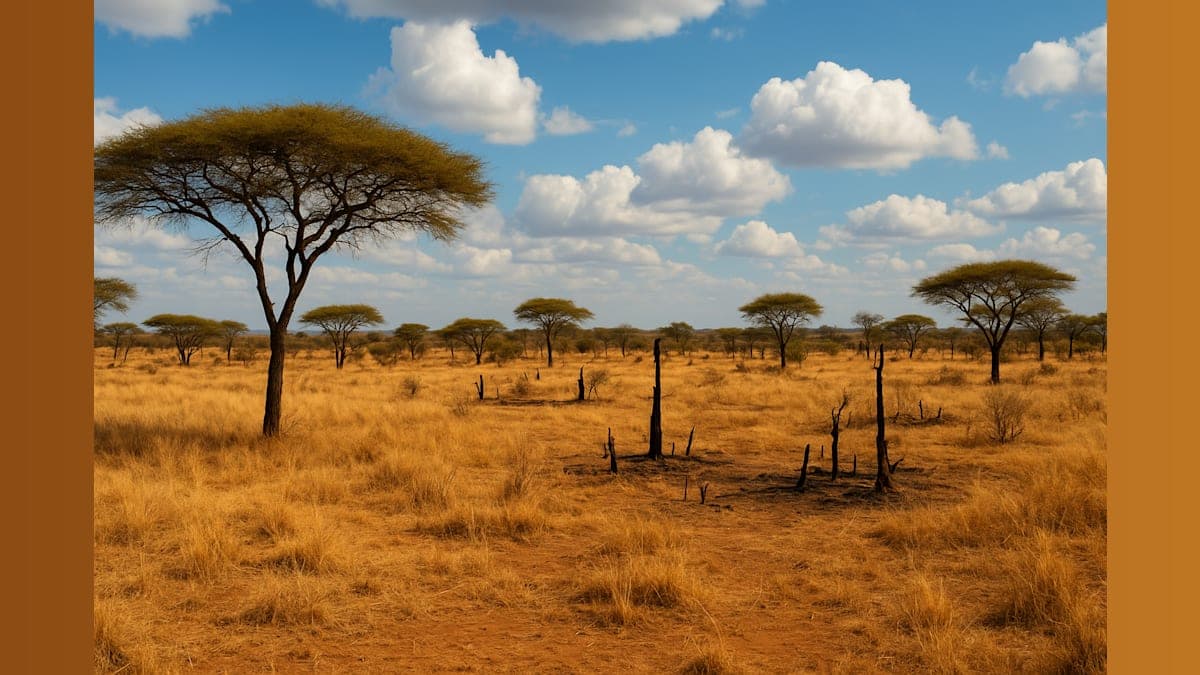
Africa remains the epicenter of global wildfire activity, accounting for 70 percent of all wildfires worldwide and generating half of all carbon dioxide emissions from such blazes. However, emerging scientific evidence suggests the continent's fire season is contracting due to shifting precipitation patterns that are pushing back the start of the dry season.
Researchers at the Chinese Academy of Sciences have documented a measurable delay in when Africa's dry season begins, a development that appears to be limiting the extent of land consumed by flames each year. The phenomenon stems from rainfall occurring later in the wet season, which prevents vegetation from drying to the point where a single spark can trigger days of uncontrolled burning.
The study, which appeared in Geophysical Research Letters, analyzed rainfall records spanning from 1990 to 2023 across the African continent. Scientists then cross-referenced this data with satellite imagery documenting fire activity between 2003 and 2022. The comparison revealed a consistent pattern of delayed dry season onset in both hemispheres.
In Northern Hemisphere Africa, the dry season now begins approximately 1.75 days later with each passing decade. The southern portion of the continent shows a more modest shift of 0.4 days per decade. While these increments may appear minor, their cumulative effect on fire activity has proven substantial.
The research team observed widespread reductions in burned area across Africa during the two-decade observation period. The most pronounced declines occurred during peak fire months, specifically December in the Northern Hemisphere and August in the Southern Hemisphere, when wildfire activity traditionally reaches its zenith.
The mechanism behind this shift does not involve longer wet seasons or dramatically increased precipitation totals. Instead, a larger proportion of the total annual rainfall now falls later in the wet season, effectively extending the period before landscapes become sufficiently parched to support widespread fire.
The findings carry particular significance given Africa's outsized role in global wildfire patterns. Despite extensive media coverage of fire seasons in regions such as France, Spain, and the Amazon, the African continent experiences far more fire activity than any other landmass. The two distinct fire seasons in the northern and southern portions of Africa collectively dominate worldwide wildfire statistics.
The study does acknowledge certain limitations in its methodology. Satellite detection systems cannot reliably identify very small fires, meaning the data could potentially miss a shift toward more numerous but smaller-scale burning events. Additionally, the analysis cannot determine the cause of individual fires, whether ignited by lightning strikes in dried vegetation or deliberately set by farmers clearing land for agricultural purposes.
Despite these constraints, the research offers valuable insights for fire management strategies. Effective fire prevention requires careful monitoring of rainfall patterns, wind conditions, and other environmental factors. The study's identification of late-season rainfall as a key variable in delaying dry season onset provides an additional tool for assessing fire risk with greater precision.
The implications extend beyond immediate fire management concerns. Understanding how climate patterns influence wildfire activity helps scientists project future trends and develop more effective prevention strategies. As climate conditions continue to evolve globally, the African continent's experience may offer lessons applicable to fire-prone regions elsewhere.
The research represents a rare positive development in climate-related environmental news, suggesting that some climate shifts may produce beneficial outcomes in specific contexts. However, scientists emphasize the need for continued monitoring to determine whether this trend will persist and how it might interact with other climate variables affecting fire behavior across the continent.