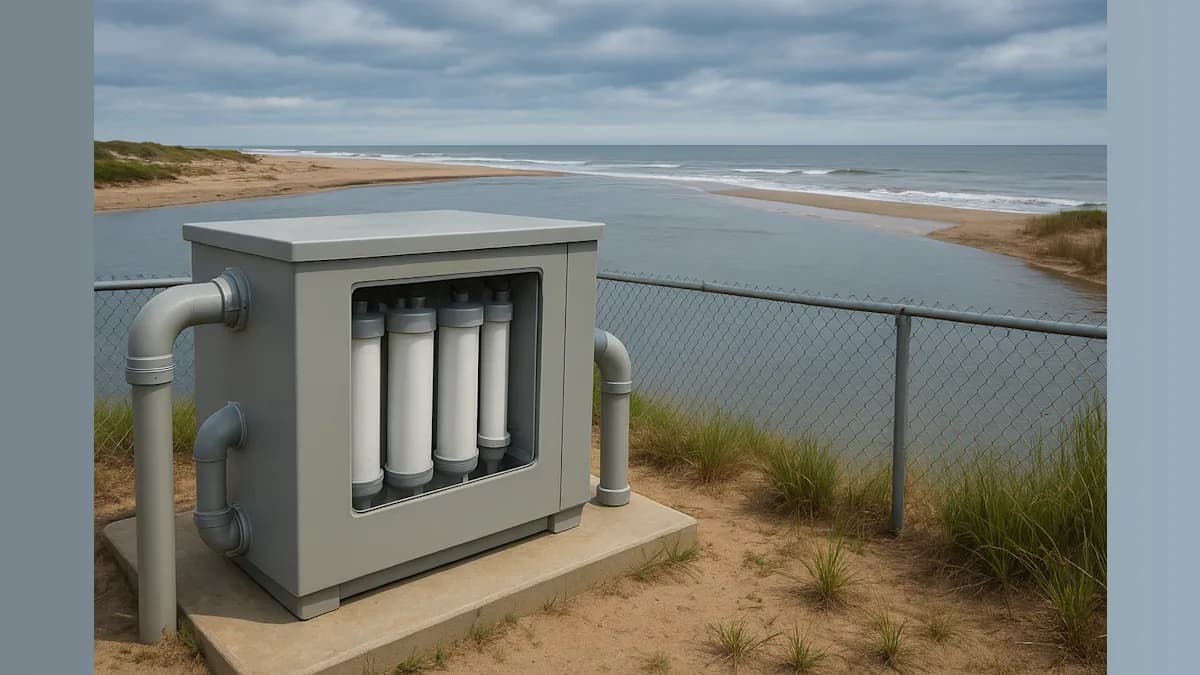
A filtration system developed by Princeton alumni and described as the first of its kind worldwide is now in service in Atlantic City, where it is designed to strip microplastics from wastewater at scale before the outflow reaches the Atlantic Ocean.
The device is a large implant that draws its design from hydrophobic plants, which repel water on contact while attracting microplastic particles. Once the particles cling to the surface, the water passes on and the plastics are left behind.
The Atlantic City installation marks the first deployment of the technology, according to Good News Network, which reported on the project. The system is intended to operate at the scale of a municipal wastewater stream rather than as a laboratory prototype.
For the surrounding region, the stakes are tied directly to the ocean. Wastewater systems that discharge toward the Atlantic represent a pathway for microplastic particles to enter marine environments, and intercepting them at the treatment stage keeps the material out of the water entirely.
The project was designed by Princeton alumni, according to Good News Network. Further details on the installation's capacity and operating schedule were not included in the source material.