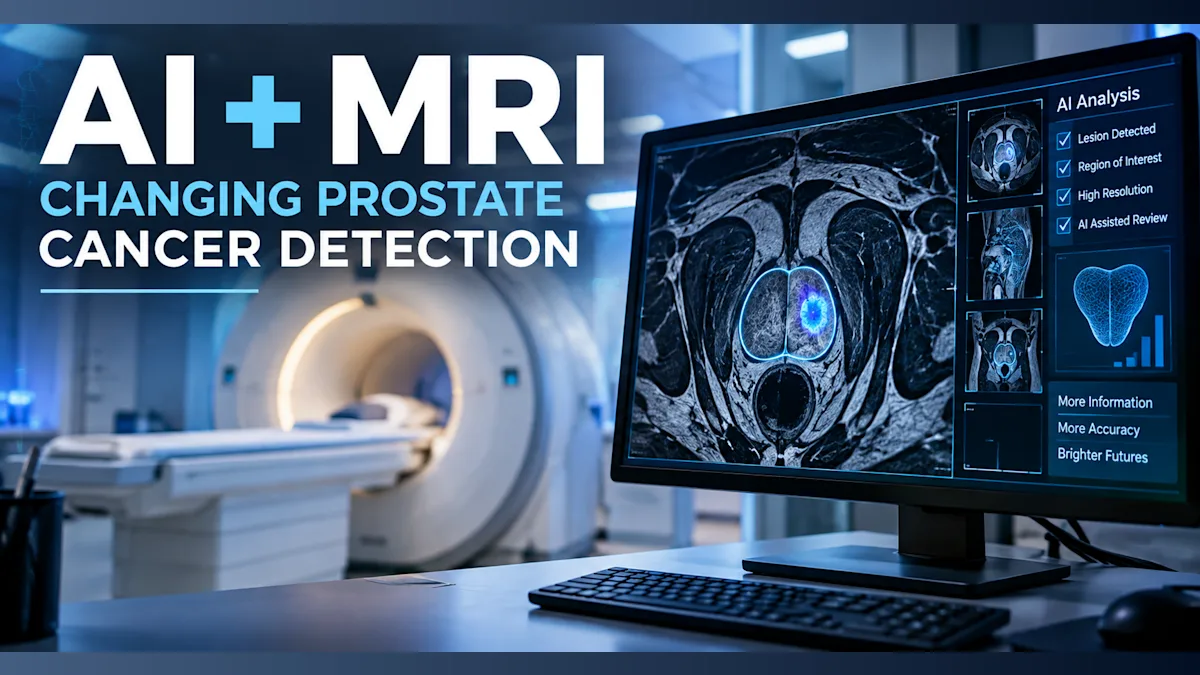
An increasingly sophisticated combination of magnetic resonance imaging and artificial intelligence is changing how doctors look for prostate cancer — technology now being used at New Jersey imaging centers to help identify suspicious tumors and potentially spare some men from unnecessary biopsies.
Dr. Thomas Reilly, a board-certified radiologist specializing in body imaging with New Jersey Imaging Network, described the evolving technology during an appearance on The Lorry Young Show on WOND, calling prostate MRI a “game changer” in the detection and diagnosis of the disease.
The change is significant because the traditional pathway following an elevated prostate-specific antigen, or PSA, blood test often led directly to a urologist and prostate biopsy.
MRI can now provide physicians with a detailed look at the prostate before a biopsy and, when suspicious areas are found, help physicians target those locations more precisely.
“Historically, if you went to your doctor and they did take a PSA and it was elevated, you'd probably go right to a urologist,” Reilly said. “And the urologist would do a biopsy.”
Traditional systematic biopsies collect tissue samples from multiple areas of the prostate, Reilly explained, but sampling only portions of the gland creates the possibility that a tumor won't be captured.
“This is where MRI comes in,” he said.
Getting a Better Look Before a Biopsy
Prostate MRI uses magnetic fields and radio waves rather than ionizing radiation.
Reilly explained that multiparametric MRI allows radiologists to examine several characteristics of prostate tissue, including its anatomy, the movement of water molecules and vascular patterns.
Cancerous tissue can behave differently from normal prostate tissue in those measurements.
“We combine all three of those data points to take a whole look at the prostate with prostate MRI,” Reilly said.
If the radiologist identifies a suspicious lesion, specialized software can allow the MRI information to be incorporated into the biopsy process, helping a urologist target the area of concern rather than relying solely on systematic sampling.
“Once we identify that lesion, we have special software,” Reilly said, explaining that the images can help guide the urologist “right to the spot that we were worried about.”
MRI May Help Some Men Avoid an Immediate Biopsy
MRI can also provide useful information when it doesn't reveal a suspicious lesion.
Reilly said some patients with an elevated PSA undergo an MRI that looks normal. Depending on the patient's overall risk and the judgment of the urologist, that can sometimes allow continued monitoring rather than an immediate biopsy.
“It can save many patients the process of having to get a prostate biopsy,” Reilly said.
Patients may instead continue monitoring their PSA and potentially undergo another MRI later, depending on their doctor's recommendation.
A biopsy, however, remains the definitive way to diagnose prostate cancer.
New Screening Option Available in South Jersey
Reilly also discussed a newer program offered by New Jersey Imaging Network called Enhanced Prostate Screening, providing a direct South Jersey connection to the technology.
“This is purely a screening test,” Reilly said. “This is not a diagnostic MRI like we would do once your PSA is elevated.”
He described it as a faster, focused, noninvasive prostate MRI intended to supplement conventional screening.
“This is like a quicker, less expensive test,” Reilly said.
New Jersey Imaging Network says the screening is designed for eligible men 45 and older who have not previously been diagnosed with prostate cancer or undergone a prostate biopsy.
The screening doesn't require a physician referral or IV contrast and uses no ionizing radiation.
The company currently charges $275, and the screening isn't covered by insurance.
Reilly said during the interview that the screening is being offered at New Jersey Imaging Network locations including Washington Township and Haddon Heights, as well as the Toms River area.
New Jersey Imaging Network is promoting the program during September's Prostate Cancer Awareness Month as a supplemental option rather than a replacement for established prostate-health screening and consultation with a physician.
Artificial Intelligence Joins the Radiologist
The other significant development is artificial intelligence.
Reilly said New Jersey Imaging Network, part of national outpatient imaging provider RadNet, is using AI to assist radiologists reviewing prostate MRI studies.
But he emphasized an important distinction.
“It's not to replace the radiologists,” Reilly said. “It's not doing my job.”
Instead, the technology analyzes imaging information and helps highlight areas that may deserve closer examination by a radiologist.
New Jersey Imaging Network says its Enhanced Prostate Screening uses an FDA-cleared, AI-powered prostate solution from DeepHealth. The AI processes MRI images and provides additional clinical information to the radiologist, who remains responsible for interpreting the examination.
Reilly explained that AI can help combine information contained in different MRI sequences in ways that make subtle abnormalities easier for the human eye to recognize.
“A cancer that you may have had to look at in two or three different images and look really hard for it,” Reilly said, can become easier to detect when the information is combined.
Reilly said early real-world data from RadNet's deployment of prostate AI showed 27% more lesions detected compared with an unassisted radiologist. South Jersey NewsBeat was able to independently confirm RadNet's use of FDA-cleared AI to assist radiologists with prostate MRI, but not the underlying data supporting Reilly's 27% figure, so that statistic is being attributed specifically to him.
Reilly: MRI Isn't for Everyone
Despite his enthusiasm for MRI and AI, Reilly offered an important caution.
Routine MRI screening isn't universally recommended for every man.
“This is something that you need to look at your individual situation, including your risk factors and a discussion with your primary care doctor,” Reilly said.
The American Cancer Society similarly recommends that men make an informed decision about prostate cancer screening after discussing the benefits, risks and uncertainties with a health care provider. The recommended age for beginning that conversation varies according to individual risk.
For Reilly, MRI and artificial intelligence don't eliminate the need for doctors or established screening tools.
They give physicians more information.
And as imaging becomes increasingly sophisticated, Reilly said the goal remains decidedly low-tech: finding significant prostate cancers earlier, when patients have more options for treating them.

About the Author
Karen Johnson
With over 30 years of news experience in major markets like Los Angeles, Denver, and Columbus, Karen now covers our area for South Jersey NewsBeat. She also brings her articulate and conversational news delivery to WOND radio listeners every weekday. Her background includes work with the NBC Radio Network, and she thrives in fast-paced news environments.