
For generations, archaeologists have debated whether weapons discovered in the burial chambers of ancient Egyptian princesses served practical purposes or existed purely as ceremonial objects. A groundbreaking study has now settled the question: these royal women were accomplished archers who regularly engaged in physically demanding activities.
Researchers examined five royal women who lived approximately 4,000 years ago, discovering compelling physical evidence that the pharaoh's daughters could skillfully wield the weapons placed in their tombs. Multiple scans revealed strong muscle attachments and healed fractures on the mummies' skeletal remains, indicating sustained physical training and combat readiness.
"Members of the royal family, especially the women, were active participants in skilled, physically demanding activities such as archery and hunting," Professor Zeinab Hashesh, the study's lead author, told Good News Network. The research appeared in the journal Frontiers in Environmental Archaeology.
"This conclusion is supported by the way their bones developed to sustain heavy muscle use, which corresponds directly to the weapons discovered in their tombs," Professor Hashesh told Good News Network.
The investigation focused on six royal mummies unearthed during the 1890s at Dahshur, a funerary complex located approximately 40 kilometers south of Cairo. The site contains pyramids and tombs that have yielded numerous archaeological treasures over the decades.
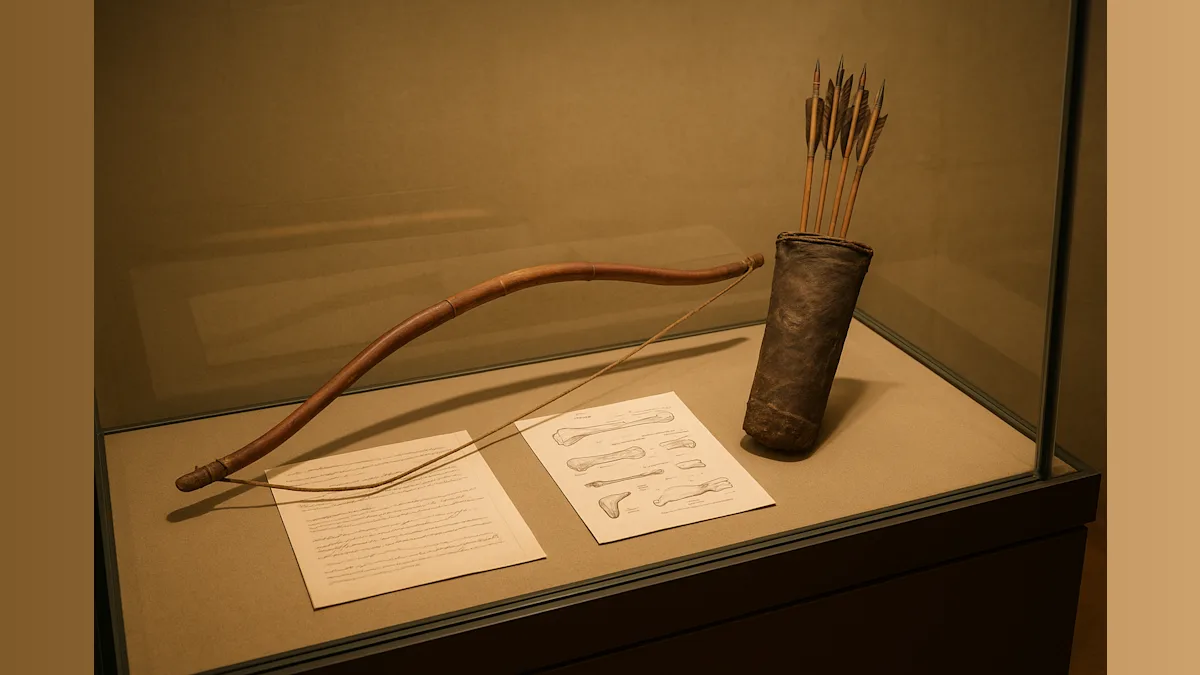
Four of the six individuals were sisters, all daughters of pharaoh Amenemhat II. They were interred in matching underground chambers: Princess Ita beside Princess Khenmet, and Princess Itaweret alongside an anonymous woman tentatively identified as Princess Sathathormeryt. Their burial goods included bows and arrows—items traditionally associated with male warriors—and Princess Ita's coffin contained an ornate dagger.
The research team also evaluated Princess Noub-Hotep and King Hor, who were buried with similar regalia.
The exceptional preservation of the skeletal remains enabled archaeologists to determine each individual's age at death, height, and biological sex, while also uncovering evidence of past illnesses and injuries. The findings paint a vivid picture of physically active royal women who sustained injuries consistent with martial training.
"Princess Ita was a young woman (28-34) with strong upper-body muscle attachments, suggesting she habitually used weapons like maces or daggers," Professor Hashesh told Good News Network.
"Princess Itaweret was a young woman aged between 20 and 34 who survived broken ribs and foot fractures; her skeleton shows she was a skilled archer," Professor Hashesh told Good News Network.
The robust muscle attachments observed on the sisters' bones indicate they were highly physically active in ways that align precisely with the use of weapons found in their burial chambers, according to Professor Hashesh.
"These were not just symbolic gifts but tools they actively used," Professor Hashesh told Good News Network.
The healed fractures discovered on the remains suggest another remarkable aspect of ancient Egyptian royal life: access to sophisticated medical treatment. "What is remarkable is that the injuries healed well, which suggests they had access to advanced medical care for their time," Professor Hashesh told Good News Network.
The research team acknowledged that additional analyses remain incomplete, including stable isotope analysis that could reveal information about possible nutritional deficiencies among the royal women.
Looking ahead, the researchers plan to preserve the remains, create three-dimensional prints for educational purposes and virtual exhibitions, and display the mummies alongside their jewelry, weapons, and funerary objects.
"All of this would be done with respect, ensuring the remains are presented ethically, just as they were originally buried," Professor Hashesh told Good News Network. "Their objects and jewelry are truly fascinating—breathtaking in their craftsmanship."
The study challenges long-held assumptions about gender roles in ancient Egypt and demonstrates that royal women participated fully in activities once thought to be exclusively male domains. The physical evidence preserved in their bones tells a story of strength, skill, and status that burial goods alone could never convey.