Tony Marino warns that federally regulated sports contracts could undermine New Jersey's gambling safeguards as Stockton researchers identify a possible impact on Atlantic City sportsbooks and the NFL joins a Supreme Court fight.
ATLANTIC CITY, N.J. — A rapidly expanding form of sports wagering is raising concerns about the future of New Jersey's regulated gambling industry, with a longtime casino analyst warning that prediction markets could threaten consumer protections, state oversight and traditional sportsbooks.
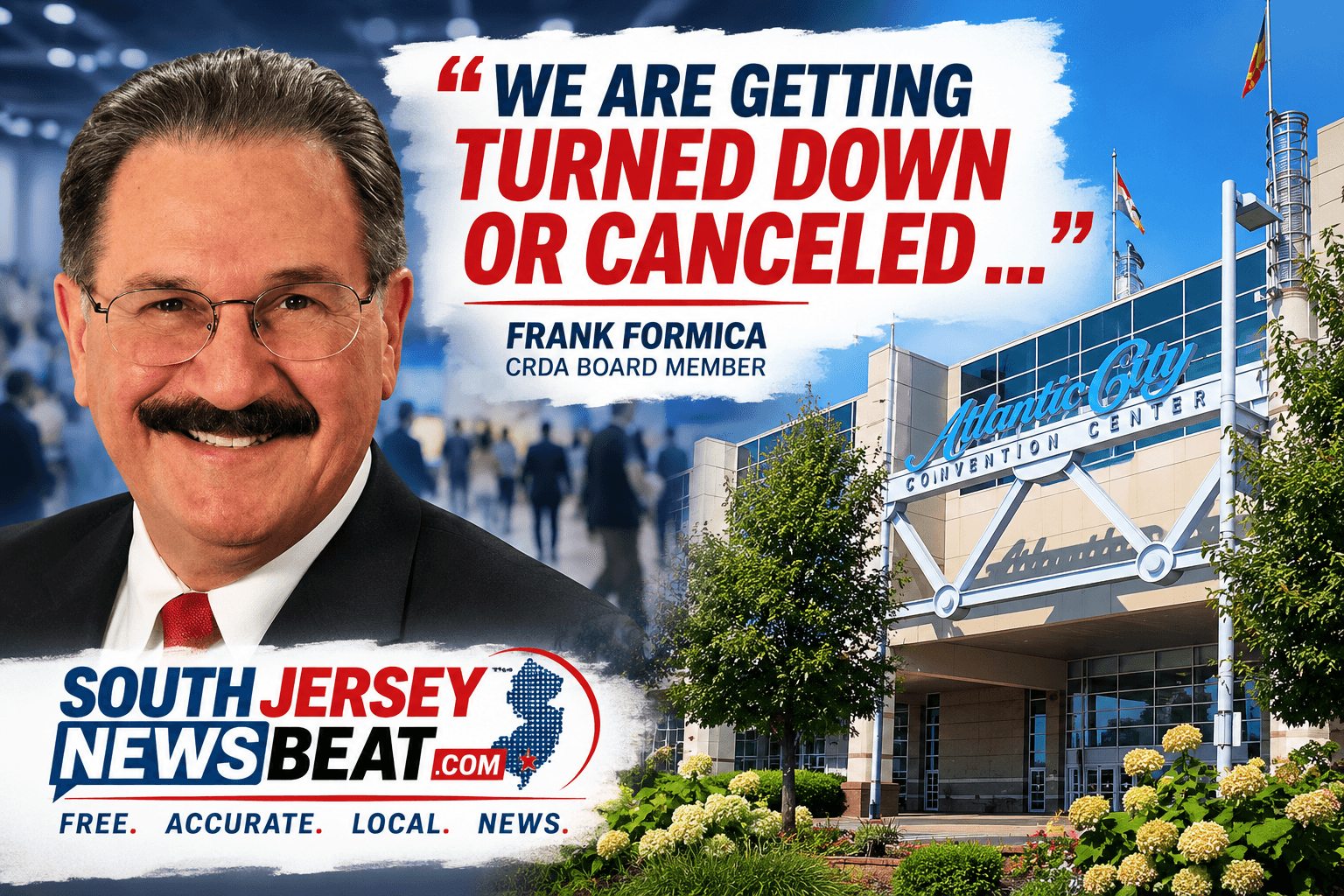
Anthony "Tony" Marino, a casino industry analyst and former New Jersey transportation official, raised those concerns during an Oct. 13 appearance on The Don Williams Show on News Talk 1400 and 92.3 WOND.
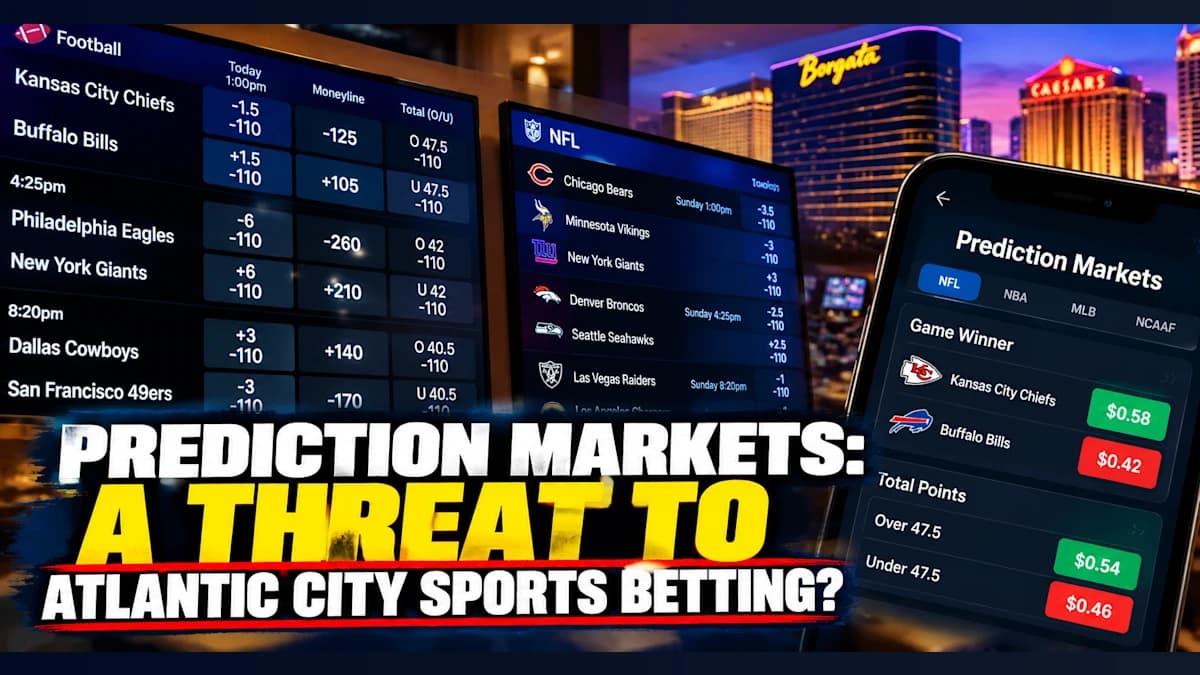
Marino argued that prediction-market platforms, which allow customers to buy and sell contracts based on the outcomes of sporting events, are functioning much like sportsbooks while operating under a different regulatory system.
"They call them trading, trading as though you're buying stock or commodities," Marino told Williams.
The issue has particular significance for Atlantic City, where sports betting has become part of the casino industry's broader business model since New Jersey helped overturn the federal prohibition on state-authorized sports wagering in 2018.
Now, New Jersey is again at the center of a major legal battle over sports betting — this time over whether federal regulators or individual states have the authority to oversee prediction-market contracts tied to sporting events.
Stockton Researchers See Possible Impact on Atlantic City
There is already some evidence suggesting that prediction markets may be affecting traditional sports wagering, although the extent of any impact remains uncertain.
In its August 2026 gaming industry analysis, Stockton University's Lloyd D. Levenson Institute of Gaming, Hospitality and Tourism noted that Atlantic City-based sportsbooks could be experiencing competition from prediction markets.
According to Stockton's analysis, sports wagering gross revenue for Atlantic City casino operators totaled approximately $390.4 million through August 2026, compared with $401.5 million during the same period in 2025.
That represents a decline of approximately $11.1 million, or 2.8%.
Statewide figures, which also include racetracks and their partners, show a larger decrease.
The New Jersey Division of Gaming Enforcement reported $671.4 million in statewide sports wagering gross revenue through August, down 5.3% from $708.7 million during the first eight months of 2025.
For August alone, statewide sports wagering revenue declined 25%, from $81.9 million to $61.4 million.
However, state regulators attributed much of the August decrease to differences in the sports calendar and a lower percentage of wagers retained by operators.
Those factors are important because sportsbook revenue can fluctuate considerably depending on game outcomes and how much bettors win.
The available figures do not establish how much, if any, of the decline was caused by prediction markets.
Still, Stockton's analysis suggests that competition from the emerging platforms deserves attention as the industry evolves.
What Are Prediction Markets?
Unlike traditional sportsbooks, which accept wagers and establish betting odds, prediction-market platforms generally allow customers to trade contracts that pay based on whether a particular event occurs.
A customer might purchase a contract predicting that a particular football team will win a game. If that outcome occurs, the contract pays according to its terms. If it does not, the customer loses the amount invested.
Companies such as Kalshi characterize these transactions as federally regulated financial contracts rather than conventional gambling.
The distinction is at the heart of the legal dispute.
Traditional New Jersey sportsbooks must comply with state licensing requirements, gambling regulations, age restrictions and consumer-protection rules.
Prediction-market operators contend that their contracts fall under the federal Commodity Exchange Act and the jurisdiction of the Commodity Futures Trading Commission, or CFTC.
That position has been challenged by state gambling regulators who argue that sports-related event contracts are effectively wagers and should be subject to the same rules as licensed sportsbooks.
Marino strongly disagrees with treating the sports contracts as ordinary financial trading.
He urged parents to pay attention to whether young adults in their households are participating in the markets.
"Any parent out there ought to start asking questions if they have a young man, especially in the house," Marino said.
He described the platforms as a potential source of gambling-related financial problems.
Those concerns reflect Marino's assessment; the interview did not provide independently verified figures establishing how many consumers have experienced financial harm through prediction markets.
New Jersey Takes Its Fight to the Supreme Court
The legal battle intensified in recent weeks.
In September, New Jersey Attorney General Jennifer Davenport asked the U.S. Supreme Court to review a federal appeals court decision that limits the state's authority to enforce its gambling laws against Kalshi.
The case stems from New Jersey's attempt to stop Kalshi from offering certain sports-related contracts without complying with state gambling requirements.
In April, the U.S. Court of Appeals for the Third Circuit ruled 2-1 in favor of Kalshi, upholding a preliminary injunction preventing New Jersey from enforcing its gambling laws against the company's federally regulated event contracts.
Other federal appeals courts have reached different conclusions in related disputes, creating conflicting interpretations of the law.
New Jersey argues that Congress did not intend to remove states' longstanding authority over sports gambling when it expanded federal regulation of financial derivatives.
Kalshi maintains that its contracts fall within a national federal regulatory framework and that conflicting state requirements would undermine the system Congress established.
The Supreme Court has not yet agreed to hear the case.
NFL Joins New Jersey's Legal Challenge
On Oct. 8, the National Football League filed a brief supporting New Jersey's request for Supreme Court review.
The league expressed concern that existing federal oversight may not provide the same protections against manipulation, insider wagering and other integrity risks that are required under state sports betting regulations.
The NFL also raised concerns about age restrictions, including whether customers younger than 21 should be permitted to participate in sports-related prediction markets.
The CFTC has defended its oversight and said it has attempted to work with the league on market integrity issues.
The dispute has drawn attention from other major participants in the gambling industry, including the American Gaming Association and tribal gaming organizations.
Marino said the disagreement over regulatory authority is creating substantial uncertainty.
"We now have this total mishmash of jurisdictions, and this issue has to be solved," he said.
Casino Industry Warns of Lost Revenue
The American Gaming Association, which represents the commercial casino industry, has also raised concerns about the rapid growth of sports prediction markets.
In September, the association projected that Americans would legally wager approximately $29.5 billion on the 2026 NFL season through regulated commercial sportsbooks, compared with $29.4 billion the previous season.
The association characterized the nearly flat projection as a departure from the industry's earlier growth.
It also estimated that prediction markets had diverted more than $1.3 billion in potential state gaming tax revenue nationwide since 2025.
Those figures are industry estimates, not independently established tax losses. They also do not identify a specific amount lost by New Jersey or Atlantic City.
Prediction-market companies dispute the argument that their federally regulated contracts should be treated as state-regulated gambling products.
The debate carries financial implications for New Jersey because licensed online sports wagering operators are subject to state taxes and regulatory requirements that differ from those governing federally regulated event contracts.
New Jersey's online sports wagering tax rate increased to 19.75% in 2026, according to Stockton University.
That makes the question of where sports-related trading takes place relevant not only to casino operators, but also to state tax collections.
A New Challenge for Atlantic City
Atlantic City's casinos face a changing competitive environment that includes online gambling, higher operating expenses, increased taxes and competition from gaming businesses outside the resort.
Sports prediction markets add another complication.
For Marino, the immediate concern is that the regulatory system has not kept pace with the growing popularity of these platforms.
He said the casino industry and state governments are pushing back against what they view as a threat to established gambling oversight.
Whether prediction markets ultimately remain under federal regulation, become subject to state gambling laws or operate under a revised framework could have consequences for Atlantic City's casinos and sportsbooks.
For now, the industry's financial data suggest that the question deserves closer examination, but they do not prove that prediction markets are responsible for declining sportsbook revenue.
The Supreme Court's decision on whether to review New Jersey's case could determine the next phase of the dispute.
Anthony "Tony" Marino discussed prediction markets and the casino industry on The Don Williams Show on News Talk 1400 and 92.3 WOND on Tuesday, Oct. 13. The program airs Monday through Friday from 6 to 10 a.m.

About the Author
Scott Stephens
Scott has been an on-air personality, producer and newscaster for 30+ years. He has been a mainstay in the South Jersey Community and on the air across many different area stations. Scott can currently be heard on Kool 98.3 and News Talk 1400 & 92.3 WOND.