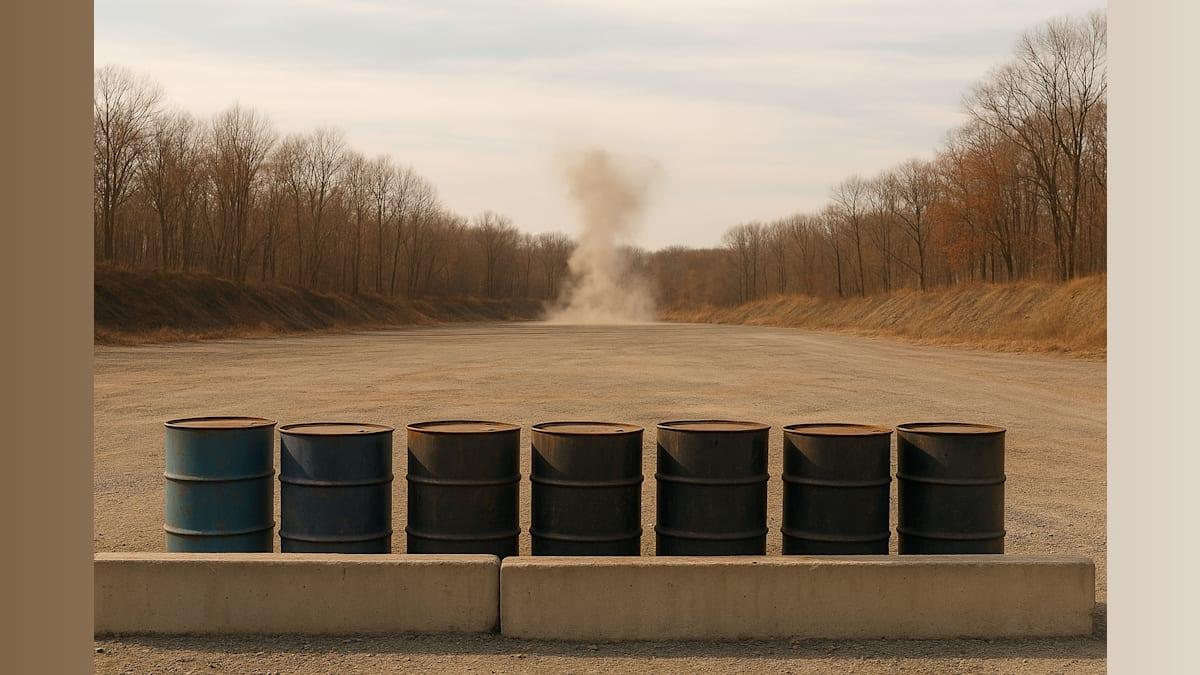
MIDDLETOWN, Iowa — The U.S. Army has completed a controlled detonation of more than 60 barrels of unstable lead azide at the Iowa Army Ammunition Plant in Middletown, NPR reported on Wednesday, November 25, 2026. The operation disposed of nearly 5 tons of a degraded explosive that had sat in storage at the facility for nearly two decades.
Lead azide is a primary explosive, a class of material sensitive enough to be used to trigger larger charges. When such compounds degrade over time, they can become unpredictable, which is why the Army opted for a controlled detonation rather than continued storage or conventional removal. The blast was carried out in a single flash, according to NPR.
The Iowa Army Ammunition Plant, located in Middletown, is a long-established military manufacturing site, and the presence of aging energetic material there is not unusual for facilities of its kind. What made this case notable was the volume involved: more than 60 barrels of material that had been on hand for nearly 20 years before it was destroyed.
For residents of Middletown and the surrounding region, the completion of the detonation closes out a disposal effort involving a substance that demands careful handling. The Army has not, in the reporting summarized by NPR, disclosed additional details about the timing of the blast or any precautionary measures taken in the surrounding community.
The episode also highlights a broader challenge for the nation's ammunition plants: managing stockpiles of explosive material that age past their useful life. Degraded primary explosives require specialized disposal, and the Army's decision to destroy the lead azide at the Iowa site reflects the priority placed on eliminating unstable material rather than leaving it in place.