
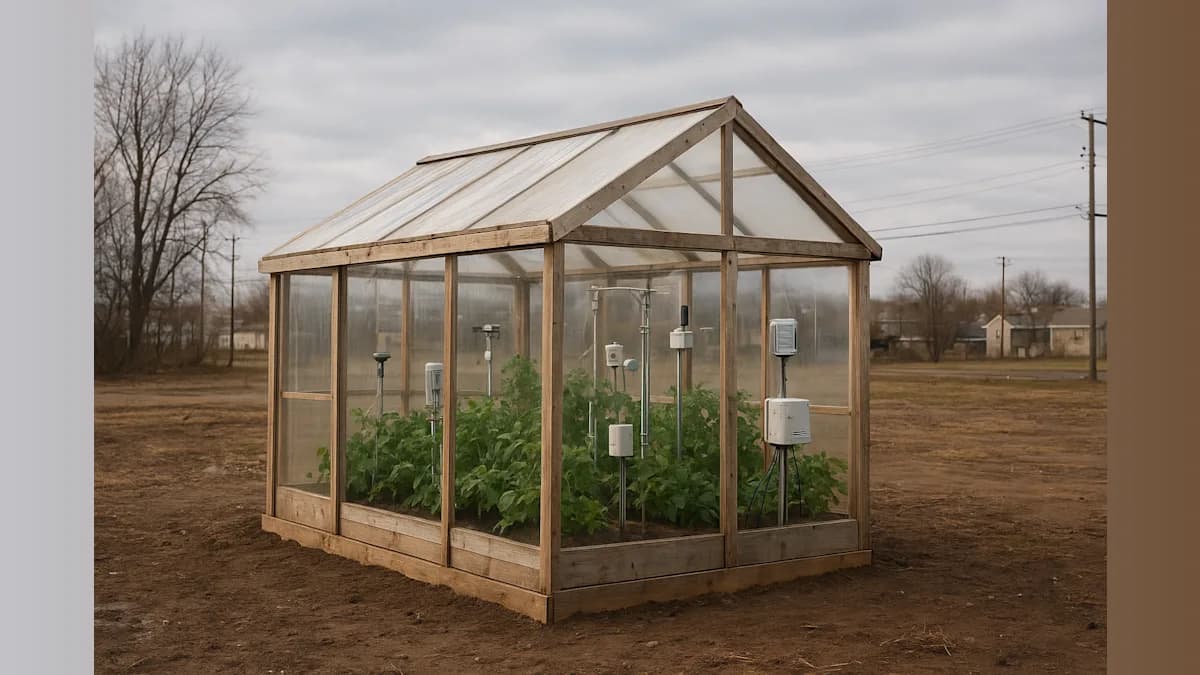
A group of high school students at the Coretta Scott King Young Women's Leadership Academy in Atlanta has transformed a corner of their classroom into a functioning greenhouse, addressing a challenge that affects many residents in their community: limited access to fresh vegetables and produce.
The automated garden represents months of experimentation and refinement. Using PVC pipes and plastic sheeting for the structural frame, the students engineered a system that relies on automated sensors to water and monitor plants without constant human intervention. The technology enables year-round vegetable cultivation in an area where obtaining fresh produce presents ongoing difficulties for many families.
The project emerged from a fundamental question posed to students: What challenge exists in your hometown, and what solution can you create to address it? This inquiry forms the foundation of the Ciena Solutions Challenge, an initiative developed by Ciena and Digital Promise that invites middle school and high school students and teachers worldwide to design responses to problems affecting their local areas.
The Atlanta students received $3,000 as awardees of the challenge, funding designated to sustain and scale their greenhouse project. The financial support enables the team to refine their design and potentially extend its impact beyond the classroom walls.
The initiative connects to a broader educational framework called Powerful Learning, a research-based model developed by Digital Promise. This approach centers on four core pillars: connection, agency, purpose, and curiosity. The model positions students as active participants in their education rather than passive recipients, encouraging them to identify meaningful problems and employ available tools, including artificial intelligence, to generate tangible solutions.
By funding projects like the automated garden, the Ciena Solutions Challenge provides students with opportunities to apply theoretical principles to concrete situations that affect their daily lives and the wellbeing of their neighbors. The Atlanta greenhouse demonstrates how young people can leverage technology and creativity to address systemic issues such as food access disparities.
The construction process required the students to navigate numerous technical obstacles. Building a functional greenhouse from basic materials demanded repeated testing, adjustment, and problem-solving. Each setback provided learning opportunities that ultimately contributed to a working prototype capable of sustaining plant life through automated systems.
The smart garden addresses what public health experts and urban planners often describe as food desert conditions, where residents face geographic or economic barriers to obtaining nutritious food. By creating a low-cost, replicable model for growing vegetables indoors, the students have developed a potential template that could be adapted by other schools, community centers, or families facing similar challenges.
The Ciena Solutions Challenge extends beyond Atlanta, supporting student-led projects internationally. According to Upworthy, awardees around the globe are applying similar principles of community-focused innovation to address diverse challenges, from health screening accessibility to environmental hazards. Each project begins with the same premise: recognizing a problem that affects real people and taking concrete action to solve it.
For the students at the Coretta Scott King Young Women's Leadership Academy, the greenhouse represents more than an academic exercise. The project positions them as problem-solvers capable of improving conditions in their community through applied technology and collaborative effort. Their work demonstrates how young people, when given resources and encouragement, can develop practical responses to complex social challenges.
Educators and students interested in participating in the Ciena Solutions Challenge can register at CienaChallenge.org. The program continues to seek innovative proposals from young people who identify problems in their communities and possess ideas for addressing them through technology, design, and collaborative problem-solving.