ATLANTIC CITY — Atlantic City's interfaith community is joining with AtlantiCare and the Gift of Life Donor Program for a discussion about organ and tissue donation that organizers hope will address more than how the process works.
They also want to confront some of the reasons people hesitate to become donors — including religious questions and longstanding distrust of the health care system.
The Bridge of Faith, Fellowship of Churches of Atlantic City and Vicinity, AtlantiCare and Gift of Life are planning a free faith-based community Lunch and Learn from 11:30 a.m. to 1 p.m. Thursday, Sept. 10, at the AtlantiCare Medical Arts Pavilion, 7 S. Ohio Ave. in Atlantic City.
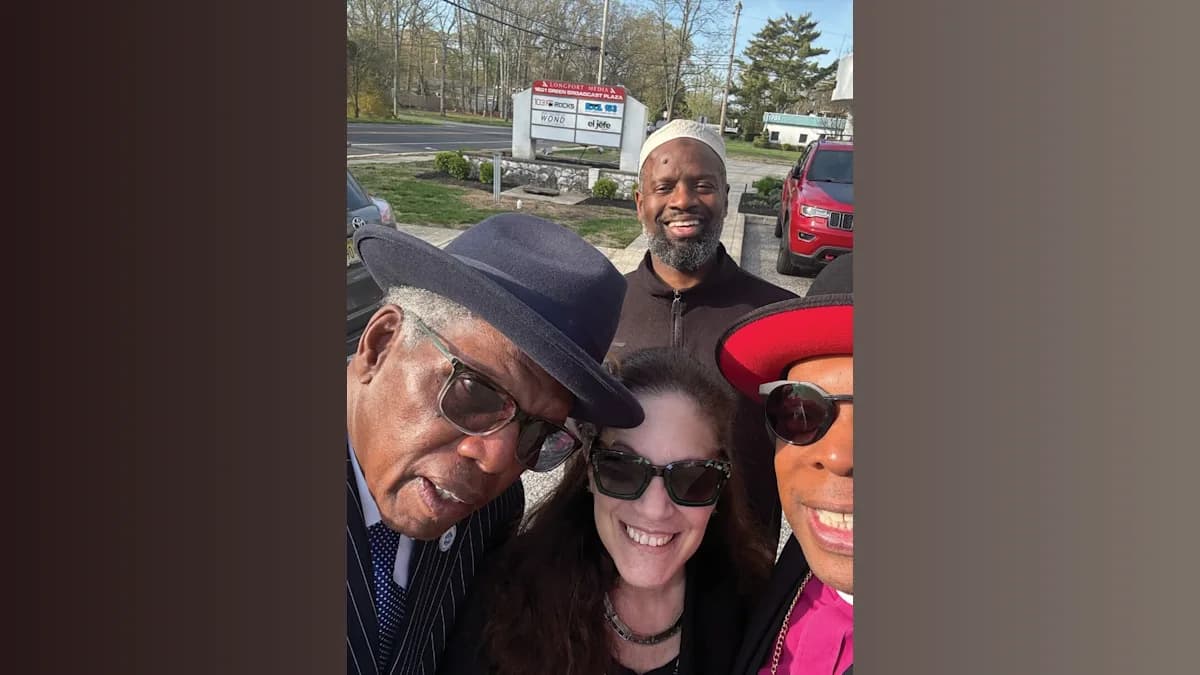
Bishop James Hargrove, president of the Fellowship of Churches, announced the event Thursday during the Bridge of Faith's monthly appearance on The Don Williams Show on WOND.
“We believe that faith leaders have a powerful voice in shaping healthy communities,” Hargrove said.
The event will bring health professionals and religious leaders together to discuss organ and tissue donation with members of Atlantic City's Christian, Muslim and Jewish communities.
The discussion comes as the need for donated organs remains substantial.
Gift of Life, the federally designated organ procurement organization serving southern New Jersey, eastern Pennsylvania and Delaware, says about 4,500 people in its region are awaiting life-saving organ transplants, while more than 100,000 people are waiting nationwide. One organ donor can save as many as eight lives, while tissue from a single donor can improve the lives of up to 100 people.
Gift of Life and AtlantiCare have previously worked together on donor awareness efforts at AtlantiCare Regional Medical Center.
Hargrove: Trust remains a barrier
Hargrove said the benefits of donation are widely understood, but he also described a more difficult issue facing some Black communities: distrust of the medical establishment.
“There is a lot of reservations because of the medical history with Black people in the United States of America,” Hargrove said, referencing the Tuskegee syphilis study and other episodes in American medical history.
He said some Black Americans continue to believe the health care system does not treat everyone equally.
“The challenge is to get the message of trust into our community,” Hargrove said. “Because until there is trust, you're not going to have individuals volunteering.”
He described one particularly troubling fear he has encountered: that registering as an organ donor could cause medical professionals to work less aggressively to save a patient's life because the person's organs could be used for transplantation.
Gift of Life specifically identifies that belief as a myth.
The organization says a person's decision to become an organ donor does not affect the medical care that person receives. The medical professionals treating a sick or injured patient are separate from the transplant and organ-recovery team, which becomes involved only later in the donation process.
Gift of Life has also made building trust in communities of color a priority. The organization established a Community Advisory Board in 2024 to address barriers to donation, particularly in communities with large numbers of people awaiting transplants and historically lower donor-registration rates. It expanded that initiative this year.
Faith can raise its own questions
Religious concerns will be another focus of the Atlantic City event.
Gift of Life says major religions in the United States support organ and tissue donation, although teachings, individual interpretations and circumstances can vary. The organization encourages people with questions to discuss them with their own religious leaders.
That nuance was evident during Thursday's radio discussion.
Imam Amin Muhammad of Masjid Muhammad in Atlantic City said organ donation can raise complicated questions for Muslims concerning the sacredness of the human body.
He stopped short of offering a universal answer and instead encouraged Muslims with questions to learn more and consider individual circumstances.
“There are cases where it may need to be explored,” Muhammad said.
He said the issue isn't necessarily resolved by a simple religious prohibition and suggested the upcoming program is exactly the type of place where questions can be examined.
“I think I would encourage people to come to listen, to learn,” Muhammad said.
A Christian perspective
The Rev. Vicki Ney, pastor of Margate Community Church, said she plans to encourage members of her congregation to attend.
Ney said her church is currently praying for two people awaiting kidney transplants.
Speaking from her own Christian perspective, she said she believes organ donation can allow something meaningful to come from the body after death.
“I do believe that most of us believe our spirits leave our bodies and we get into the presence of the Lord,” Ney said, “and so that it's perfectly okay to use what was left if it's possible for the next person to go on with their lives.”
More than 49,000 transplants last year
The number of organ transplants performed in the United States exceeded 49,000 in 2025 for the first time, according to Gift of Life.
But demand continues to exceed supply. The organization says approximately 13 people die each day while awaiting an organ transplant, and another person is added to the national waiting list about every eight minutes.
More than half of those on the waiting list are people from communities of color.
Gift of Life itself set a national record in 2025, coordinating 1,955 organ transplants, including 984 kidney transplants.
For Atlantic City's Bridge of Faith, however, the Sept. 10 program isn't simply about increasing a statistic.
It is also about giving residents a place where uncomfortable questions about medicine, race, death and religion can be asked openly.
Hargrove said that requires trusted voices from within the community.
“We are asking our faith leaders — not just the pastors, but pastors and leaders — to join us,” he said.
The program is free and scheduled for 11:30 a.m. to 1 p.m. Sept. 10 on the third floor of the AtlantiCare Medical Arts Pavilion at 7 S. Ohio Ave. in Atlantic City.
About the Author
Scott Stephens
Scott has been an on-air personality, producer and newscaster for 30+ years. He has been a mainstay in the South Jersey Community and on the air across many different area stations. Scott can currently be heard on Kool 98.3 and News Talk 1400 & 92.3 WOND.