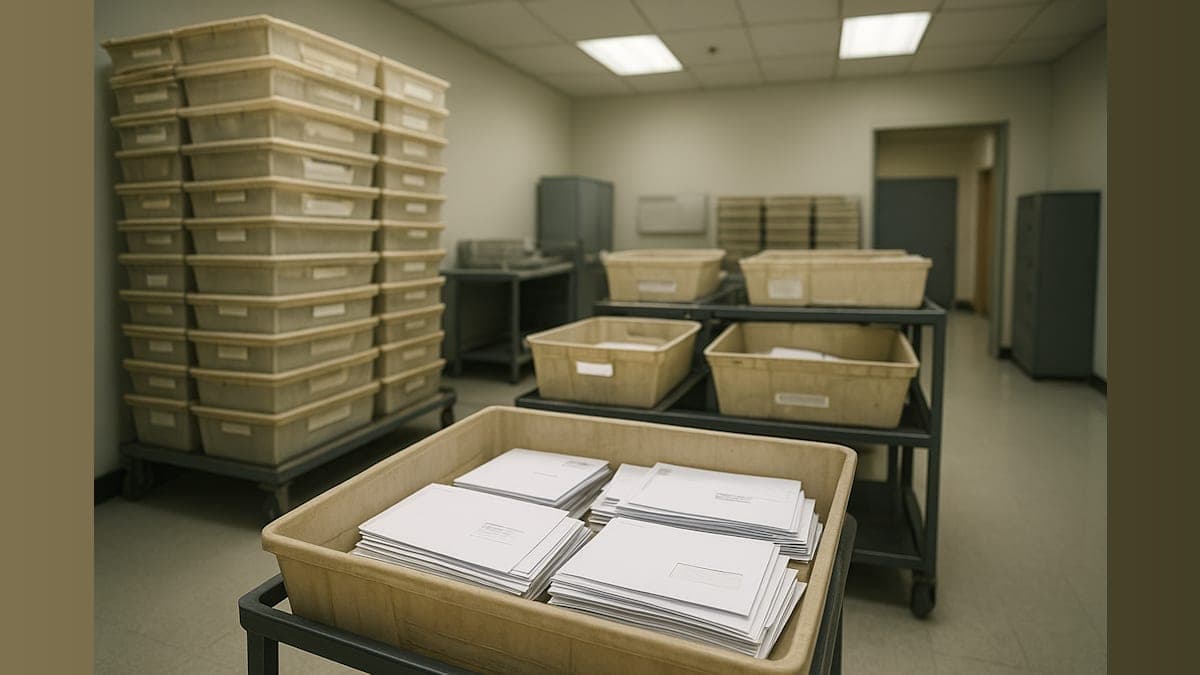
Our community's Board of Elections made a unanimous decision Wednesday night that puts voters first: they voted to count 24 vote-by-mail ballots that were trapped in a postal facility because of a four-year-old billing dispute.
The ballots in question belonged to Atlantic County residents who had properly corrected technical issues with their mail-in votes. These voters did everything right—their corrected ballots bore postmarks ranging from May 18 through June 10, all well ahead of the cure deadline. But the U.S. Postal Service never delivered the cure forms to county election officials, holding them over an alleged $66,000 debt from 2020.
The board's decision came despite strong pushback from state officials. Deputy Attorney General Drew Hedin had instructed the board to reject the ballots, contending they missed the legal deadline for curing ballot defects.
"These ballots were not received until well after this deadline had passed, and there is no stated exception to the deadline under Title 19," Hedin wrote in a letter to the Board of Elections. "There is no basis to process the cure forms in question."
But Atlantic County Clerk Joseph Giralo championed the voters' cause, urging board members to count every ballot. He shared a May 6 letter from Tyler Thayer, a mailing standards specialist with the U.S. Postal Service, that seemed to contradict the agency's own actions in withholding the ballots.
"Firstly, I want to assure you that the United States Postal Service will not impede the mailing and return of ballots, even if there is an outstanding balance due," Thayer wrote. "USPS is committed to the American people and the election process."
The board sided with Giralo and the voters, opening and tallying all 24 ballots during Wednesday night's meeting. However, officials are keeping the results under wraps for now, waiting for state guidance on the proper procedure for updating certified election outcomes.
For context, New Jersey allows voters to fix technical problems with their mail-in ballots—such as missing or mismatched signatures—after election officials flag them. This "cure" process gives voters a second chance to ensure their voices are heard.
The billing dispute at the heart of this controversy dates to 2020, when Ed McGettigan served as county clerk. Both the clerk's office and the Board of Elections have seen complete turnover since then, meaning current officials inherited this problem from their predecessors.
The case highlights the tension between rigid statutory deadlines and circumstances beyond voters' control—and in this instance, our local board chose to prioritize the franchise over bureaucratic obstacles.

About the Author
Peter Killeen
A 25-year radio news veteran, Peter covers South Jersey for NewsTalk 1400 & 92.3 WOND radio. Known for his concise and impactful delivery, he ensures listeners and readers stay informed without unnecessary filler.