A grassroots conservation initiative in Taiwan has achieved remarkable results, doubling the population of migrating mangrove land crabs through the use of bamboo bridges and strategic road closures. Last year, observers documented 10,000 crabs making their seasonal journey from inland areas to coastal beaches—twice the number recorded the previous year.
The migration occurs annually from July to September near Taijiang National Park, where female crabs travel to the beaches to deposit their eggs. The journey presents unique challenges for the egg-laden crustaceans, which cannot swim with their bellies full and must navigate numerous waterways that have emerged as land development has altered their ancestral migration routes.
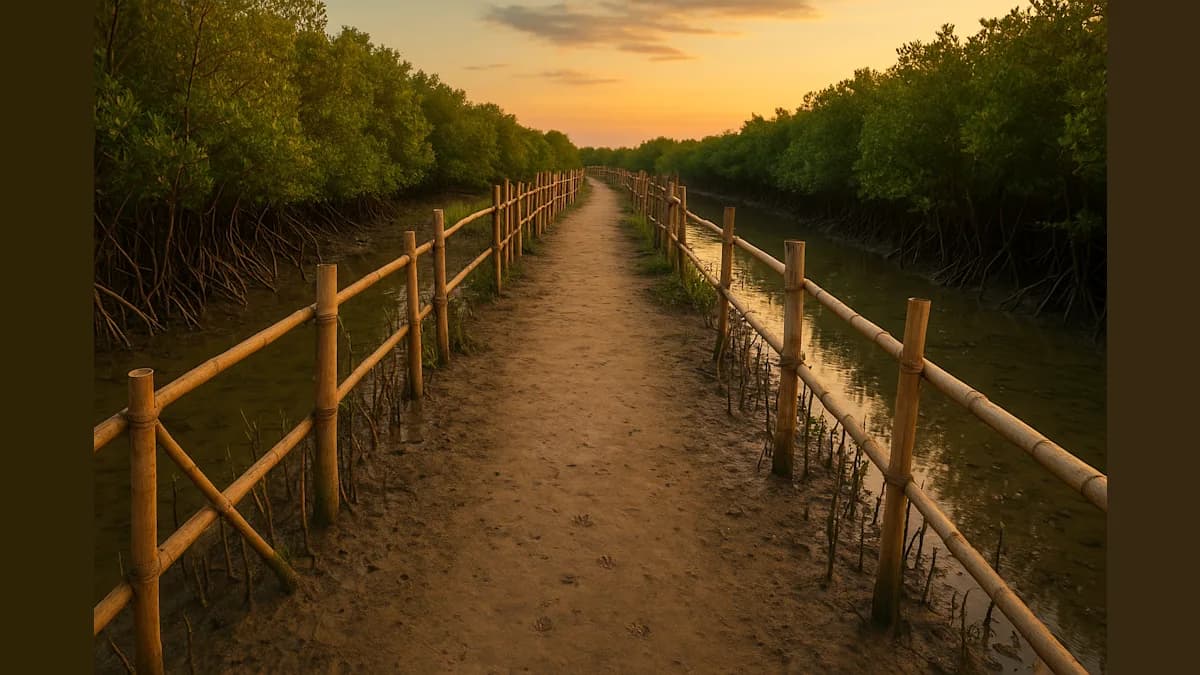
Local volunteers and national park staff have addressed this obstacle by constructing small bridges fashioned from bamboo, allowing the crabs to cross water barriers that would otherwise prove impassable. The solution represents a low-cost, environmentally sensitive approach to wildlife conservation that requires minimal materials but delivers substantial ecological benefits.
Unlike the Christmas Island red crab, whose hard exoskeleton can puncture vehicle tires, the mangrove land crab lacks such natural defenses against vehicular traffic. Taiwan's rapid industrialization over the past six decades has created additional hazards for the species, as roadways increasingly intersect with migration paths.
To mitigate this threat, Taijiang National Park officials and community volunteers implement temporary road closures when the slow-moving crustaceans approach crossing points. This practice ensures safe passage for the crabs during their critical reproductive journey.
The conservation efforts extend beyond protecting a single species. Taijiang National Park Director Chen Jun-shan explained the broader ecological significance to Reuters, noting that the mangrove land crab plays a vital role in nutrient cycling within coastal ecosystems.
"As for the mangrove land crab, it can return all of these nutrient sources back into the land, allowing the coastal forest to become more abundant," Chen Jun-shan told Reuters. "So if you protect the land crabs, the entire coastal forest belt can be protected."
The mangrove land crab migration does not approach the scale of the Christmas Island phenomenon, which involves approximately 100 million crabs. Nevertheless, the Taiwan population represents a significant ecological resource whose protection yields benefits throughout the coastal forest ecosystem.
The doubling of observed crab numbers demonstrates how targeted conservation measures, even those employing basic materials and community participation, can produce measurable results in wildlife protection. The success of the bamboo bridge initiative offers a model for addressing human-wildlife conflicts in ways that balance development needs with ecological preservation.