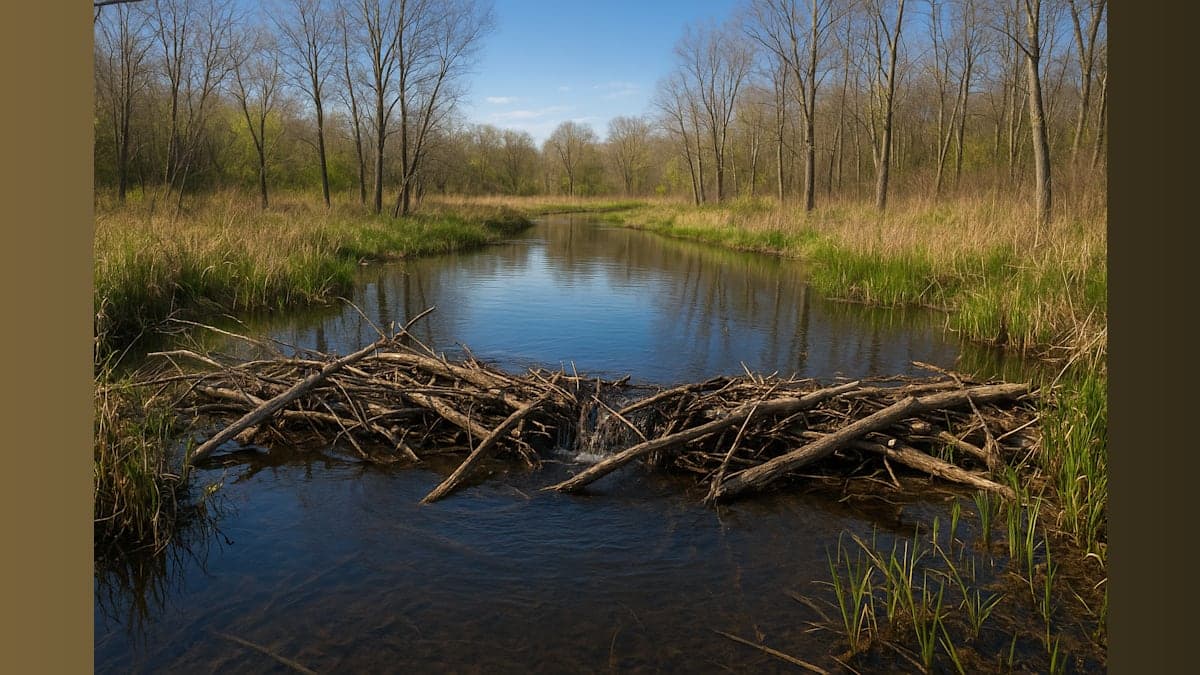
A persistent flooding problem that plagued Greenford Tube station and surrounding neighborhoods in west London has been resolved by an unlikely team of engineers: beavers. The animals, reintroduced to the area in 2023 after four centuries of extinction in England, have constructed a series of dams that now prevent the chronic inundation that once forced commuters to wade through floodwater and prompted routine sandbag deployments.
The natural solution has spared Ealing Council from what would have been expensive engineering works to address the drainage issues. Following heavy rainfall earlier this week, the area remained dry for the first time in recent memory.
"Even in situations like on Monday, where there was really heavy rainfall, the area didn't flood," said Şeniz Mustafa, England's first urban beaver officer, speaking to Positive News. "When they put their minds to it, they really get things finished."
Nature's Engineers at Work
The Ealing Beaver Project began in 2023 when conservationists secured a licence to release five beavers along a stream running through Paradise Fields, a 10-hectare former golf course in Ealing borough. The initiative aimed to demonstrate how these animals, often called nature's engineers, could enhance London's climate resilience.
The beavers wasted no time transforming their new habitat. They constructed multiple dams that created a new lake almost overnight, fundamentally reengineering the landscape around Greenford. In a display of their engineering prowess, the animals even dismantled an old dam built by human volunteers and replaced it with a superior structure of their own design. Within their first year, the colony had already produced a litter, establishing a sustainable population.
"I just can't believe how much they've done in a short period of time, they basically said 'step aside, humans'," Mustafa told Positive News. "We do make things a little bit hard for ourselves. It goes to show that we don't have to use heavy machinery or build infrastructure, nature can do it."
Biodiversity Boom
The ecological benefits extend far beyond flood control. The beaver-modified habitat has attracted four new species to Paradise Fields in just 11 months. Sticklebacks now inhabit the waters alongside dragonflies and damselflies. Red pole, a bird species that typically only stops during migration, has been observed in the area.
This month alone, observers have documented at least 14 different butterfly species. The wetland ecosystem now supports tadpoles, freshwater shrimp, and toads. According to Mustafa, none of this biodiversity would exist without the beavers' landscape modifications.
"It's interesting to see how other wildlife will just recolonise and return to a space," Mustafa told Positive News. The transformation has proven particularly valuable in a city where access to nature remains limited for many residents. "The benefit to the local community is massive. [The animals] have completely transformed my perspective of what beavers can do."
Collaborative Conservation Effort
The Ealing Beaver Project represents a partnership between Ealing Wildlife Group, rewilding organisation Citizen Zoo, the Friends of Horsenden charity, and Ealing Council, with additional support from Beaver Trust and the Mayor of London.
"We are facing climate and ecological emergencies worldwide, but we have the power to make a difference," London Mayor Sadiq Khan told Positive News following the beavers' release. "I am committed to ensuring that London is at the forefront of the rewilding revolution as we work to re-establish lost species and reconnect people and nature."
The success of the Ealing project offers a compelling model for addressing urban flooding and biodiversity loss through nature-based solutions. By allowing beavers to apply their natural engineering skills, the borough has achieved multiple environmental objectives while avoiding the financial burden and ecological disruption of conventional infrastructure projects.