Democrat Xavier Becerra will advance to the November election for California governor, according to a race call by The Associated Press. After days of counting ballots, it remains unclear who will claim the second spot in the fall contest, with an estimated 3.5 million uncounted ballots remaining.
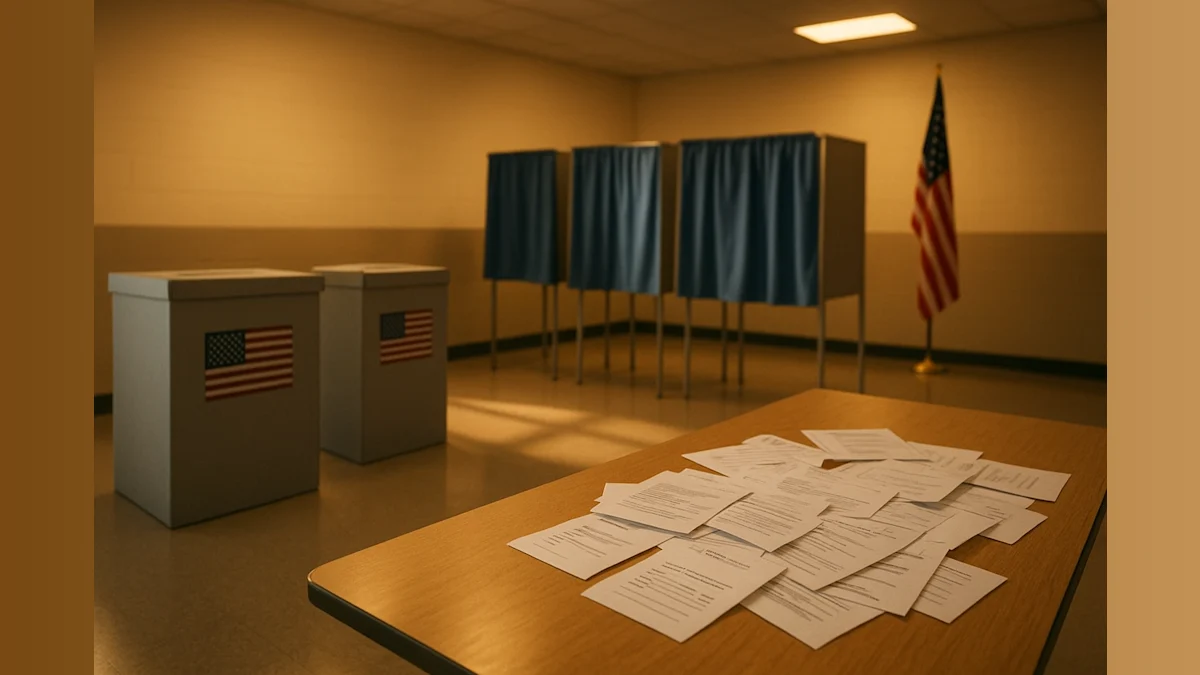
Under California's unique primary system, all candidates appear on a single ballot open to any registered voter, regardless of party affiliation. The top two vote-getters then advance to the general election, creating the possibility of same-party matchups in this heavily Democratic state.
Becerra, who served as Health and Human Services secretary under President Joe Biden, has orchestrated one of the most remarkable political comebacks in recent California history. As recently as April, polling showed the former member of Congress and California attorney general languishing in single digits within a crowded field of contenders.
The battle for second place remains intensely competitive. Republican businessman Steve Hilton maintains a narrow edge over billionaire Democratic activist Tom Steyer, though Steyer has been steadily gaining ground as election officials continue processing ballots. Hilton, a British-born former Fox News commentator who previously served as a political adviser to former British Prime Minister David Cameron, received an endorsement from President Trump in April. He has campaigned on a platform calling for change after 16 years of complete Democratic control of state government.
Steyer has invested more than $213 million of his personal fortune into his candidacy, making this the most expensive gubernatorial election in California history. Despite the unprecedented spending, he currently sits in third place in the vote tally.
The state has not experienced such a wide-open primary since the late 1990s. The winner in November will inherit leadership of the nation's most populous state while confronting a substantial budget deficit and pressing challenges including the high cost of living, homelessness, and wildfire risk. Incumbent Governor Gavin Newsom, a Democrat, faces term limits and is widely believed to be positioning himself for a presidential run in 2028.
The race has been marked by unexpected developments. Several of California's most prominent Democrats—former Vice President Kamala Harris, U.S. Senator Alex Padilla, and California Attorney General Rob Bonta—all declined to enter the contest.
The field was dramatically reshaped in April when then-U.S. Representative Eric Swalwell's campaign collapsed amid allegations of sexual assault and harassment. Swalwell, who had been rising in polls and accumulating high-profile endorsements, resigned from Congress shortly after the accusations surfaced. He has denied the assault allegations. His departure from the race appeared to primarily benefit Becerra's campaign.
The consolidation of the field also alleviated Democratic concerns about vote-splitting that could have allowed Republican candidates Riverside County Sheriff Chad Bianco and Hilton to capture both top spots in the June primary. Such an outcome would have guaranteed a Republican governor in a state where registered Democrats outnumber GOP voters by a two-to-one margin.
Instead, Becerra surged in the final weeks of the primary campaign, aided by political groups operating independently of his official campaign. In a state where registered Democratic voters significantly outnumber Republicans, Becerra enters the general election as the early favorite, though this election cycle has already demonstrated that unexpected developments can rapidly reshape the political landscape.